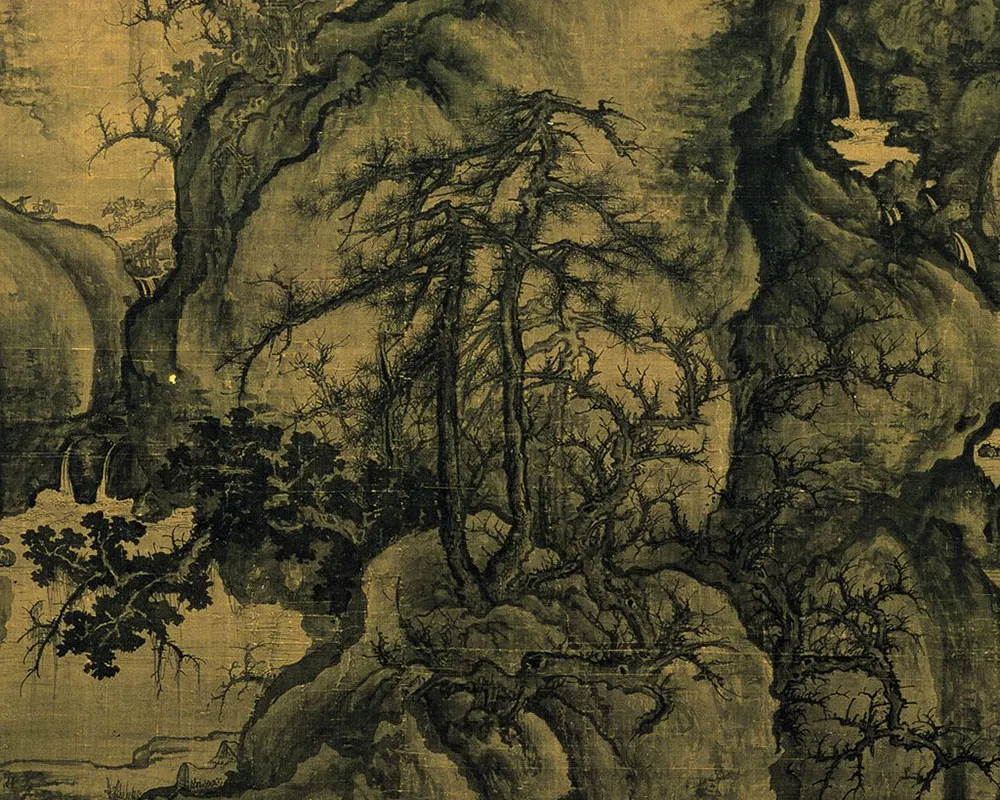
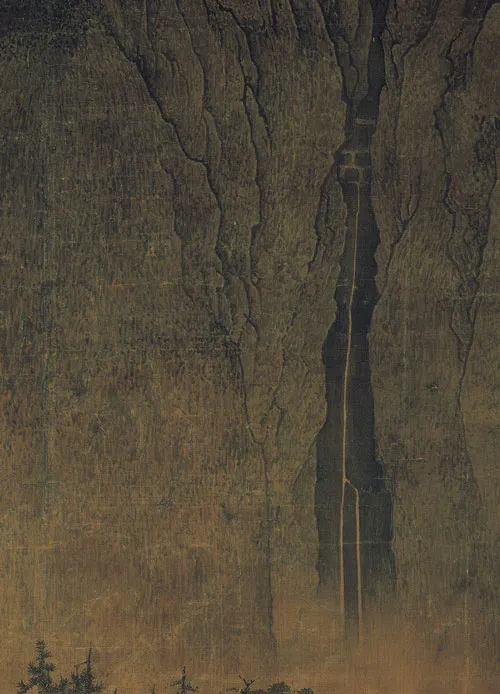
Detail of Early Spring showing the mist and mountains
Chinese ink painting is an art form defined not by what is added, but by what is withheld. It is a discipline where the void—the empty white space of the paper—holds as much weight as the darkest strike of the brush. Relying on the humblest of materials—brush, ink, silk, or paper—masters of this tradition created universes that are both visually vast and philosophically profound.
These works are not merely static depictions of nature; they are “mind landscapes,” imbued with qiyun (spirit resonance). Through the modulation of water and ink, artists summoned the mist of early spring, the roar of waterfalls, and the silence of a scholar’s contemplation. To view them is to enter a dialogue with the ancients, exploring a worldview where humanity is but a small, harmonious note in the great symphony of the cosmos.
Title: Early Spring (c.1072)
Artist: Guo Xi (c.1020–c.1090)
Dynasty: Northern Song
Collection: National Palace Museum, Taiwan
In the Northern Song Dynasty, landscape painting transcended mere representation to become a vehicle for Taoist philosophy. Guo Xi’s Early Spring stands as a monumental testament to this era, capturing the elusive moment when the earth stirs from its winter slumber. The painting does not rely on pigment to depict the season; instead, it uses the wetness of ink to suggest the humid, heavy air of a thawing world.
The composition is a masterclass in “atmospheric perspective.” The mountains are not rigid structures but are shrouded in a living mist, rendered through layered washes and amorphous strokes that dissolve solid form into ethereal space. One can almost sense the moisture in the air as the ice melts, reanimating the mountain springs that trickle over the rocks.
Guo Xi was a theorist as well as a painter, famously stating in his treatise Mountains and Waters that a true landscape is one where a viewer may “walk, gaze, travel, and dwell.” This immersiveness is evident here. At the foot of the hill, dead wood gives way to new shoots—a subtle yet powerful symbol of resilience and the cyclical nature of life.
Water acts as the painting’s arteries. A waterfall cascades from the highest peak, threading through the valley and unifying the disparate elements into a single, breathing organism. This continuity transforms the landscape from a collection of rocks into a sentient body, pulsing with the flow of the season.
The technique employed here involves the meticulous layering of ink washes to build three-dimensional volume. The high peaks, framed by the deliberate use of negative space, appear to float amidst clouds, creating a sense of distance that is both physical and spiritual.
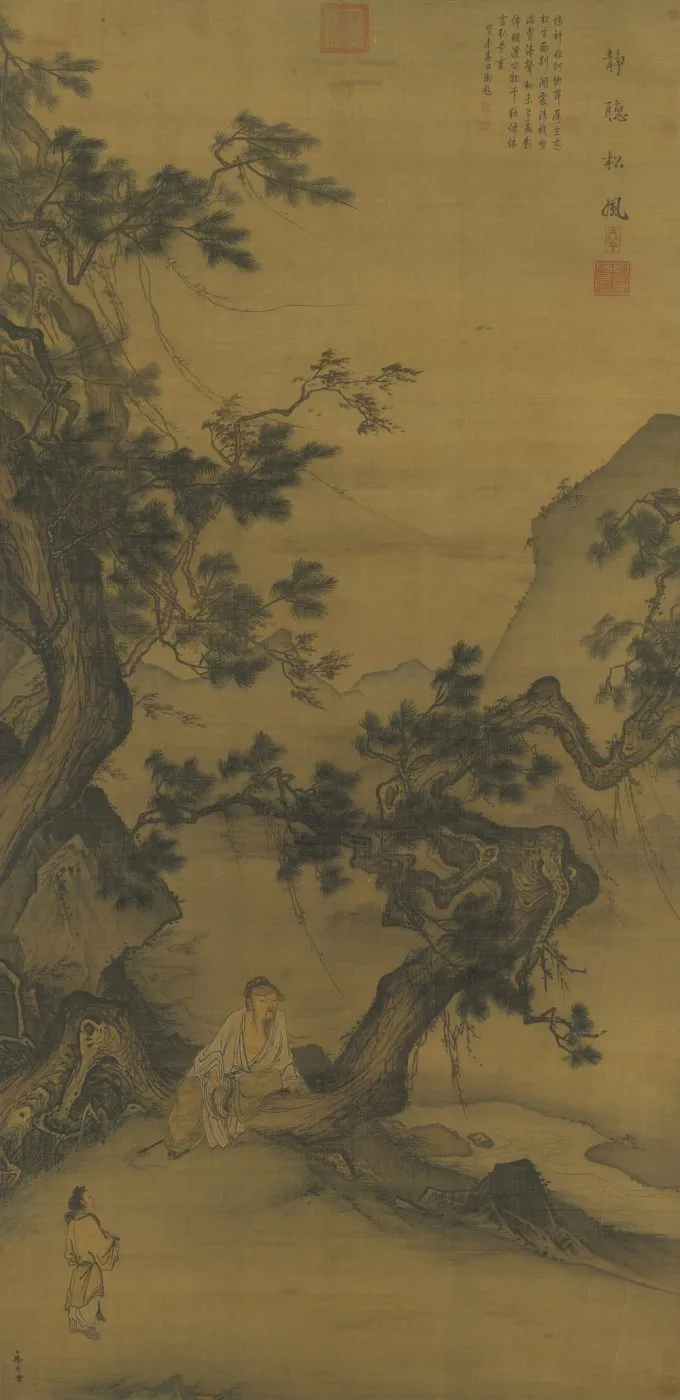
Title: Quietly Listening to Wind in the Pines (c.1246)
Artist: Ma Lin (c.1180–c.1256)
Dynasty: Southern Song
Collection: National Palace Museum, Taiwan
While the Northern Song painters focused on the grandeur of the macrocosm, the Southern Song artists often turned inward, focusing on poetic intimacy. Ma Lin’s masterpiece invites the viewer to engage not just their eyes, but their sense of hearing. It is a visual representation of a sound: the soughing of wind through pine needles.
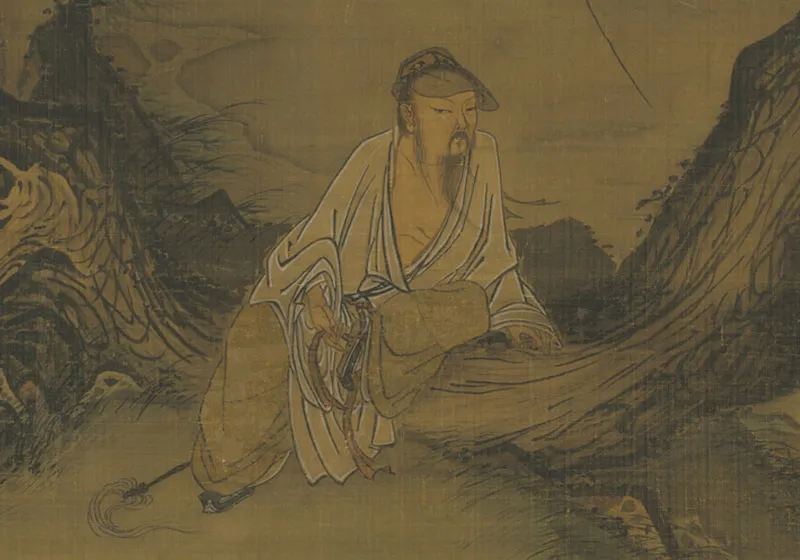
The composition centers on the Taoist ideal of the human figure nestled within nature, not dominating it. The scholar is a participant in the landscape, his presence serving to amplify the vastness of the surroundings rather than conquer them.
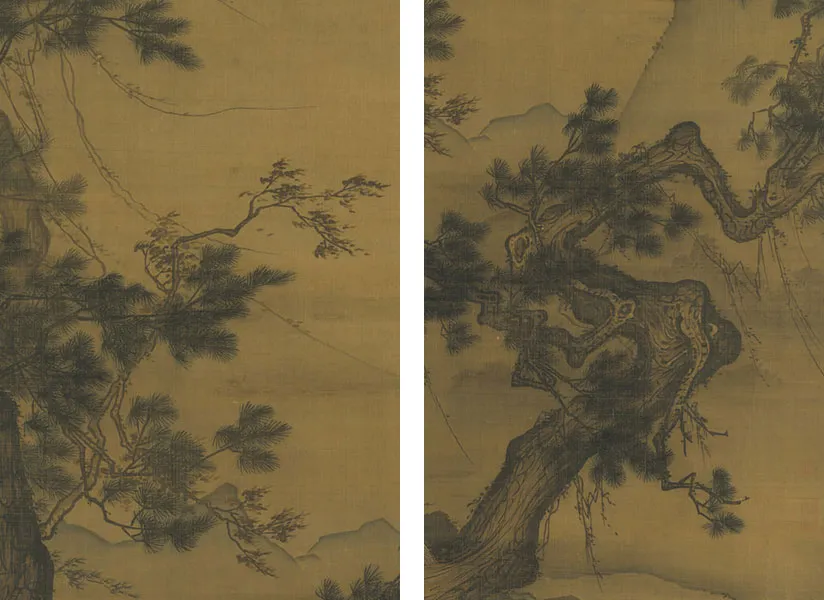
Seated beneath a gnarled pine, the sage-like figure appears lost in deep contemplation. He exudes an aura of detachment, his spirit untethered from worldly dust. The brushwork here is exquisitely fine; the texture of the pine bark, the individual needles, and the scholar’s wispy beard are rendered with a precision that contrasts with the vast, open space surrounding him.
The background mountains are faint, mere silhouettes against the silk. This “deep distance” technique implies that the universe extends far beyond the frame. The wind, invisible by nature, is given form through the swaying branches, animating the static image with a phantom breeze that the viewer can almost feel.
Title: Wind in Pines Among a Myriad Valleys (1124)
Artist: Li Tang (c.1049–after 1130)
Dynasty: Song
Collection: National Palace Museum, Taiwan
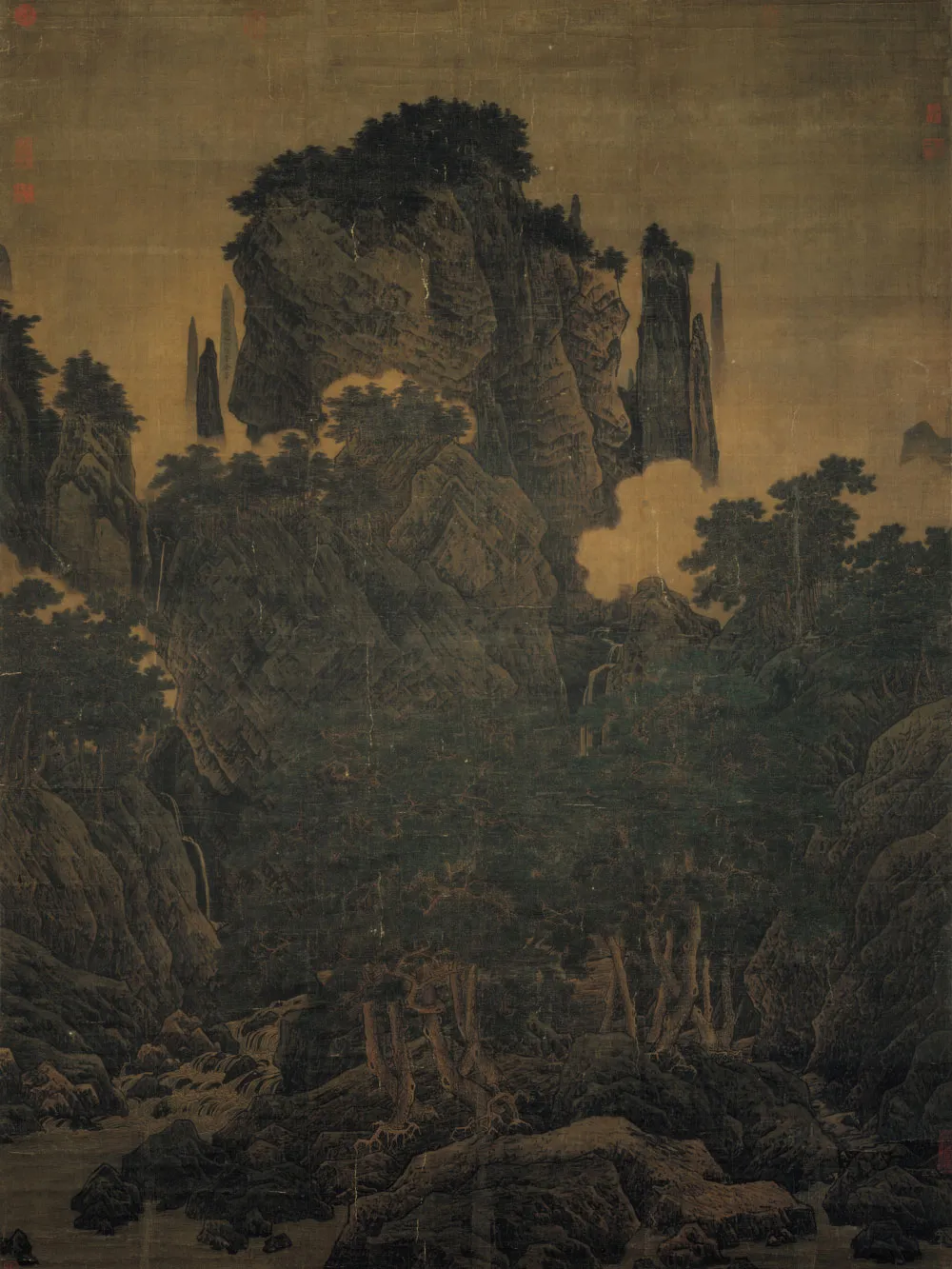
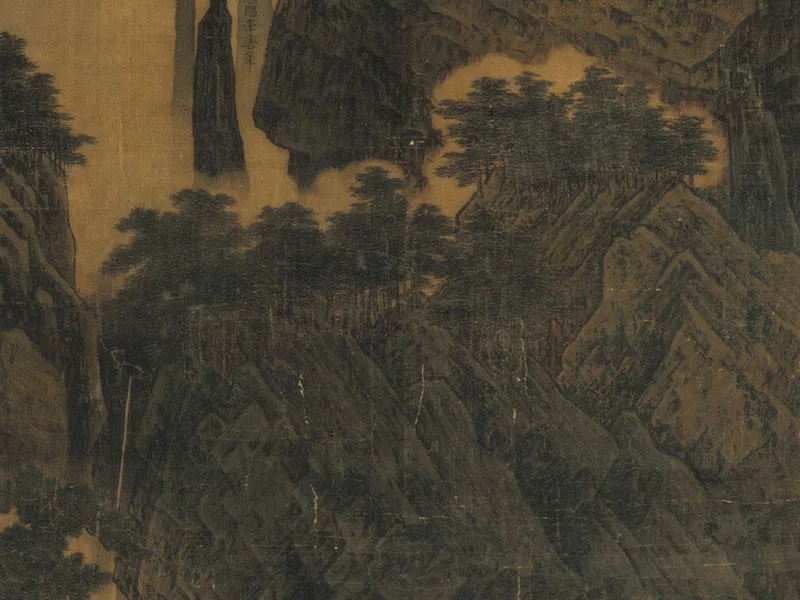
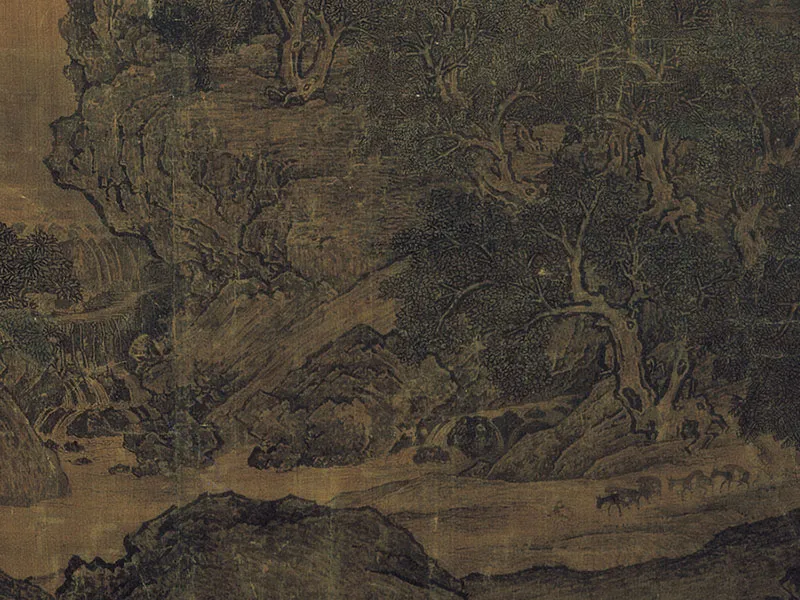
Li Tang stands as a bridge between the Northern and Southern Song styles. His work Wind in Pines Among a Myriad Valleys captures the monumental scale of the former while introducing the intimate, textured brushwork that would define the latter. This piece is renowned for its “axe-cut” strokes—sharp, slanted brush movements that mimic the rugged, chiseled face of cliffs.
The density of the composition is alleviated by the strategic placement of clouds, which split the mountainside and allow the painting to breathe. This use of blank paper to represent mist is a hallmark of the genre, turning emptiness into substance.
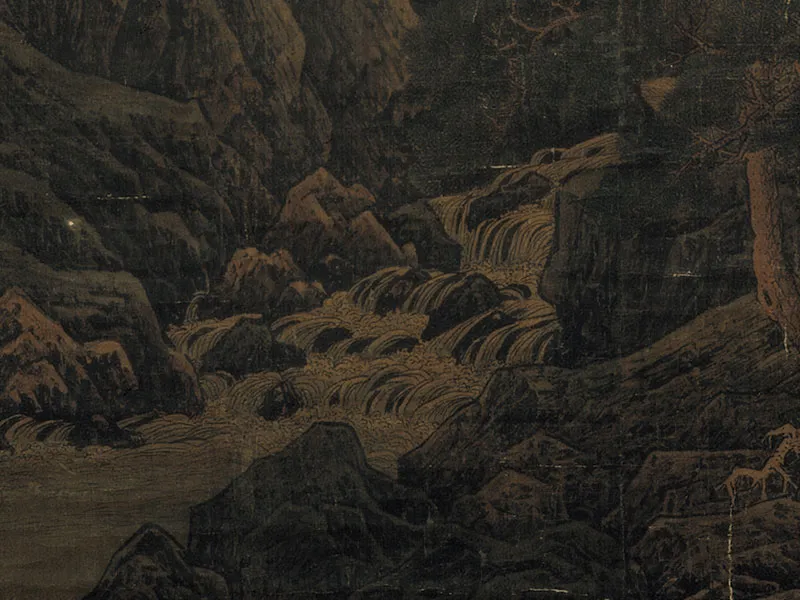
There is a dynamic contrast between the immovable mountains and the fluid water. Rapids tumble over rocks in the foreground, the spraying water depicted with a kinetic energy that suggests a deafening roar. Yet, as the stream widens, it settles into a tranquility that mirrors the philosophical journey from chaos to calm.
Li Tang’s realism is meticulous. He differentiates the environment through ink tonality: rocks near the water are saturated with dark, heavy ink to appear wet and mossy, while those higher up are rendered in lighter, drier strokes to convey their sun-baked aridity.
Title: Travelers Among Mountains and Streams (c.1000)
Artist: Fan Kuan (960–1030)
Dynasty: Northern Song
Collection: National Palace Museum, Taiwan
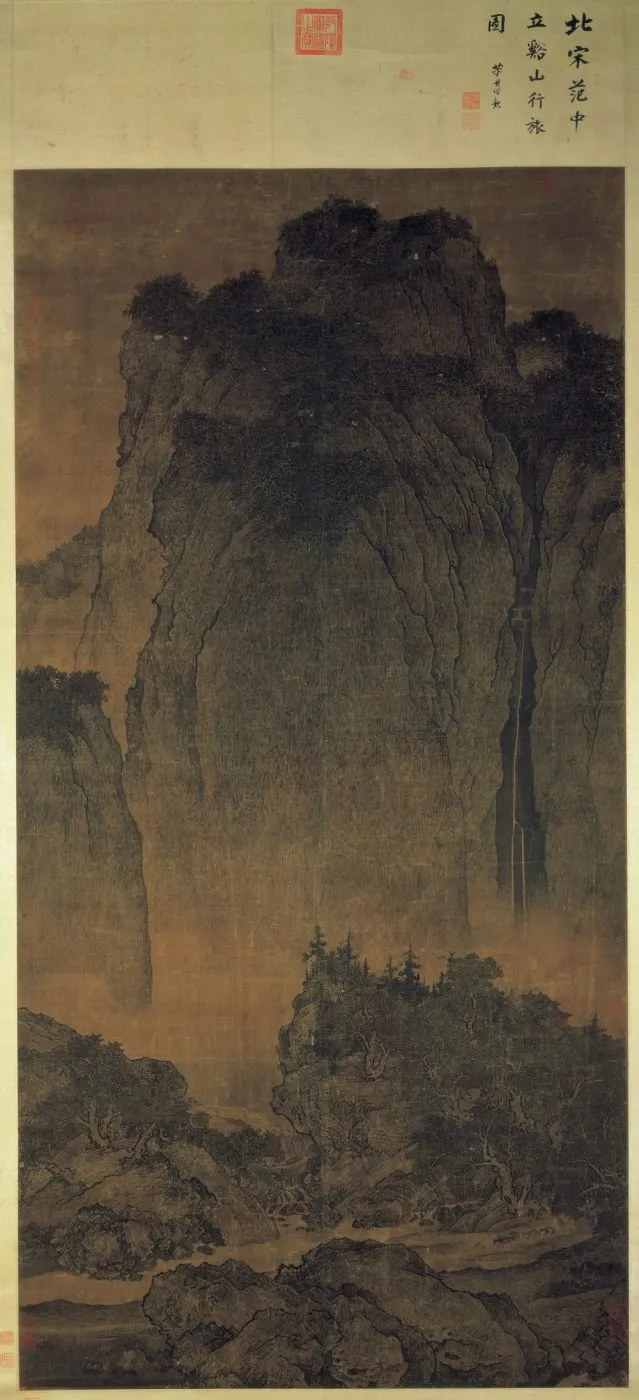
Often cited as the greatest landscape painting in Chinese history, Fan Kuan’s surviving masterpiece is a vision of the cosmic order. Standing nearly seven feet tall, it presents nature as a towering, majestic force. Fan Kuan, a recluse who sought truth in the mountains, translated his awe into this “monumental landscape.”
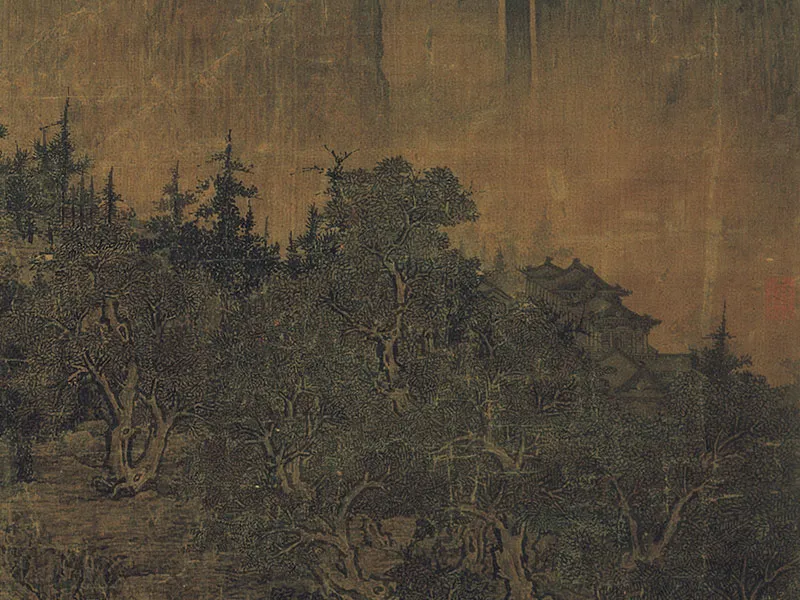
The central peak dominates the composition, occupying two-thirds of the scroll. It is a visual representation of the earth’s spine, rendered with “raindrop strokes” that give the rock a tactile, granular weight. A slender waterfall plummets from the heights, a thread of white connecting the heavens to the earth.
In the foreground, a mule train and two figures trudge along a path. They are rendered microscopically small—so tiny that they are easily missed at first glance. This is intentional. By juxtaposing the colossal mountain with the minute humans, Fan Kuan illustrates the Taoist perspective: humanity is insignificant in the face of nature’s eternal grandeur.
A temple, barely visible, nestles in the mid-ground forest. It is the only other sign of human presence, suggesting that the only way to dwell in such a place is to align oneself with its rhythms. The detail is so precise that the scene invites the viewer to dissolve their ego and vanish into the forest.
Title: Sailboats and Pavilions
Artist: Li Sixun (651–716)
Dynasty: Tang
Collection: National Palace Museum, Taiwan
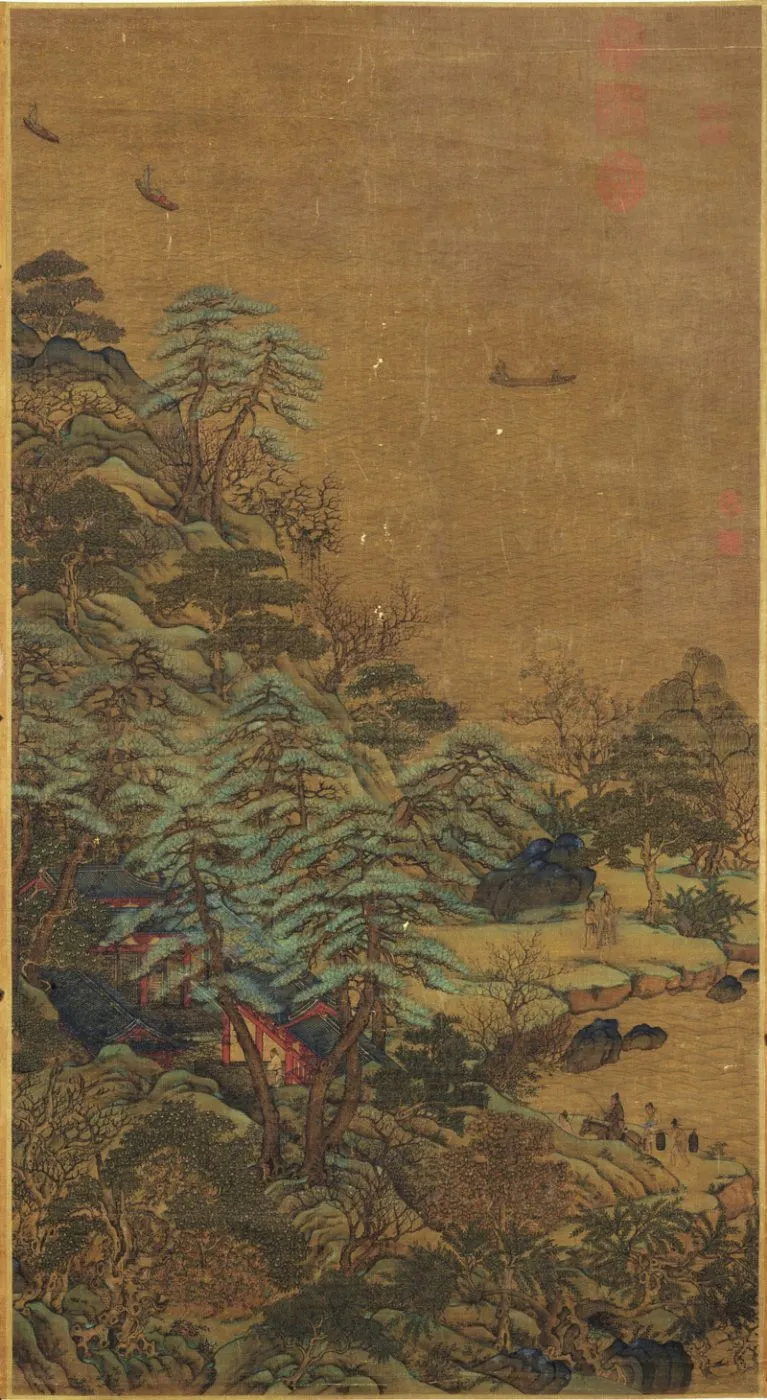
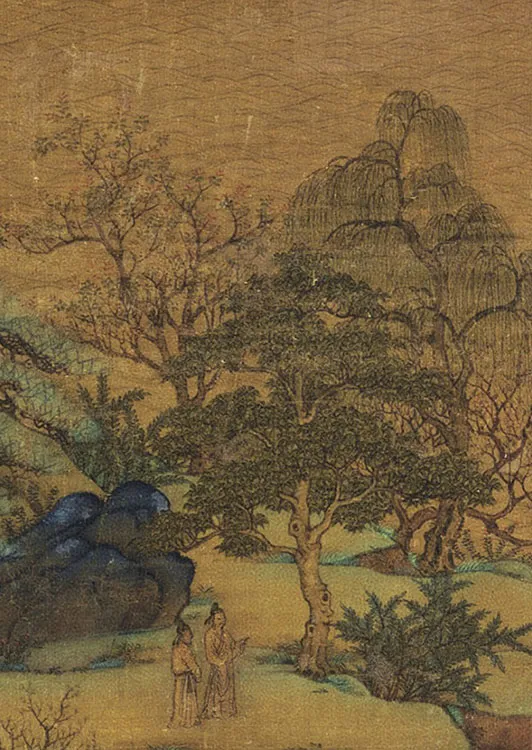
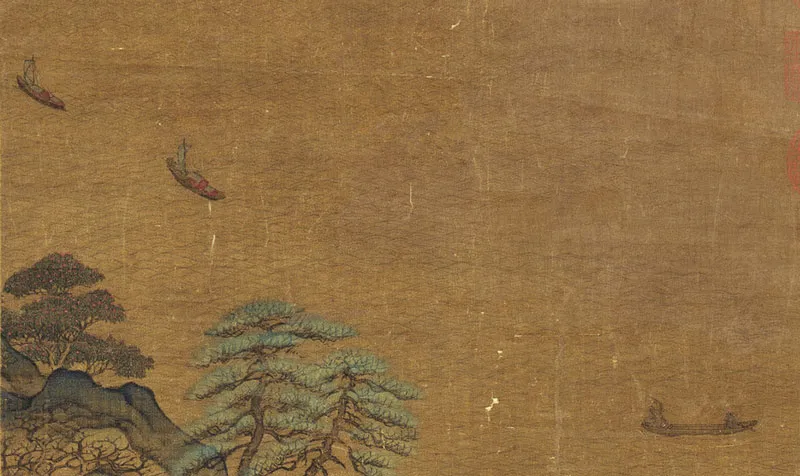
Before the monochrome aesthetic of the Song Dynasty took hold, the Tang Dynasty favored the “gold-and-green” style. Li Sixun’s work is a vibrant celebration of this tradition, using mineral pigments—azurite blue and malachite green—to depict a lush, paradisiacal spring.
The painting captures the joy of a spring outing, a beloved theme in Chinese art. Amidst the shimmering mineral colors, architectural details emerge—the red and black rooftop of a pavilion stands as a geometric counterpoint to the organic curves of the mountains.
Along the riverbank, figures in Tang attire engage in leisure. One rides a mule, others converse by the water. These simple lines convey the soft drape of fabric and the relaxed posture of men enjoying the season of renewal.
The botanical details are specific and varied. Deciduous trees sport fresh, tender leaves, while flowering trees burst with red blossoms. Each element is outlined in fine ink before being filled with heavy color, creating a jeweled, decorative effect that differs sharply from the ink-wash styles of later eras.
On the river, rendered with faint wavy lines, small sailboats drift. Though they appear as mere outlines from a distance, close inspection reveals the rigging, masts, and even the tiny figures manning them. The painting is a sensory experience; one can imagine the fragrance of pine and the sound of water lapping against the shore.
The composition is balanced by a mountain slope that divides the lush vegetation from the open water. It is a world fully alive, inviting the viewer to step out of their reality and into this idealized spring.
Title: Pavilions Among Mountains and Rivers
Artist: Yan Wengui (ca. 967–1044)
Dynasty: Northern Song
Collection: Osaka City Museum of Fine Art
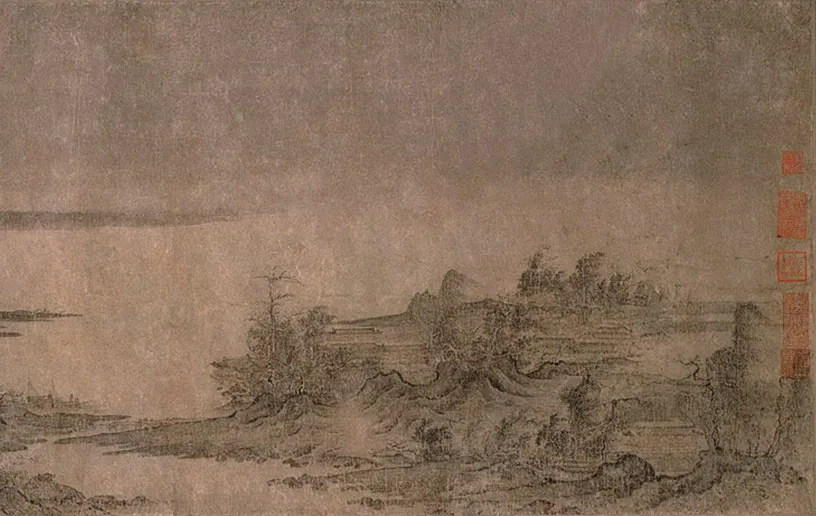
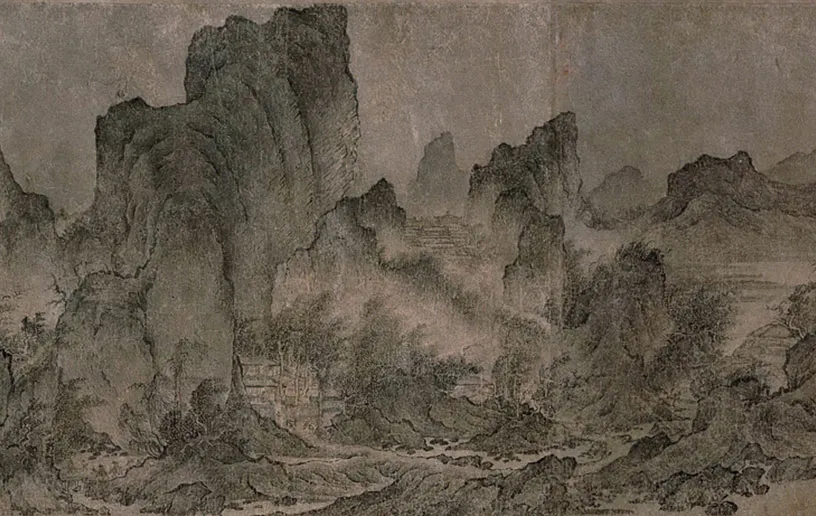
Yan Wengui, a master whose works were known as “Yan-style scenes,” specialized in the handscroll format—a medium that introduces the dimension of time into painting. Unlike a hanging scroll seen all at once, a handscroll is unrolled section by section, taking the viewer on a linear journey.
This panoramic piece uses short, dense strokes to outline the rugged contours of the terrain. As the scroll unrolls, the landscape evolves from rising hills blanketed in vegetation to towering peaks shrouded in mist.
The atmosphere thickens near the center of the scroll. Clouds obscure the mountain bases, infusing the scene with a celestial mystery. Pavilions and human dwellings are scattered throughout, smaller than the mountains yet essential for giving the landscape scale and habitability.
The wind is a palpable character in this narrative. Trees lean uniformly to the right, bending under invisible pressure. This force is further emphasized by the minute human drama: figures struggle against the gale, one pushing forward with an umbrella shielding him from the wind.
The scroll culminates in a visual crescendo of layered mountains and rushing water. A waterfall meets a surging river that flows off the edge of the paper, a poetic invitation for the viewer to continue the journey in their imagination.
Title: Withered Tree and Strange Rock
Artist: Su Shi (1037–1101)
Dynasty: Northern Song
Collection: Private Collection
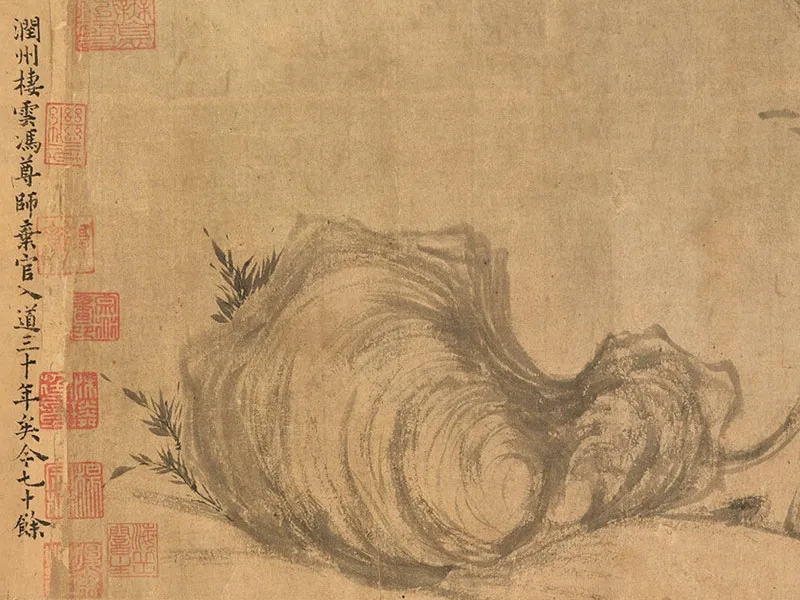
Su Shi was a titan of the Song Dynasty—a poet, politician, calligrapher, and painter. He championed “literati painting,” which prioritized personal expression over realistic representation. This work, which commanded over $56 million at auction, is a profound example of spiritual autobiography.
The imagery is stark: a twisted, leafless tree and a peculiar rock. Yet, in this desolation, there is defiance. The tree, bent by time and hardship, twists upward, its branches reaching for the sky like antlers. It mirrors Su Shi’s own life—a career marked by political exile and hardship, met with unwavering optimism.
The “ugliness” of the rock is celebrated as character. In Chinese aesthetics, the strange and gnarled are often valued more than the pretty, for they possess gu (ancient structural strength).
Life persists even here. From behind the barren stone, delicate bamboo shoots and grass emerge. These humble signs of growth serve as a counter-narrative to the withered tree, a reminder that hope often resides in the margins of despair.
Title: Magpies and Hare (1061)
Artist: Cui Bai (fl. 1050–1080)
Dynasty: Northern Song
Collection: National Palace Museum, Taiwan
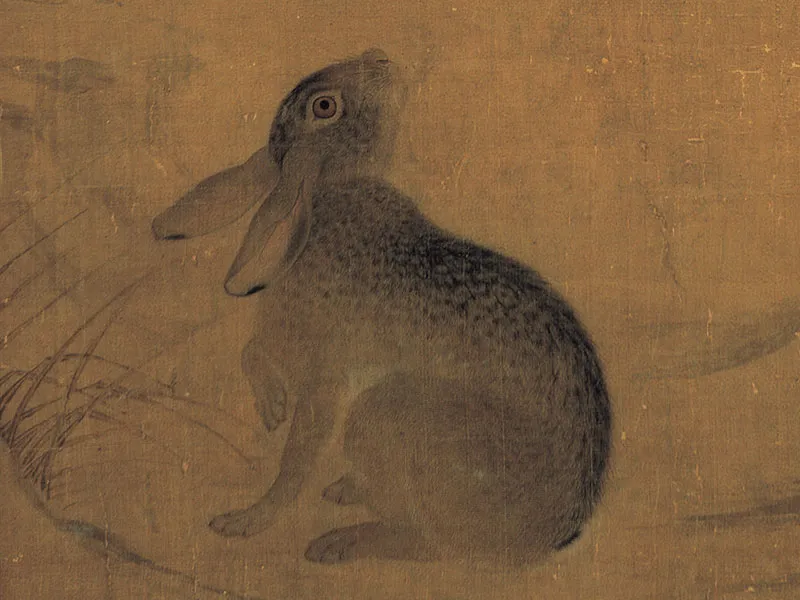
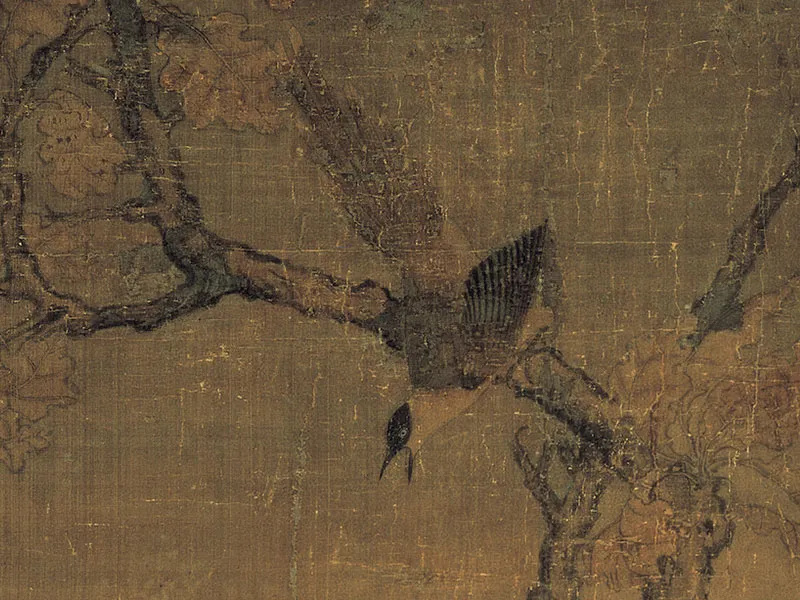
Cui Bai’s Magpies and Hare is a masterpiece of the “bird-and-flower” genre, but it transcends mere decoration to capture a dramatic psychological moment. The setting is late autumn, evidenced by the bare branches and the mottled fur of the hare, which has grown its winter coat.
The painting is not a static portrait but a snapshot of interaction. Two magpies caw from a branch, momentarily arresting the attention of a hare below. The animal pauses, one paw suspended, looking back with a mixture of curiosity and caution.
Cui Bai’s technical virtuosity is visible in the fur. He varies the brushstrokes to match the anatomy—long and fluffy along the spine, short and coarse on the legs. The texture is so tactile it seems one could stroke the silk and feel the warmth of the animal.
The composition subtly mirrors the Taoist Taiji symbol. The curve of the slope and the branches divide the space in a dynamic S-curve. The dark hare anchors the lighter background, while the pale-bellied magpie contrasts against the darker upper reaches. It is a moment of natural balance, held together by the invisible wind that rustles the few remaining leaves.
Joining Shen Yun in 2007, Angelia Wang (b. Xi'an, China) represents a benchmark in the…
"We're a team." It is a simple phrase, just three words, yet it holds more…
In the high-stakes theater of grand opera, survival requires a bifurcation of the self. For…
They say the second year of marriage is defined by cotton. It sounds simple, almost…
Two decades together is no small feat. It is a milestone that speaks to patience,…
poems The Merchant of Venice Student Edition---PDF and Complete TextThe water in Venice is never…
There is a specific kind of silence that settles in the garden after a loss.…
There is a specific kind of magic that happens when a photographer doesn't just capture…
In the ancient Italian town of Santarcangelo di Romagna, where history clings to the cobblestones…
The Princeton Club of New York, usually a bastion of quiet networking, recently became the…
A decade together is no small feat. It’s ten years of inside jokes, shared silences,…
In the vast and fragmented linguistic landscape of China, the spoken word has always been…
In an art world often preoccupied with jarring intellectualism or the pursuit of hyper-realistic technicality,…
For Joseph Scheier-Dolberg, the Oscar Tang and Agnes Hsu-Tang Associate Curator of Chinese Paintings at…
I still remember watching you when Grandma passed away. I saw how deeply you mourned,…
There is a distinct difference between seeing a moment with your eyes and seeing how…
Clothing has never been merely about protection against the cold. Across five millennia of human…
The first year of marriage is often a whirlwind of emotions. It is a period…
Ralph Waldo Emerson once observed that "Earth laughs in flowers," a poetic sentiment that reverberates…
There is a specific gravity to a poem carried in the pocket. It is different…
Mother’s Day is approaching, and if you are miles away from the woman who raised…
Winter has a way of changing the landscape of our lives, not just the view…
The allure of Japanese art often lies in its masterful negotiation between the void and…
There is a distinct fairy-tale quality to the work of Lison de Caunes, a resonance…
William Wordsworth (1770–1850) remains a titan of English letters, a figure whose life spanned the…
I was thinking today about how much ground we've covered together. You know, between two…
There is a paradoxical nature to porcelain. In its raw state, it is dense earth;…
The sonnet is not merely a form; it is a vessel for concentrated thought. To…
The intersection of heritage craftsmanship and avant-garde installation art often yields the most compelling dialogues…
I've been thinking a lot about the power of visibility lately, especially as we celebrate…