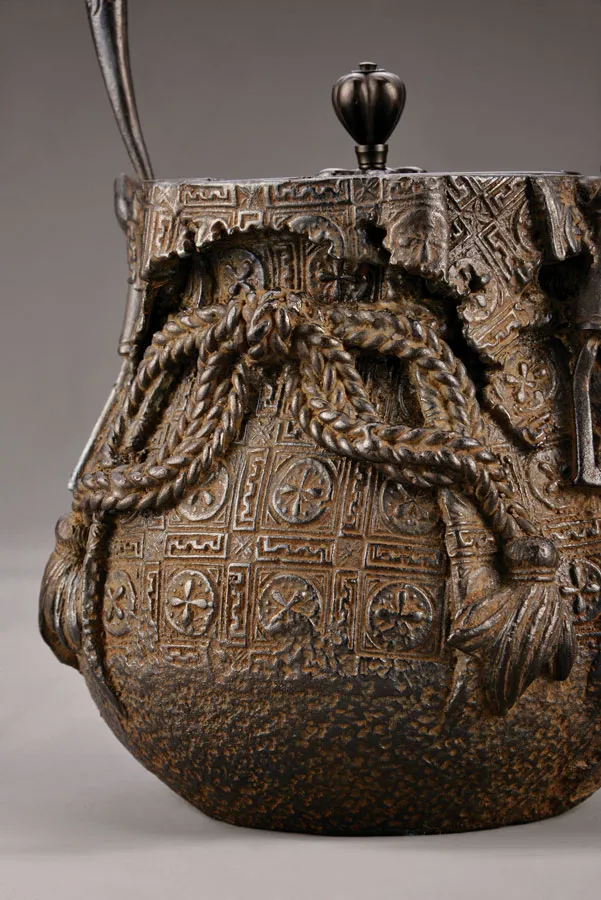
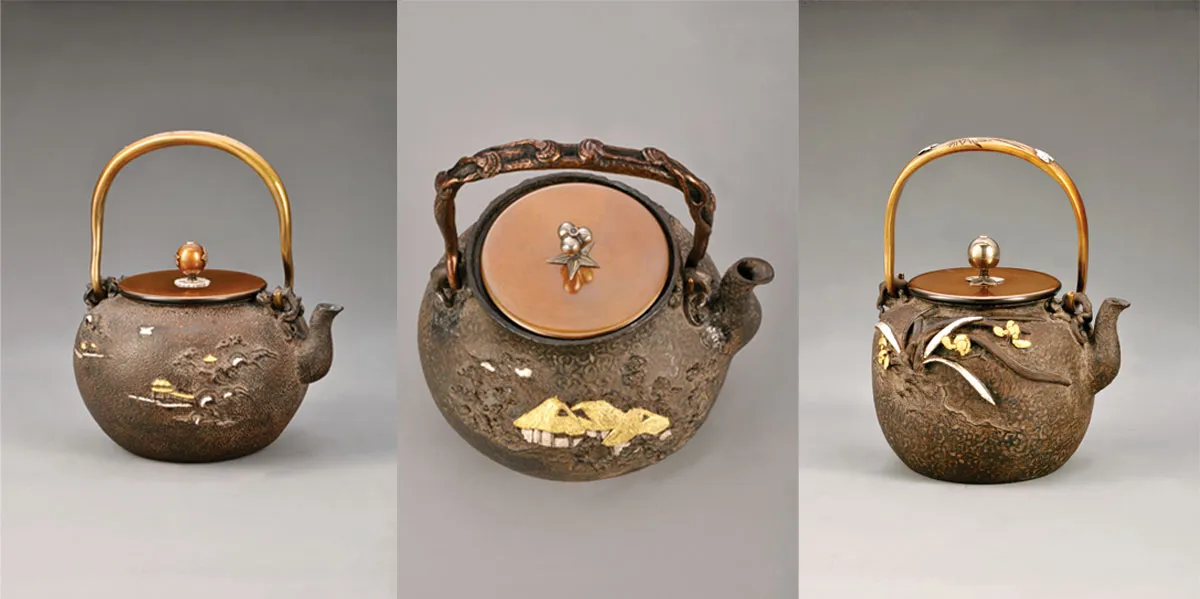
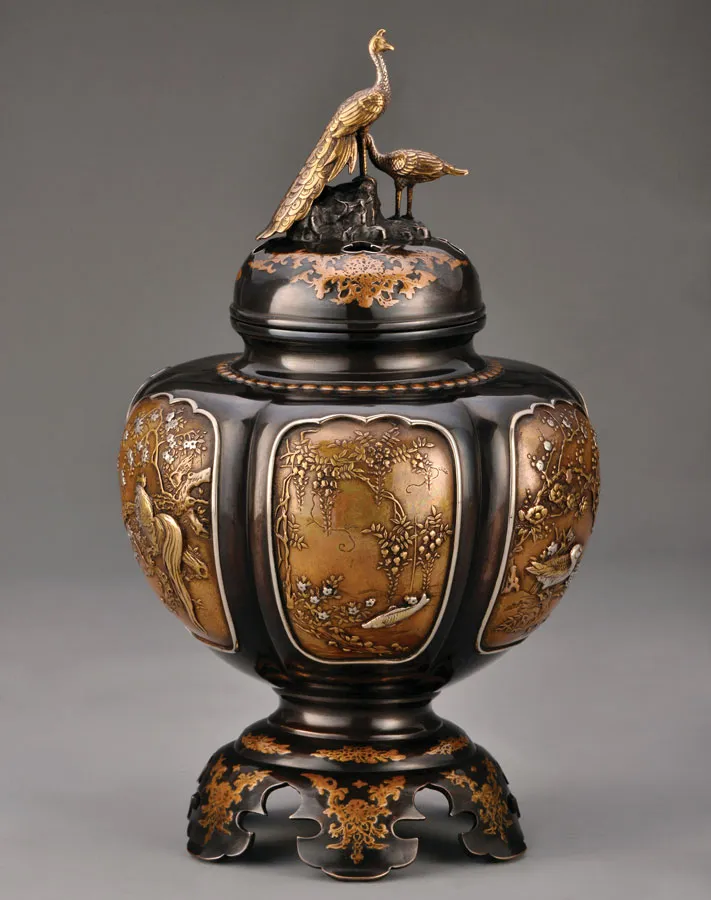
Traditional Japanese tea kettle and incense holder by Kisendo
In the quiet workshops of Takaoka, Japan, time moves differently. It does not tick forward in seconds, but accumulates in layers of clay, wax, and molten iron. Here, the creation of a single tea kettle or incense burner is not a manufacturing task, but a months-long dialogue between nature and the human hand.
Kisendo, a name that resonates with the heritage of Japanese metalwork, operates not merely as a brand, but as a custodian of an ancient alchemy. To understand these vessels is to understand the paradox of wabi-sabi: the pursuit of a perfection that acknowledges, and even celebrates, the inevitability of the imperfect.
The roots of this artistry run deep into the soil of Takaoka. Founded in 1609 by the ruler Maeda Toshinaga, the town was envisioned as a sanctuary for metalworkers. Seven master artisans were originally summoned to the site—then a sparsely populated region known as Sekino—to forge the ironclad legacy of the domain. Four centuries later, Takaoka stands as a Japan Heritage site, a living museum where the hammering of metal is the heartbeat of the city.
Within this historical ecosystem, Kisendo acts as a conductor. Susumu Yotsukawa, the third-generation owner, describes the process as a symphony where elite artisans work independently yet in unison. “We know who to work with to bring about the best quality item,” Yotsukawa explains. The brand specializes in the vision—design and development—while the master artisans of Takaoka translate that vision into tangible reality.
This structure ensures that no single error propagates through the chain. “When you hand your work to the next artisan, if your work is not complete or is not perfect, then it will affect the person who will work on the product after you,” says Yotsukawa. It is a collective responsibility, a pact of excellence that machines, with their soulless precision, can never replicate. The fine artistic lines and the intuitive nuances of the metal demand the tactile sensitivity of the human hand.
The philosophy governing Kisendo is encoded in its very name. Ki (joy), Sen (fountain), and Do (house) combine to form “The House of the Fountain of Joy.” This nomenclature reflects the founding wish of Yotsukawa’s grandfather, who established the parent company, Yotsukawa Seisakujo, in 1945: to create objects that bring happiness to daily life.
Deeply rooted in Buddhism, the aesthetic of Kisendo draws from the concept of wabi-sabi, crystallized by the tea master Sen no Rikyu in the Edo period. It is a philosophy that finds profound beauty in the incomplete, the impermanent, and the rustic.
A Kisendo kettle often features an unpolished surface, rough edges, or a graininess reminiscent of the sand used in casting. These are not flaws, but deliberate artistic choices. “We like to give the kettles the touch and appearance of something there in nature, from the earth or soil,” Yotsukawa observes. Whether it is the texture of a rock, the line of a leaf, or the sound of the ocean, nature’s chaotic beauty is captured in iron and copper.
The height of Kisendo’s craftsmanship is perhaps best exemplified by their commissions for Japan’s imperial family. The Tamagatakujaku Koro, an incense burner designed by Yotsukawa’s father, is a masterclass in symbolism and form.
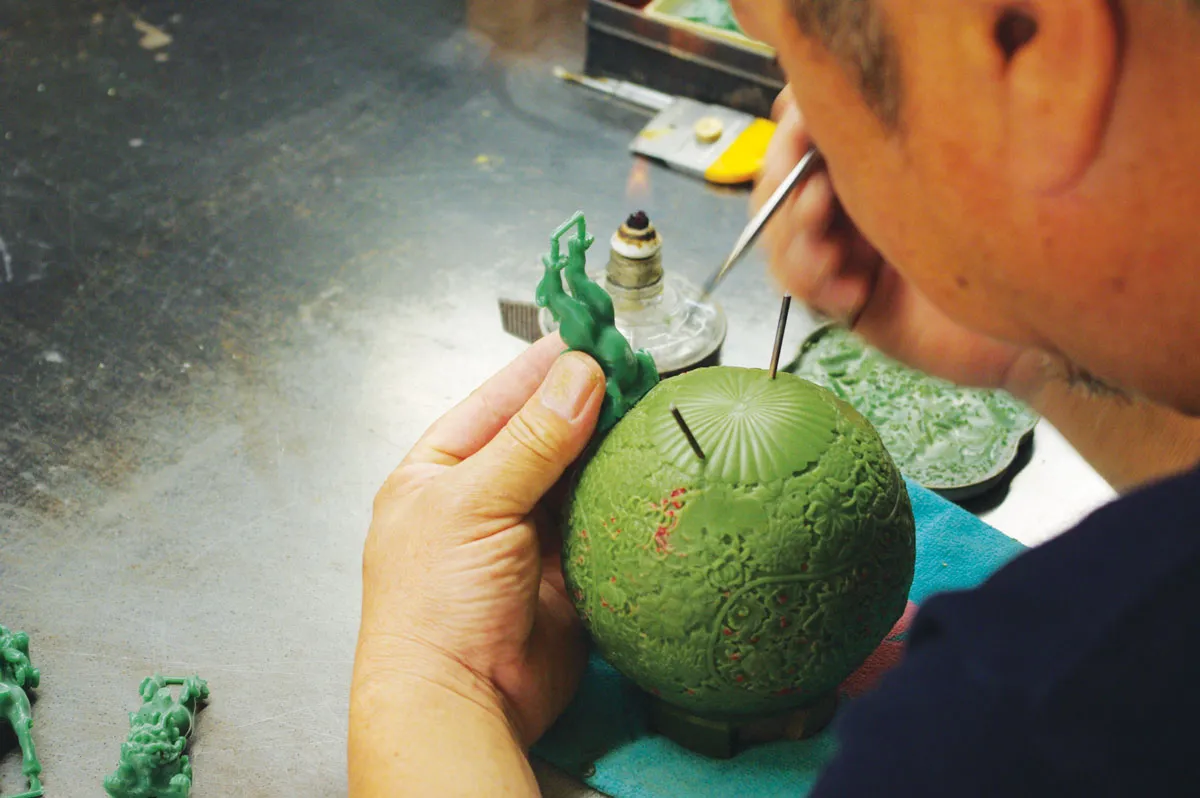
The piece is a sphere—”there is no end to it,” notes Yotsukawa—representing the cosmos and the cycle of reincarnation. It is supported by three Chinese lions, guardians of the home and the virtues held within. Adorned with phoenixes representing longevity and orchids symbolizing nobility and integrity, the burner is a physical manifestation of Oriental philosophy. It is a vessel where traditional values and legendary motifs coalesce into a single, seamless form.
The technique employed to create these masterpieces is known as “lost-wax casting,” a method dating back to 3,000 B.C. It is a process of creation through destruction, where the original model must be sacrificed to birth the final metal form.
The journey begins with a master model, painstakingly sculpted from clay or wood. This is the definitive step; every petal, every texture must be refined here, for the metal will remember every detail of the model.
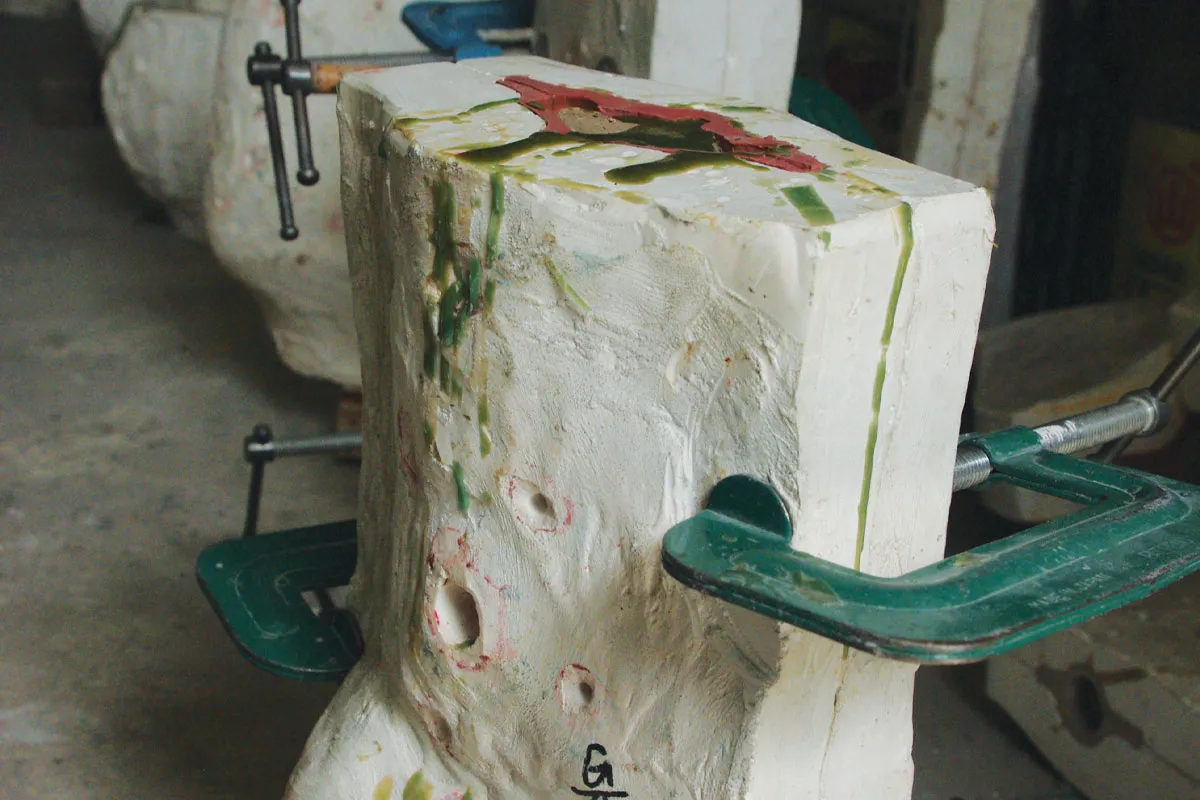
Once the master model is perfected, a silicone mold is created to capture its negative space. From this, a wax copy is produced. This wax replica is the ephemeral ghost of the final object—delicate and temporary. An artisan uses heated precision tools to refine the wax, ensuring the vision is sharp before the transformation begins.
To prepare for the molten metal, “spruing” is attached—wax channels that look like drinking straws. These will eventually become the arteries through which the liquid metal flows.
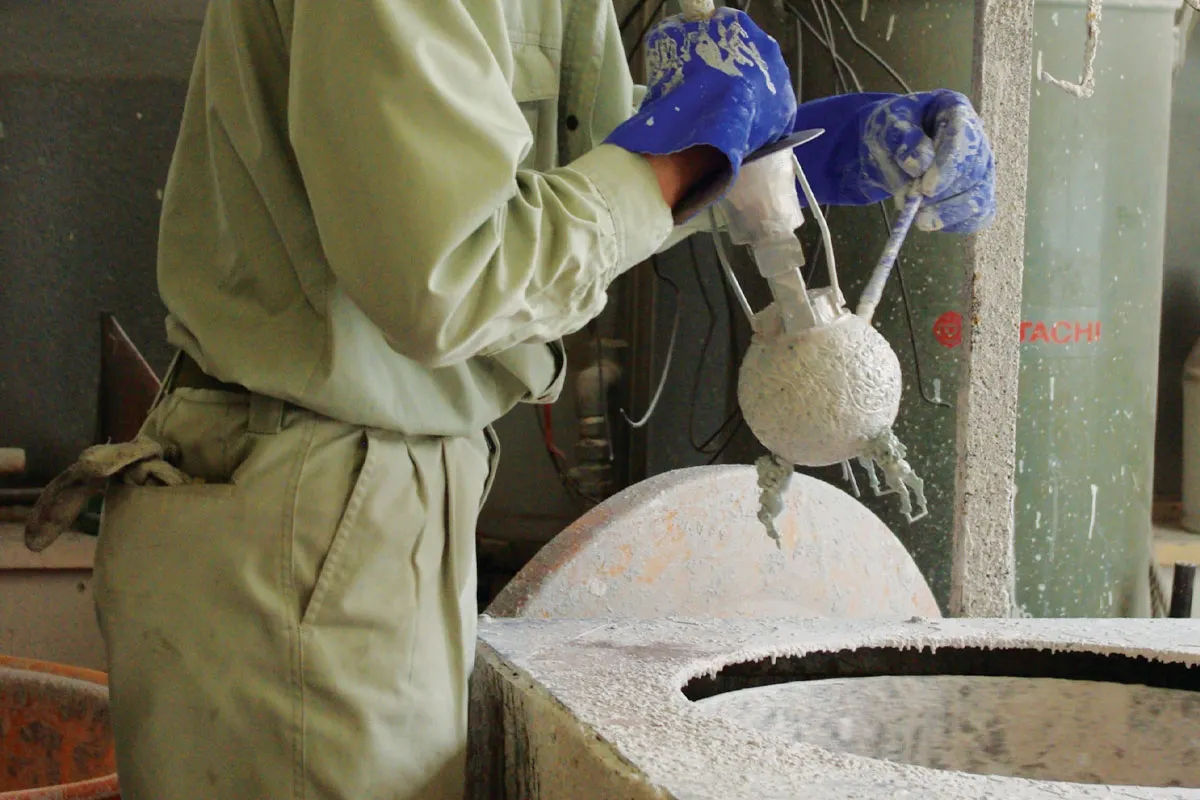
The wax assembly is then dipped repeatedly into a fine, heat-resistant sandy slurry. Layer by layer, a ceramic shell is built up around the wax, encasing it in a protective cocoon.
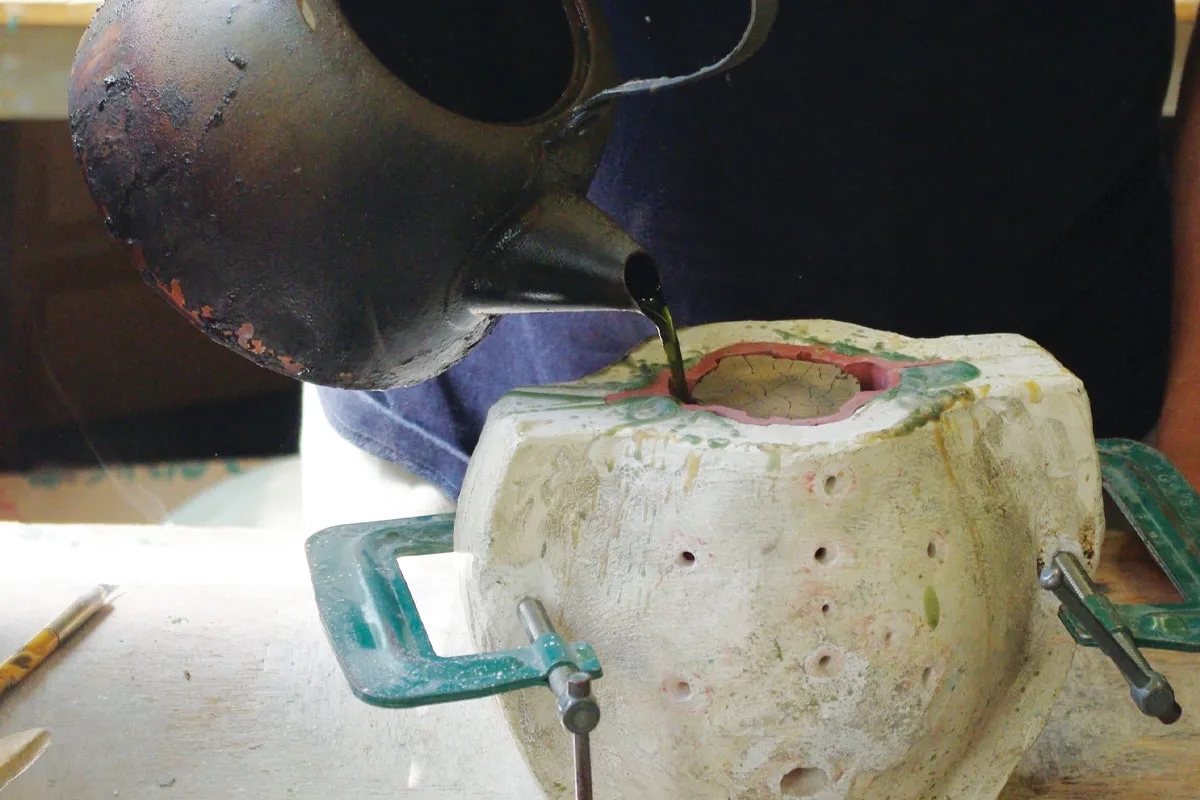
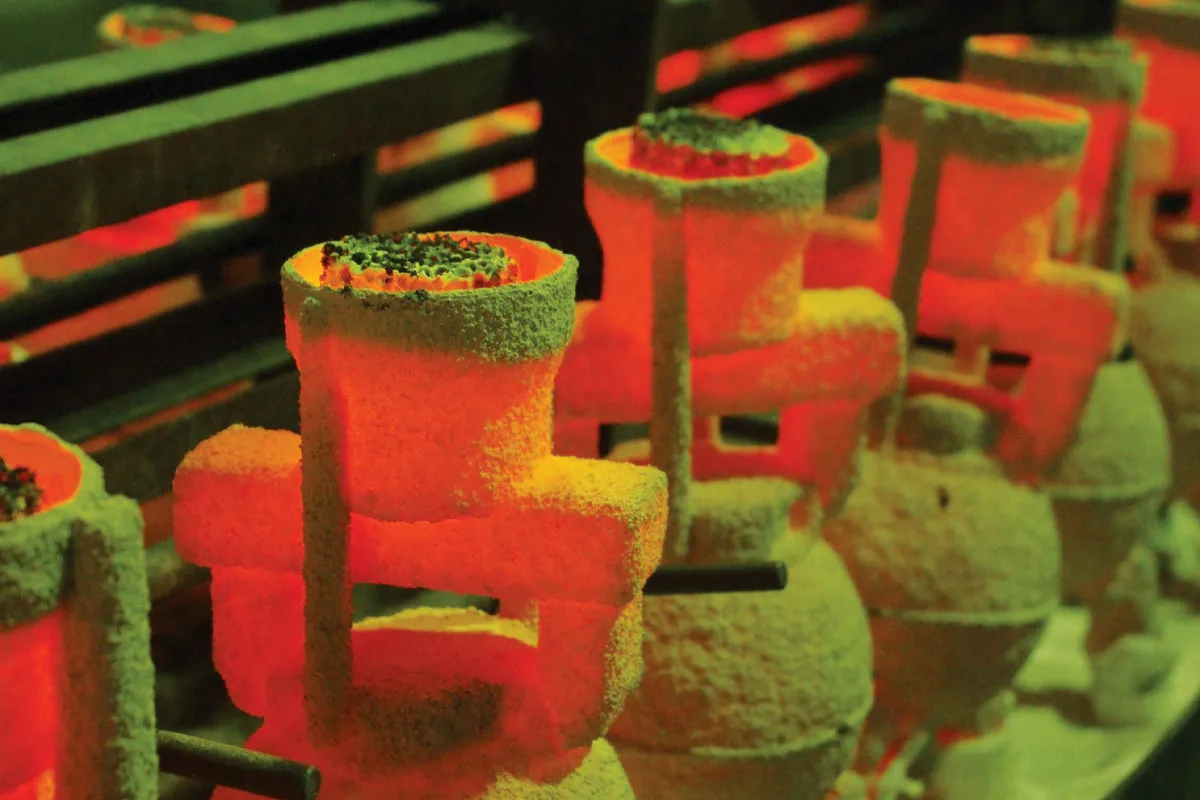
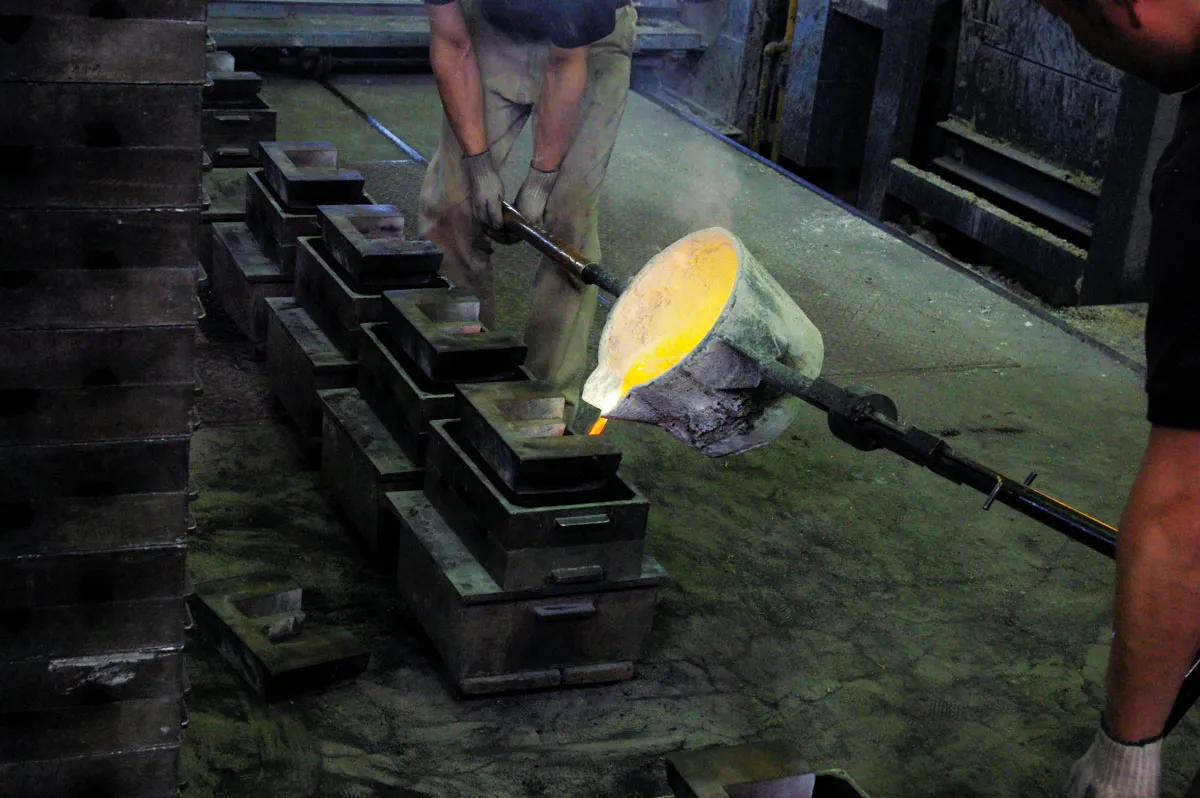
Then comes the fire. The shell is heated, causing the wax inside to melt and drain away—hence “lost wax.” What remains is a void, a hollow memory of the object waiting to be filled. Into this empty space, copper or iron heated to 600°F is poured.
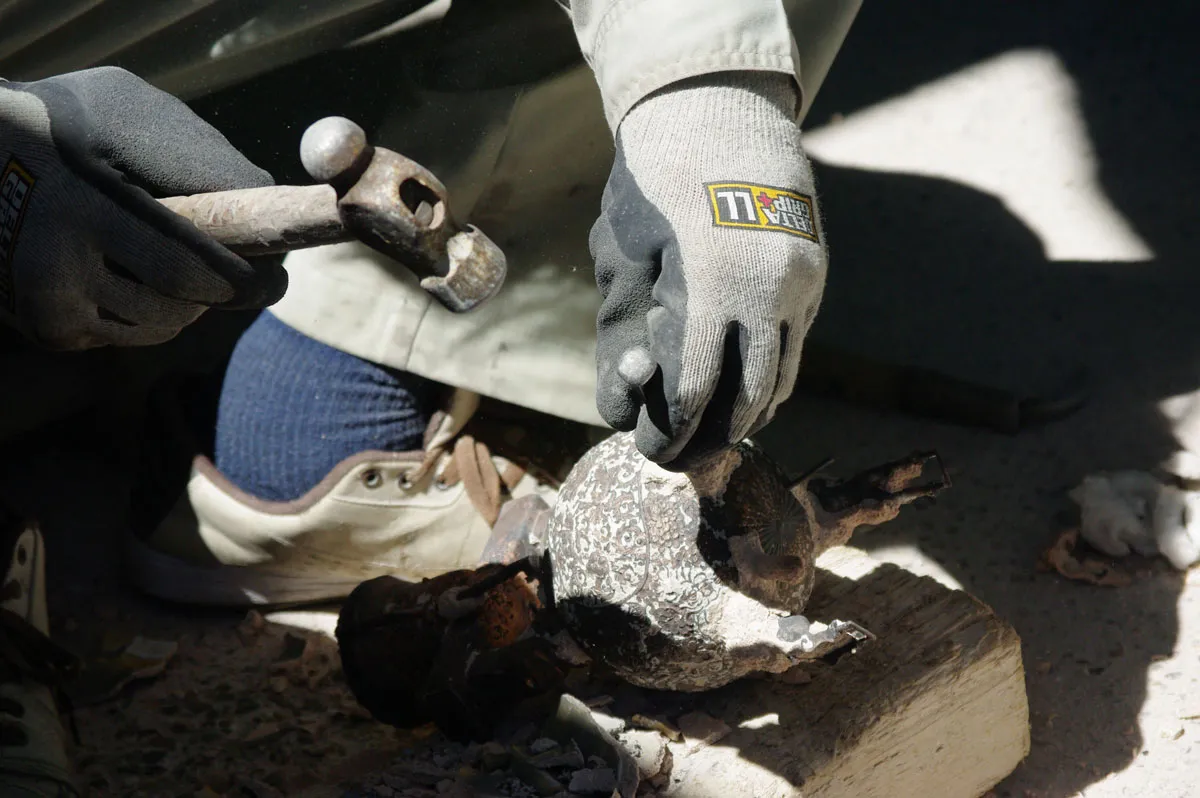
As the metal cools and hardens overnight, it claims the space the wax once held. The sandy shell, having served its purpose, is broken away with a hammer, revealing the rough metal form beneath.
The final stages require immense patience. The spruing channels are cut away, and the scars of the process are repaired. A master metal artisan then takes up chisels and finishing tools to chase the minute patterns, bringing sharpness back to the design.
The resulting objects are studies in contrast. A Kisendo kettle often balances the rustic with the refined—a shiny, polished handle or a gold-leaf accent set against a body that feels ancient and earthy.
“This is the fine balance… that actually stand far away from each other but coexist and make a harmony,” Yotsukawa reflects. It is the interplay between the finished and the unfinished, the heavenly ideal and the earthly reality. In the hands of Kisendo’s artisans, metal becomes more than material; it becomes a meditation on the beauty of the natural world, preserved in iron for generations to come.
Joining Shen Yun in 2007, Angelia Wang (b. Xi'an, China) represents a benchmark in the…
"We're a team." It is a simple phrase, just three words, yet it holds more…
In the high-stakes theater of grand opera, survival requires a bifurcation of the self. For…
They say the second year of marriage is defined by cotton. It sounds simple, almost…
Two decades together is no small feat. It is a milestone that speaks to patience,…
poems The Merchant of Venice Student Edition---PDF and Complete TextThe water in Venice is never…
There is a specific kind of silence that settles in the garden after a loss.…
There is a specific kind of magic that happens when a photographer doesn't just capture…
In the ancient Italian town of Santarcangelo di Romagna, where history clings to the cobblestones…
The Princeton Club of New York, usually a bastion of quiet networking, recently became the…
A decade together is no small feat. It’s ten years of inside jokes, shared silences,…
In the vast and fragmented linguistic landscape of China, the spoken word has always been…
In an art world often preoccupied with jarring intellectualism or the pursuit of hyper-realistic technicality,…
For Joseph Scheier-Dolberg, the Oscar Tang and Agnes Hsu-Tang Associate Curator of Chinese Paintings at…
I still remember watching you when Grandma passed away. I saw how deeply you mourned,…
There is a distinct difference between seeing a moment with your eyes and seeing how…
Clothing has never been merely about protection against the cold. Across five millennia of human…
The first year of marriage is often a whirlwind of emotions. It is a period…
Ralph Waldo Emerson once observed that "Earth laughs in flowers," a poetic sentiment that reverberates…
There is a specific gravity to a poem carried in the pocket. It is different…
Mother’s Day is approaching, and if you are miles away from the woman who raised…
Winter has a way of changing the landscape of our lives, not just the view…
The allure of Japanese art often lies in its masterful negotiation between the void and…
There is a distinct fairy-tale quality to the work of Lison de Caunes, a resonance…
William Wordsworth (1770–1850) remains a titan of English letters, a figure whose life spanned the…
I was thinking today about how much ground we've covered together. You know, between two…
There is a paradoxical nature to porcelain. In its raw state, it is dense earth;…
The sonnet is not merely a form; it is a vessel for concentrated thought. To…
The intersection of heritage craftsmanship and avant-garde installation art often yields the most compelling dialogues…
I've been thinking a lot about the power of visibility lately, especially as we celebrate…