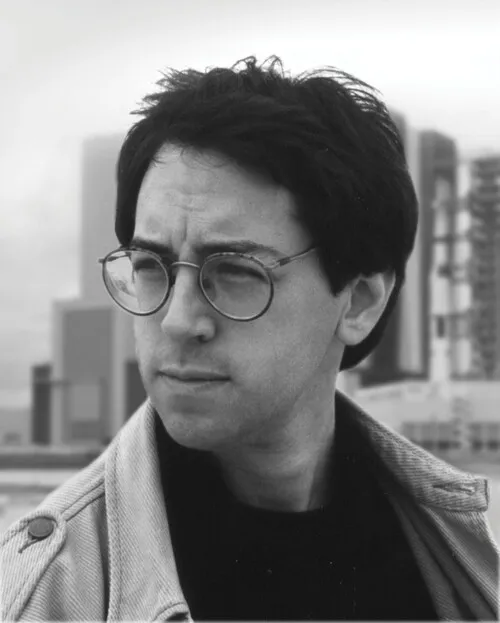
Dr. David West Reynolds studied ancient Egyptian and Roman history at the Kelsey Museum of Archaeology. Photo by Daniel Erickson, Phaeton Group
Forty years ago, within the hushed, velvet shadows of a museum in Washington, D.C., a confrontation took place across three millennia. A ten-year-old boy stood transfixed before the death mask of King Tutankhamun. The object was not merely an artifact; it was a dazzling broadcast of intent—polished gold glowing with an inner light, lapis lazuli cut with mathematical precision, capturing the eternal youth of a long-dead pharaoh.
To the young David West Reynolds, this was more than a display of wealth; it was a silent testament to a civilization’s technical mastery and spiritual ambition. Yet, beneath the awe lay a haunting question, one that would germinate for decades: How does a culture capable of such magnificence fall into ruin? And where do we stand in that cycle?
That moment of wonder did not fade; it evolved into a methodology. Today, Dr. David West Reynolds stands as a unique figure in the landscape of modern exploration—a scientist who treats mythology as a map, and an archaeologist who excavates the future as rigorously as the past.
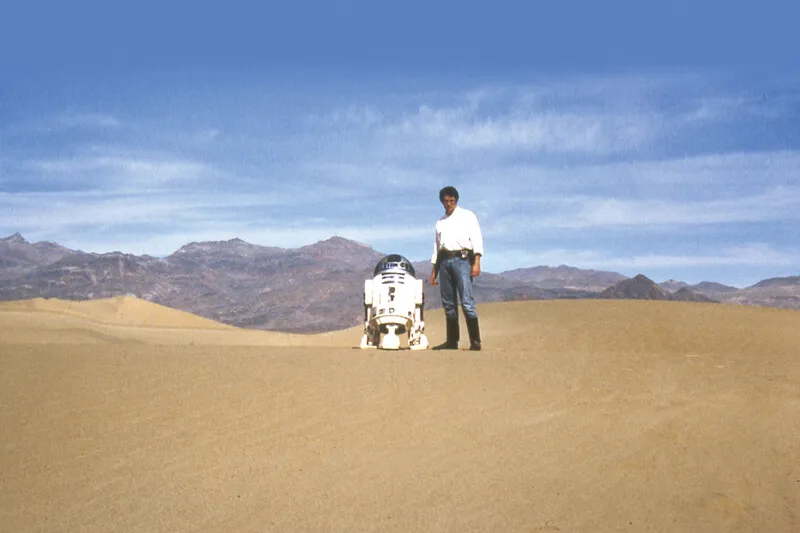
Reynolds’ trajectory has never adhered to the linear safety of academia. His life is a mosaic of divergent worlds: the prehistoric silence of dinosaur fossils, the sterile grandeur of NASA’s lunar labs, and the cinematic deserts of the Star Wars universe.
Growing up near the Falls of the Ohio, where 400-million-year-old coral reefs jut from the riverbed, Reynolds learned early to read the language of stone. “Look closely,” his mother urged him, instilling a habit of observation that would later serve him in the most unlikely of dig sites.
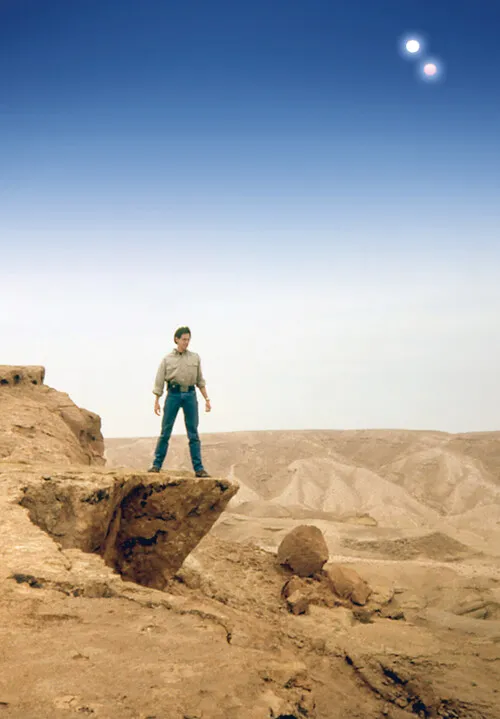
In 1995, this fusion of archaeological rigor and narrative curiosity led him to Tunisia. His objective was not a Roman ruin, but a modern myth: the lost filming locations of the planet Tatooine from George Lucas’s 1977 Star Wars. In the pre-digital age, the locations had been swallowed by the Sahara, forgotten even by the studio.
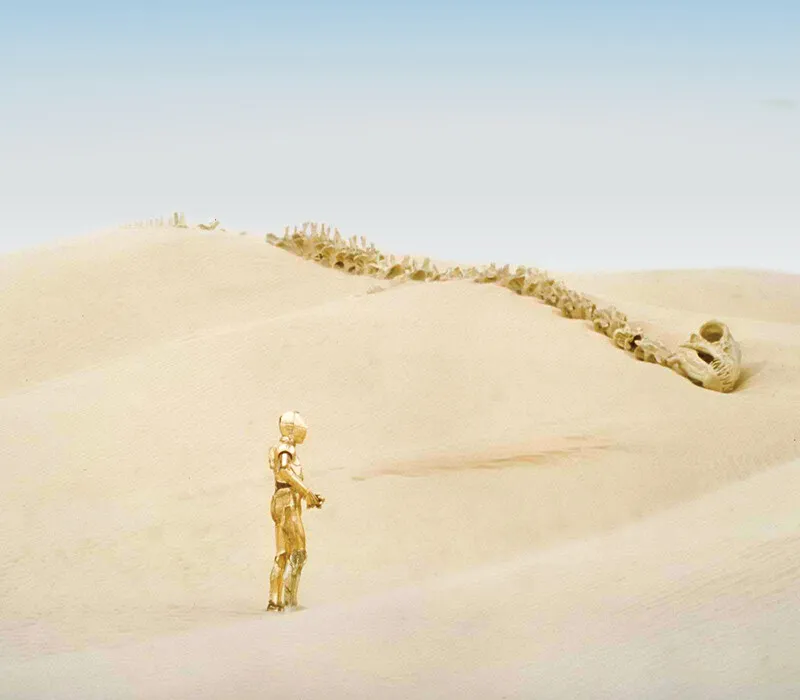
Navigating precipitous canyons and learning local Berber dialects, Reynolds treated the search with the same seriousness as a quest for Troy. He looked for the intersection of geology and cinema. The breakthrough came on a high dune, where the shifting sands revealed the bleached, fiberglass vertebrae of a “krayt dragon”—a prop abandoned decades prior, now indistinguishable from the fossils of his youth.
Standing in the salt flats where the fictional Luke Skywalker once gazed at twin suns, Reynolds experienced a profound collapse of the barrier between story and reality. The landscape was desolate, devoid of the film’s space battles, yet it held the heavy, universal silence of human yearning.
This discovery propelled him into the heart of the myth-making machine. Hired by Lucasfilm, Reynolds became the first to hold the title of “mythologist” in a galaxy far, far away. Working at Skywalker Ranch, he did not just catalogue facts; he engineered lore. He redefined the Jedi lightsaber, transforming it from a mere laser sword into a crystal-powered extension of the wielder’s spirit—a concept rooted in the belief that tools are reflections of the soul.
“Myth, for me, is fiction used to carry truth,” Reynolds observes. “In science fiction, you can make up anything… but mythology must deal with real human struggles.”
The transition from the sands of Tunisia to the stainless steel of the Apollo program seems abrupt, yet for Reynolds, it was a continuation of the same inquiry: What are the limits of human will?
Tasked with writing the definitive account of the Apollo missions, Reynolds approached the subject not as a historian, but as an experimental archaeologist. He needed to feel the weight of the history. Upon donning the components of a vintage spacesuit, the romance of space travel evaporated, replaced by a claustrophobic reality.
“It felt like wearing football armor with a wetsuit on top… incredibly awkward,” he notes. Descending a replica lunar module ladder, he realized the terrifying blindness of the helmet. Every movement required absolute faith in the engineering.
This realization led Reynolds to identify the “Unbroken Chain” of trust that defined the Apollo era. It was a societal architecture where the engineer turning a bolt knew, with terrifying clarity, that a life depended on that single motion. To Reynolds, the moon landing was less a triumph of rocketry and more a cathedral of integrity—a collective masterpiece comparable to the pyramids or the Longmen Grottoes.
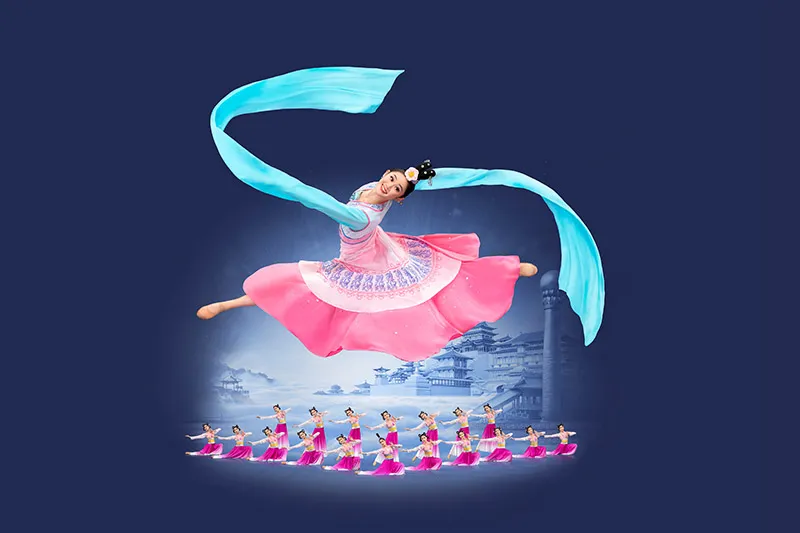
If Apollo represented the pinnacle of technical will, Reynolds found the resurgence of spiritual aesthetics in the performing arts of Shen Yun. He views the New York-based company not merely as entertainment, but as a modern Renaissance—a deliberate reclamation of a 5,000-year-old heritage nearly extinguished by political suppression.
“Historically, great cultures rendered their most valuable insights and beliefs entertaining,” Reynolds explains, lamenting how modern entertainment often divorces spectacle from significance. In Shen Yun, he witnessed a reintegration.
The visuals struck him with the force of a painting come to life: “Women glided as though drifting on clouds… Men leaped and spun with power and finesse.” The digital backdrops, extending the stage into Himalayan peaks or celestial palaces, mirrored the immersive world-building he had once studied at Lucasfilm, but here, the technology served a deeper, ancestral narrative.
Beyond the choreography, Reynolds identified a profound “courage” in the storytelling. The depictions of contemporary persecution faced by Falun Dafa practitioners in China resonated with him as a form of moral resistance. “We’re seeing not a story about courage, we’re seeing what actual courage looks like,” he asserts. It is a reminder that art, at its highest function, is a vessel for truth—a way to preserve nobility in an era that often incentivizes the opposite.
The “Hero’s Journey”—the monomyth structure identified by Joseph Campbell and utilized by Lucas—is circular. The hero must return from the extraordinary world to the ordinary one, bearing a boon for his community.
For Reynolds, this return manifests in his role as a mentor and speaker. The “Live Your Hero’s Journey” program and his recent exhibition, Star Wars meets Indiana Jones, are his offerings. The artifacts on display—dinosaur bones, moon dust, cinema props—are merely symbols. They are tangible proofs that the boundary between the “impossible” and the “historical” is porous.
During the closing of his exhibition, the cycle completed itself. Reynolds watched a ten-year-old boy stand before a display case, eyes wide, spellbound by the artifacts of an adventurous life. It was a mirror image of the boy in Washington D.C., forty years prior.
“The real Hero’s Journey is not in some far-off glorious place,” Reynolds reflects. “It is here and now.” The gold of the pharaoh has been replaced by the dust of the desert and the silence of the moon, but the invitation remains the same: to step out of the audience and into the narrative.
Joining Shen Yun in 2007, Angelia Wang (b. Xi'an, China) represents a benchmark in the…
"We're a team." It is a simple phrase, just three words, yet it holds more…
In the high-stakes theater of grand opera, survival requires a bifurcation of the self. For…
They say the second year of marriage is defined by cotton. It sounds simple, almost…
Two decades together is no small feat. It is a milestone that speaks to patience,…
poems The Merchant of Venice Student Edition---PDF and Complete TextThe water in Venice is never…
There is a specific kind of silence that settles in the garden after a loss.…
There is a specific kind of magic that happens when a photographer doesn't just capture…
In the ancient Italian town of Santarcangelo di Romagna, where history clings to the cobblestones…
The Princeton Club of New York, usually a bastion of quiet networking, recently became the…
A decade together is no small feat. It’s ten years of inside jokes, shared silences,…
In the vast and fragmented linguistic landscape of China, the spoken word has always been…
In an art world often preoccupied with jarring intellectualism or the pursuit of hyper-realistic technicality,…
For Joseph Scheier-Dolberg, the Oscar Tang and Agnes Hsu-Tang Associate Curator of Chinese Paintings at…
I still remember watching you when Grandma passed away. I saw how deeply you mourned,…
There is a distinct difference between seeing a moment with your eyes and seeing how…
Clothing has never been merely about protection against the cold. Across five millennia of human…
The first year of marriage is often a whirlwind of emotions. It is a period…
Ralph Waldo Emerson once observed that "Earth laughs in flowers," a poetic sentiment that reverberates…
There is a specific gravity to a poem carried in the pocket. It is different…
Mother’s Day is approaching, and if you are miles away from the woman who raised…
Winter has a way of changing the landscape of our lives, not just the view…
The allure of Japanese art often lies in its masterful negotiation between the void and…
There is a distinct fairy-tale quality to the work of Lison de Caunes, a resonance…
William Wordsworth (1770–1850) remains a titan of English letters, a figure whose life spanned the…
I was thinking today about how much ground we've covered together. You know, between two…
There is a paradoxical nature to porcelain. In its raw state, it is dense earth;…
The sonnet is not merely a form; it is a vessel for concentrated thought. To…
The intersection of heritage craftsmanship and avant-garde installation art often yields the most compelling dialogues…
I've been thinking a lot about the power of visibility lately, especially as we celebrate…