A serene landscape depicting the beauty of nature
Classical Chinese poetry operates not merely as text, but as a vessel for the ancient consciousness. In these verses, hope is rarely a loud proclamation; rather, it is a quiet discovery found in the rhythm of the seasons, the endurance of bamboo, or the clarity of a mountain stream. The poets of the Tang and Song dynasties possessed a heightened sensory empathy, allowing them to extract timeless wisdom from the transient beauty of the physical world. By stepping into their landscape, we uncover a philosophy where resilience and tranquility are cultivated within.
To the ancient mind, nature is not a backdrop but a mirror of the human condition. Wumen Huikai, a Chan (Zen) master of the Song Dynasty, invites us to dismantle the barriers of anxiety that cloud our perception. The changing seasons are not obstacles to be endured, but variations of beauty to be witnessed. The “finest hour” is not a specific time on a calendar, but a state of an unburdened heart.
春有百花秋有月,夏有凉风冬有雪。
若无闲事挂心头,便是人间好时节。
With Spring flowers, Autumn moon,
The Winter snow, and breezy Summer air
If in your heart there’s not a single care,
Any season will be the finest hour.
— Wumen Huikai (1183-1260)
Similarly, the transition of time carries its own promise. Zhang Huiyan questions the melancholy associated with the end of spring. His observation suggests that the “best season” is internal. If the road for spring’s arrival is never concealed, then hope is a perennial state, accessible the moment we choose to look for it.
难道春花开落,又是春风来去,便了却韶华?
花外春来路,芳草不曾遮
When the flowers bloom and fall
The spring wind will come and go
Is this the end of the best season?
The road for the arrival of spring
Was never concealed by the grass
— Zhang Huiyan (1761-1802)
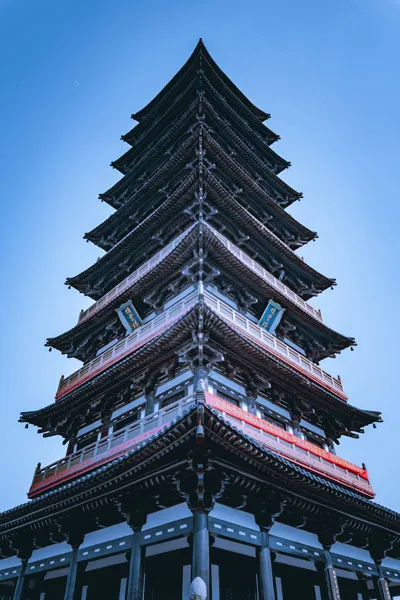
Great endeavors are often daunting in their scope, yet the Daoist sage Lao Tzu reminds us of the geometry of progress. The “nine-storied tower” is a symbol of monumental achievement, yet its reality is humble—it is nothing more than a collection of earth, piled specifically and consistently. This is a call to focus on the immediate action rather than the distant anxiety.
九层之台起于累土,千里之行始于足下
A nine-storied tower rises from a heap of earth;
A thousand miles journey starts with the first step.
— Lao Tzu (571 BCE-)
In the botanical world, the bamboo and the plum blossom serve as moral compasses. Shao Ye uses the bamboo’s joints—which remain even after death—as a metaphor for integrity that outlasts physical existence. The “fragrance” of the fallen flower represents the indelible impact of a noble spirit.
竹死不变节,花落有余香
Bamboos could die but the joints will stay
Flowers could fall but the fragrance will linger
— Shao Ye (~860)
This sentiment is echoed by Monk Shiwu, who captures the sensory relay of nature. As one beauty fades, another ripens. It is a lesson in presence: treasuring the jasmine that blooms now, rather than mourning the plum that has passed.
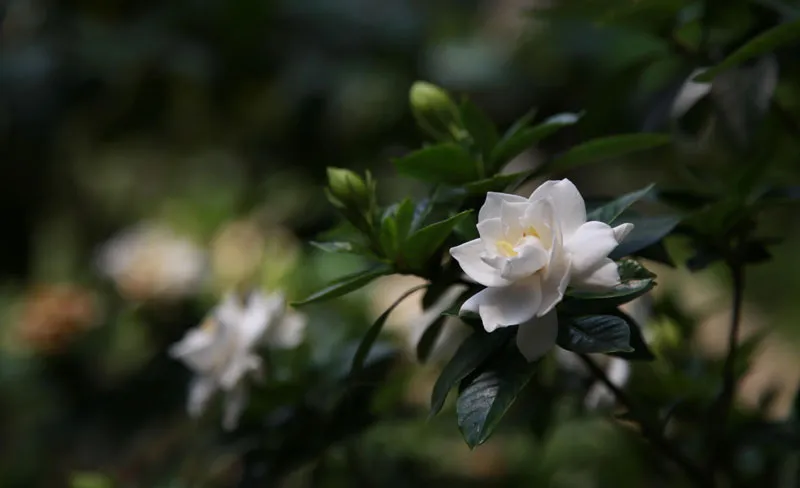
梅子熟时枙子香
When plums are ripe,
Jasmine sends out a refreshing fragrance.
— Monk Shiwu (~1644)
The landscape of life often presents paths that seem blocked or obscured. The Chinese proverb regarding the cart and the mountain offers a pragmatic fatalism: anxiety is unnecessary because the solution often reveals itself only upon arrival. It is a trust in the unfolding of destiny.
车到山前必有路,船到桥头自然直
When the cart reaches the mountain, there must be a road
When the boat reaches the bridge, it will naturally be straight
— Proverb
Wang Wei, a poet known for the painterly quality of his verse, transforms the concept of a “dead end” into a moment of transcendence. When the water ends, one does not despair; one sits and shifts gaze to the clouds. The cessation of one path is simply the invitation to contemplate a higher plane.
行到水穷处,坐看云起时。
Walk to where the waters end,
Sit and watch the clouds arise.
— Wang Wei (699-761)
We are often blinded by our immersion in our own circumstances. Su Shi’s reflection on Mount Lu is a profound epistemological observation: we cannot see the truth of our situation because we are buried within it. Detachment is required for clarity.
不识庐山真面目,只缘身在此山中。
Why can’t I tell the true shape of Mount Lu?
Because I myself am in the mountains.
— Su Shi (1037-1101)
This necessity for distance and broader perspective is also found in the wisdom of conflict resolution. To “take a step back” is not an act of surrender, but an expansion of vision. By retreating from the immediate friction, the “boundless sea and sky” become visible again.
退一步海阔天空,忍一时风平浪静
Take one step back and see the boundless sea and sky
Endure one moment and calm the wind and seas
— Proverb
In classical poetry, the moon acts as a cosmic mediator between separated souls. Zhang Jiuling’s verse regarding the “bright moon” over the sea collapses the physical distance between people. If two people gaze at the same celestial body, they share a moment in time, regardless of the miles between them.
海上生明月,天涯共此时
Over the sea has risen the bright moon,
Being far apart we share this moment.
— Zhang Jiuling (673-740)
This theme extends to the concept of the “bosom friend.” Wang Bo posits that emotional proximity renders physical distance irrelevant. A true connection exists in the realm of the spirit, where the “far end of the world” is as intimate as a neighbor’s courtyard.
海内存知已,天涯若比邻。
To have a bosom friend within the seas,
The far end of the world is the same as your neighbour next door
— Wang Bo (649-676)
Li Bai, the Romantic of the Tang Dynasty, often used hyperbole to express the sheer scale of the natural world and the human spirit. His description of the waterfall at Mount Lu describes a cascade so immense it resembles the Milky Way falling from heaven. It is an image of overwhelming power and beauty.
飞流直下三千尺,疑是银河落九天。
Flying waters rushing three thousand feet down,
Till I think the Milky Way has tumbled from the ninth level of Heaven.
— Li Bai (701-762)
Yet, even in grandeur, there is introspection. Tang Gong’s image of a boat laden with “sweet dreams” weighing down the galaxy suggests the beautiful burden of hope. The drunkard’s obliviousness to the distinction between sky and water speaks to a unity with the cosmos.
醉后不知天在水,满船清梦压星河
Drunk, he knows not the sky is afloat in the water;
A boat laden with sweet dreams weighs down the Milky Way.
— Tang Gong (~1360)
Ambition and the search for meaning often require elevation. Wang Zhihuan’s visit to Stork Tower resulted in a couplet that has inspired generations: to see further, one must climb higher. It is a literal and metaphorical instruction for the cultivation of the self.
欲穷千里目,更上一层楼
You can enjoy a grander sight,
By climbing to a greater height
— Wang Zhihuan (688-742)
The search for what is precious—be it a person, a truth, or a destiny—is beautifully captured by Xin Qiji. Amidst the dazzle of the Lantern Festival, the object of his search is found not in the brightness, but in the “dim light.” It suggests that profound truths often reside in the quiet corners, away from the spectacle.
众里寻他千百度。蓦然回首,
那人却在,灯火阑珊处。
Thousands of times I have been searching over the crowd
And all of a sudden when I turned my head around
He is right where the lights are few and dim.
— Xin Qiji (1140-1207)
The relationship between lovers is often likened to the celestial. Fan Chengda’s wish to be the star to his beloved’s moon speaks of a constancy that defines true devotion—a “brightening” of each other that persists through the dark.
愿我如星君如月,夜夜流光相皎洁。
May I be like the stars and you the moon
Shining and brightening each other night after night
— Fan Chengda (1126-1193)
Finally, the acceptance of life’s transience allows for a deeper peace. Yan Shu observes that while flowers must fall, the swallows return. This cyclical view prevents despair; the “wither and fall” is balanced by the “return,” reminding us that loss is merely a prelude to renewal.
无可奈何花落去,
似曾相识燕归来。
Powerless are flowers that must wither and fall,
It’s time for the return of the swallows I seem to have met before
— Yan Shu (991-1055)
Su Shi, a man who faced exile and hardship with remarkable grace, provides perhaps the ultimate statement on hope. Looking back at the “bleak passage” of his life, he realizes that the storm and the sun are equally transient. To be “unaffected by windswept rain or shine” is the ultimate liberation of the spirit.
回首向来萧瑟处,归去,也无风雨也无晴。
Looking back over the bleak passage survived,
The return in time
Shall not be affected by windswept rain or shine.
— Su Shi (1037-1101)
Joining Shen Yun in 2007, Angelia Wang (b. Xi'an, China) represents a benchmark in the…
"We're a team." It is a simple phrase, just three words, yet it holds more…
In the high-stakes theater of grand opera, survival requires a bifurcation of the self. For…
They say the second year of marriage is defined by cotton. It sounds simple, almost…
Two decades together is no small feat. It is a milestone that speaks to patience,…
poems The Merchant of Venice Student Edition---PDF and Complete TextThe water in Venice is never…
There is a specific kind of silence that settles in the garden after a loss.…
There is a specific kind of magic that happens when a photographer doesn't just capture…
In the ancient Italian town of Santarcangelo di Romagna, where history clings to the cobblestones…
The Princeton Club of New York, usually a bastion of quiet networking, recently became the…
A decade together is no small feat. It’s ten years of inside jokes, shared silences,…
In the vast and fragmented linguistic landscape of China, the spoken word has always been…
In an art world often preoccupied with jarring intellectualism or the pursuit of hyper-realistic technicality,…
For Joseph Scheier-Dolberg, the Oscar Tang and Agnes Hsu-Tang Associate Curator of Chinese Paintings at…
I still remember watching you when Grandma passed away. I saw how deeply you mourned,…
There is a distinct difference between seeing a moment with your eyes and seeing how…
Clothing has never been merely about protection against the cold. Across five millennia of human…
The first year of marriage is often a whirlwind of emotions. It is a period…
Ralph Waldo Emerson once observed that "Earth laughs in flowers," a poetic sentiment that reverberates…
There is a specific gravity to a poem carried in the pocket. It is different…
Mother’s Day is approaching, and if you are miles away from the woman who raised…
Winter has a way of changing the landscape of our lives, not just the view…
The allure of Japanese art often lies in its masterful negotiation between the void and…
There is a distinct fairy-tale quality to the work of Lison de Caunes, a resonance…
William Wordsworth (1770–1850) remains a titan of English letters, a figure whose life spanned the…
I was thinking today about how much ground we've covered together. You know, between two…
There is a paradoxical nature to porcelain. In its raw state, it is dense earth;…
The sonnet is not merely a form; it is a vessel for concentrated thought. To…
The intersection of heritage craftsmanship and avant-garde installation art often yields the most compelling dialogues…
I've been thinking a lot about the power of visibility lately, especially as we celebrate…