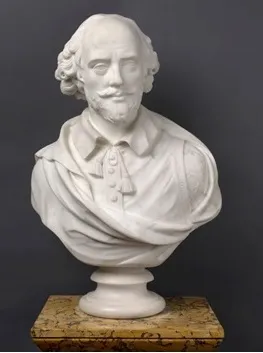
Portrait of poet Michael Drayton looking solemn in period clothing
To seek a manual for relationships in the biographies of poets is a fool’s errand; they often knew little of stability, yet they understood the crushing weight of joy and anguish better than the rational mind ever could. This collection favors the Romantics over the Enlightenment’s cool logic, spanning the full spectrum from the flush of first desire to the cold finality of the grave.
There is a specific bitterness in pretending not to care. Drayton, a contemporary of Shakespeare, captures the moment of a “clean break” that is anything but clean. He feigns a stoic indifference, a handshake to seal the end, yet the emotional undercurrent betrays him. It is a performance of closure where the actors—Passion, Faith, Innocence—are dying on stage, waiting for a single word to revive them.
“Since there’s no help, come let us kiss and part;”
The sonnet moves from a dismissal to a desperate plea, proving that the loudest declarations of freedom are often just cries for one last reason to stay.
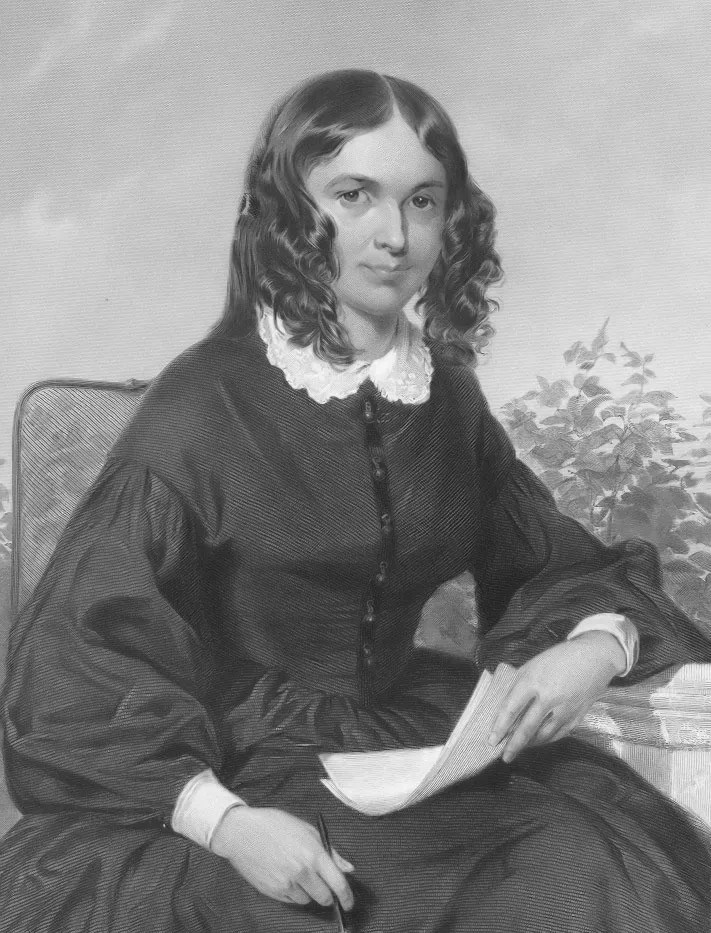
Elizabeth Barrett Browning did not love with moderation. Written for her husband Robert, this sonnet treats affection as a measurable quantity, physically counting the ways the soul stretches. It blends the fervor of an arts groupie with the solemnity of a saint.
“How do I love thee? Let me count the ways.”
She replaces her “lost saints” with her lover, elevating a human relationship to a theology. It is breathless, slightly hyperbolic, and entirely surrenders to the idea that love is the only breath worth taking.
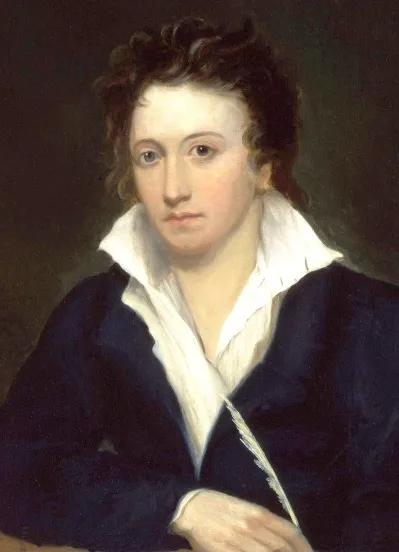
Shelley abandons philosophy for seduction. His logic is dangerously simple: if the winds mix with heaven and the waves clasp one another, why should two humans remain apart? It is a “law divine” that everything mingles.
“The fountains mingle with the river / And the rivers with the ocean,”
He conveniently ignores the predatory nature of the animal kingdom in his examples, focusing instead on the moonbeams kissing the sea. It is a sweet, coercive argument that suggests refusal is a crime against nature itself.
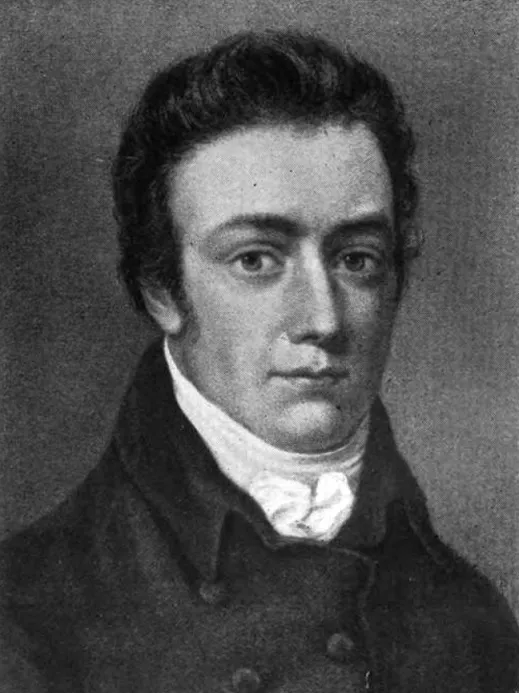
Coleridge understood that the way to a heart is often through a tragedy. In “Love,” the speaker does not woo directly; he sings a ballad of a knight and a lady to his beloved, Genevieve. It is a meta-poem, a seduction wrapped in a narrative of chivalry and madness.
“All thoughts, all passions, all delights, / Whatever stirs this mortal frame,”
By making Genevieve weep for the fictional knight, he opens the door for her to weep for—and eventually embrace—him. The manipulation is subtle, using the “doleful tale” to tune her emotions to his frequency.
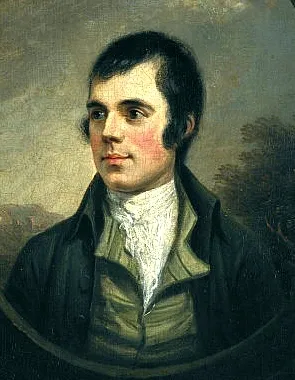
Burns offers no complex arguments, only a simple, staggering promise. The imagery is absolute: rocks melting in the sun, seas running dry. It is the voice of a young man who has not yet learned that time erodes everything, or perhaps he simply chooses to defy it.
“O my Luve is like a red, red rose / That’s newly sprung in June;”
The beauty lies in the impossibility of the vows. He promises to return even if he must travel ten thousand miles, a distance that, in his era, felt like a journey to the stars.
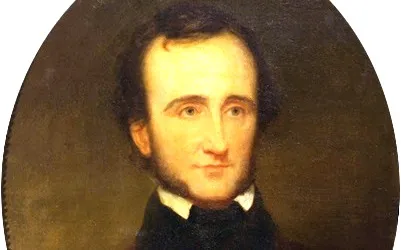
Poe’s love is never far from the tomb. In “Annabel Lee,” the soundscape mirrors the ocean that killed her—a rolling mixture of anapests and iambs, crashing and receding. It is not just grief; it is a jealousy so profound it accuses the angels of murder.
“It was many and many a year ago, / In a kingdom by the sea,”
He refuses to let death be the end, sleeping nightly by her sepulcher. The repetition of her name becomes an incantation, keeping her ghost tethered to the shore.
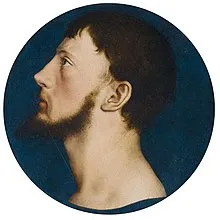
Love here is a blood sport. Wyatt writes of a deer that cannot be caught, a metaphor for Anne Boleyn, the woman who belonged to King Henry VIII. The poem drips with the exhaustion of a hunter who knows the chase is futile.
“Whoso list to hunt, I know where is an hind,”
The diamond collar reading Noli me tangere (Touch me not) marks her as Caesar’s property. It is a bitter acknowledgement that some beauty is too wild to hold and too dangerous to touch.
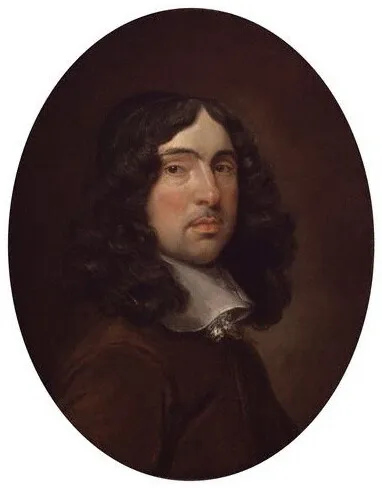
Marvell’s “To His Coy Mistress” is the ultimate Carpe Diem argument. He does not plead; he threatens with the reality of mortality. If they had infinite time, he would spend centuries adoring her eyes, but they do not.
“But at my back I always hear / Time’s wingèd chariot hurrying near;”
The image of worms trying her “long-preserved virginity” is grotesque and effective. He demands they “tear our pleasures with rough strife,” consuming time before it consumes them.
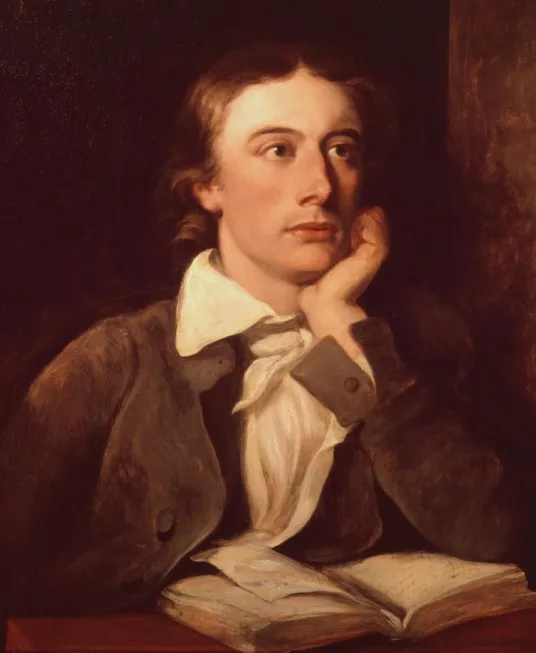
Keats yearns for a paradox: the eternal stillness of a star and the warm, breathing reality of a lover. A star is steadfast but isolated in “lone splendour.” Keats wants the eternity without the loneliness.
“Bright star, would I were stedfast as thou art—”
He chooses to be “pillow’d upon my fair love’s ripening breast,” suspended in a moment of “sweet unrest.” It is a wish to be awake forever in the moment of highest sensation, or else to simply cease to exist.
While others write of specific lovers, Shakespeare defines the element itself. Sonnet 116 is legalistic in its precision, stating that love which alters when it finds alteration is not love at all. It is the North Star, the fixed point by which all wandering ships navigate.
“Let me not to the marriage of true minds / Admit impediments.”
He stakes his entire reputation as a writer on this definition. If he is wrong, then “no man ever loved.” It suggests a love that transcends the physical “rosy lips and cheeks” to become something unshakeable, even at the edge of doom.
Joining Shen Yun in 2007, Angelia Wang (b. Xi'an, China) represents a benchmark in the…
"We're a team." It is a simple phrase, just three words, yet it holds more…
In the high-stakes theater of grand opera, survival requires a bifurcation of the self. For…
They say the second year of marriage is defined by cotton. It sounds simple, almost…
Two decades together is no small feat. It is a milestone that speaks to patience,…
poems The Merchant of Venice Student Edition---PDF and Complete TextThe water in Venice is never…
There is a specific kind of silence that settles in the garden after a loss.…
There is a specific kind of magic that happens when a photographer doesn't just capture…
In the ancient Italian town of Santarcangelo di Romagna, where history clings to the cobblestones…
The Princeton Club of New York, usually a bastion of quiet networking, recently became the…
A decade together is no small feat. It’s ten years of inside jokes, shared silences,…
In the vast and fragmented linguistic landscape of China, the spoken word has always been…
In an art world often preoccupied with jarring intellectualism or the pursuit of hyper-realistic technicality,…
For Joseph Scheier-Dolberg, the Oscar Tang and Agnes Hsu-Tang Associate Curator of Chinese Paintings at…
I still remember watching you when Grandma passed away. I saw how deeply you mourned,…
There is a distinct difference between seeing a moment with your eyes and seeing how…
Clothing has never been merely about protection against the cold. Across five millennia of human…
The first year of marriage is often a whirlwind of emotions. It is a period…
Ralph Waldo Emerson once observed that "Earth laughs in flowers," a poetic sentiment that reverberates…
There is a specific gravity to a poem carried in the pocket. It is different…
Mother’s Day is approaching, and if you are miles away from the woman who raised…
Winter has a way of changing the landscape of our lives, not just the view…
The allure of Japanese art often lies in its masterful negotiation between the void and…
There is a distinct fairy-tale quality to the work of Lison de Caunes, a resonance…
William Wordsworth (1770–1850) remains a titan of English letters, a figure whose life spanned the…
I was thinking today about how much ground we've covered together. You know, between two…
There is a paradoxical nature to porcelain. In its raw state, it is dense earth;…
The sonnet is not merely a form; it is a vessel for concentrated thought. To…
The intersection of heritage craftsmanship and avant-garde installation art often yields the most compelling dialogues…
I've been thinking a lot about the power of visibility lately, especially as we celebrate…