For those with a drawer full of polished pages, the Donald Justice Poetry Prize offers a destination for substantial work. This competition distinguishes itself by seeking unpublished, original book-length collections—specifically those between 50 and 100 typed pages—rather than single entries. The reward matches the effort: a $1,500 purse and the publication of the manuscript. Note the date February 15, 2020, on your calendar; it is an annual cycle, so if the winter deadline passed, preparation for the next round should begin immediately. The entry fee stands at $25, open to all American poets regardless of previous publication history, provided the work pays close attention to form.
A different kind of prestige awaits at the Frost Farm Prize for Metrical Poetry. The winner receives $1,000 and a coveted invitation to read at the Robert Frost Farm in June, breathing the same air that inspired the American master. Submissions must be original, unpublished, and strictly metrical. With a deadline of March 30, 2020, and a modest fee of $6 per poem, it serves as a springtime ritual for formalists.
The Architecture of the Sonnet
Better Than Starbucks returns to champion the fourteen-line form, accepting submissions from October 1 through December 1, 2020. They cast a wide net: Shakespearean, Petrarchan, Spenserian, and even slant-rhymed variations are welcome. Blank verse is permissible if the sonnet skeleton remains visible, and meters beyond pentameter—such as tetrameter or hexameter—are fair game. The critical element they seek is the volta, that pivotal turn of thought. There is no submission fee, and the top prize is $100.
Precision is the watchword for the Maria W. Faust Sonnet Contest. With a deadline of June 1, 2020, this challenge requires strict adherence to iambic pentameter across fourteen lines. While the rhyme scheme allows for Traditional or Non-Traditional variances, the rhythm must not falter. Up to three sonnets can be submitted for a $5 fee, with the top three laureates each claiming $250.
Taming the Chaos
The challenge of weaving seven sonnets into a thematic crown is not for the faint of heart, but the rewards are significant.
Shakespeare writing at a desk
The “Putting Chaos Into 14 Lines” Sonnet Contest accepts entries until December 20, 2020. Participants may aim for the Individual Sonnet award or the ambitious Crown Award, both carrying a $500 prize. Winners earn an invitation to read at the Poetry by the Sea Conference in May. The judge, Julie Kane, looks for traditional craftsmanship. Entry fees are $3 for a single sonnet and $15 for a crown.
Verses for Human Rights
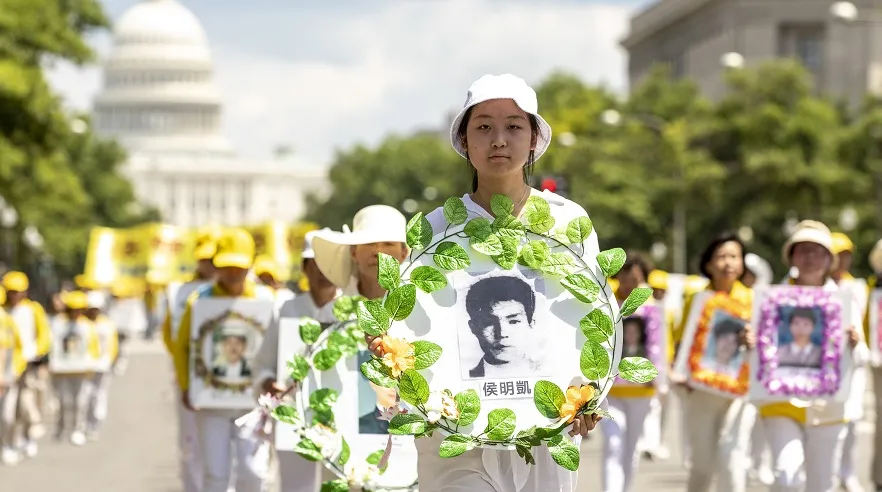
Poetry often flourishes where freedom is stifled. The FoFG Poetry Contest invites writers to explore the plight of Falun Gong practitioners in China, standing against the abuses of the communist regime.
Falun Gong practitioners in a parade
Submissions run from January 1 to April 30, 2020. The contest is divided by experience, offering top prizes of $500 for adults, $250 for college students, and $100 for high schoolers. There is no fee to enter this space of advocacy and art, and all who place receive publication.
Stage and Syllable
Theater and poetry share a bloodline, a connection explored by the Conservative Theater Festival. While primarily a playwriting competition, works often incorporate verse in the traditional manner. The festival seeks scripts under 20 minutes, utilizing fewer than five characters and minimal sets. The deadline is September 1, 2020, with a $10 fee. The prize is the production of the work itself, overseen by Stage Right Theatrics, an organization dedicated to conservative values and aesthetics.
Brevity finds its home in two specific contests this year. The Myong Cha Son Haiku Award, open exclusively to undergraduate American students, offers a substantial $1,500 prize for unpublished, original haiku. The deadline falls on February 15, 2020. For the broader public, the general Haiku Contest accepts traditional haiku entries in the comments section until August 8, 2020, with a $100 award and no entry fee.
The Next Generation of Formalists
The Society of Classical Poets continues its mission to revive meter and rhyme, specifically targeting younger voices to carry the torch.
Vintage style image of a graduation cap and diploma
The SCP High School Poetry Competition opens on September 1, 2020, and closes on New Year’s Eve. Students are encouraged to attempt meter in their work, submitting up to three poems totaling 50 lines or less. A $5 fee places entrants in the running for $100 and publication in the Society’s Journal, validating the efforts of emerging writers.
The Classical Revival
For adult practitioners of the craft, the Society of Classical Poets (SCP) 9th Annual Poetry Competition remains a central pillar. Accepting work from September 1 through December 31, 2020, the contest calls for metered verse in any genre. The top prize is $1,000 alongside journal publication. Poets may submit up to three pieces, provided the total line count does not exceed 108, for a $10 fee.
Simultaneously, the SCP Poetry Translation Competition seeks to bridge linguistic eras. Translators are tasked with bringing poems from the Romantic period or earlier (pre-1870) into English, maintaining the original’s metrical integrity. This category requires no submission fee, offers a $100 prize, and shares the December 31 deadline.

 Shakespeare writing at a desk
 Falun Gong practitioners in a parade
 Vintage style image of a graduation cap and diploma


