When a friend or family member loses their father, the world seems to stop. The silence that follows the loss of a dad—the protector, the guide, the first hero—is profound. Standing on the sidelines, we often feel helpless, paralyzed by the fear of saying the wrong thing.
But here is the truth: there are no “perfect” words. There is only your presence and your honest attempt to show you care. Whether you are writing a card for a grieving friend, a coworker, or a spouse, the goal isn’t to fix their pain, but to remind them they aren’t carrying it alone.
Below is a guide to help you craft a message that feels genuine, along with specific examples for different relationships.
How to Write a Condolence Message Without Offending
Before you put pen to paper, take a breath. You don’t need to be a poet; you just need to be a friend. Here are a few principles to keep in mind:
Keep it real, not rehearsed. Avoid the stiff “form letter” phrases. Think about what made their dad special. Was it his laugh? His advice? His quiet strength? Mentioning a specific trait makes your message feel personal.
Don’t try to “fix” it. Phrases like “he’s in a better place” or “everything happens for a reason” can sometimes sting more than they soothe. It is okay to simply acknowledge that this sucks.
Offer specific support. Instead of the vague “let me know if you need anything,” try “I’m dropping off dinner on Tuesday,” or “I’m available to run errands this weekend.”
The “closing” matters. You don’t always have to say “sincerely.” You can say “standing with you,” “with love,” or “here for you.”
A gentle reminder that presence matters more than perfection
What to Write in a Sympathy Card for the Loss of a Father
When a father figure passes, the loss ripples through the entire family. Depending on your relationship to the grieving person, your tone might shift from intimate to professional.
For a Friend Who Lost Their Dad
Your friend needs to know you are a safe harbor. You don’t need to be formal; you just need to be there.
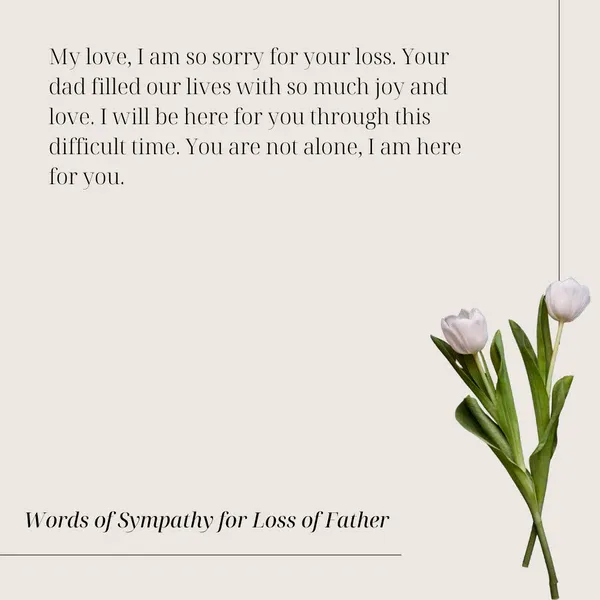
“I’m so incredibly sorry about your dad. I know how much you looked up to him. I’m just a phone call away, whatever time it is.”
“Your dad was truly one of a kind. I’ll never forget how he used to make us all laugh. He brought so much light into the room.”
“I can’t imagine how heavy your heart is right now. Your father raised an amazing human in you, and I see his kindness in you every day.”
“I wish I could take this pain away. Since I can’t, I’m coming over to just sit with you. Your dad was a good man, and he will be missed.”
“Your father left such a legacy of warmth. I know he was your rock. Please lean on me for a while until you find your footing again.”
Comforting words for a friend grieving their father
For a Coworker or Employee
When a colleague loses a parent, they often worry about work. Your message should reassure them that work is the last thing they need to worry about.
“I was so sorry to hear about your father. Please take all the time you need to be with your family. We are covering everything here.”
“Sending you strength during this difficult week. Your work family is thinking of you and wishing you peace.”
“My deepest condolences on the loss of your father. I know how close you were. Please let us know if there is any way we can support you.”
“I hope you can find some comfort in the memories you have with your dad. We are all keeping you in our thoughts.”
“Losing a parent is a major life change. Please be gentle with yourself right now. You have our full support.”
Sympathy card ideas for a colleague
For a Relative (Cousin, Aunt, Uncle)
When the loss is within the family, you are grieving too. It is okay to share that shared sense of loss.
“Uncle Bob was a legend. Our family gatherings won’t be the same without his stories. We’re all going to miss him so much.”
“I’m heartbroken for you. Your dad was the glue that held so much together. I promise we will keep his memory alive.”
“I know he was your dad, but he felt like a second father to me too. I’m going to miss his wisdom. I love you.”
“He had such a generous spirit. I see so much of him in the way you care for people. He lives on through you.”
“Our family tree has lost a strong branch, but his roots go deep. We will get through this together.”
Condolences for family members
Comforting a Friend Who Lost Their Husband
Losing a spouse is a different kind of heartbreak. It changes their daily existence. Acknowledge the partnership they lost.
“I am just heartbroken for you. He adored you so much—it was written all over his face every time he looked at you.”
“I know he was your partner in everything. I’m here to help carry the load, whether that’s childcare, groceries, or just listening.”
“Your love story was beautiful to witness. While he’s gone, the life you built together is a testament to that love.”
“He was such a good man, and he loved you and the kids fiercely. We will make sure his memory stays vivid for them.”
“I don’t have the right words, but I have a shoulder for you to cry on. I’m not going anywhere.”
Messages for a widow
Messages Between Siblings (Loss of Grandfather)
When a grandparent passes, it’s the end of an era. Sharing this with a sibling brings up childhood memories.
“I keep thinking about all those summers at Grandpa’s house. He taught us so much about patience. I’m so glad we have those memories.”
“It feels like the world is a little emptier without him. He was our hero growing up. I’m here for you, sis/bro.”
“Grandpa had the best stories. It’s up to us to tell them now. Love you.”
“I know how much he meant to you. He was so proud of the person you became.”
“He shaped our childhoods in the best way. His laugh is something I’ll hear in my head forever.”
Remembering a grandfather
Support for Your Spouse (Loss of Father-in-Law)
When your husband or wife loses their dad, you are their primary anchor.
“I am right here. I’ve got the kids, the house, everything. You just focus on saying goodbye to your dad.”
“Your dad was such a wonderful man, and he welcomed me into the family with open arms. I will miss him too.”
“I see your dad’s strength in you every day. He would be so proud of how you’re handling this, but it’s okay to fall apart too. I’ve got you.”
“I’m so sorry, my love. I know he was your hero. We will get through this one breath at a time.”
“Just lean on me. You don’t have to be strong right now.”
Supporting a spouse through grief
Messages for Other Deep Losses
Grief isn’t limited to fathers. Here are thoughtful ways to address other profound losses.
Loss of a Mother
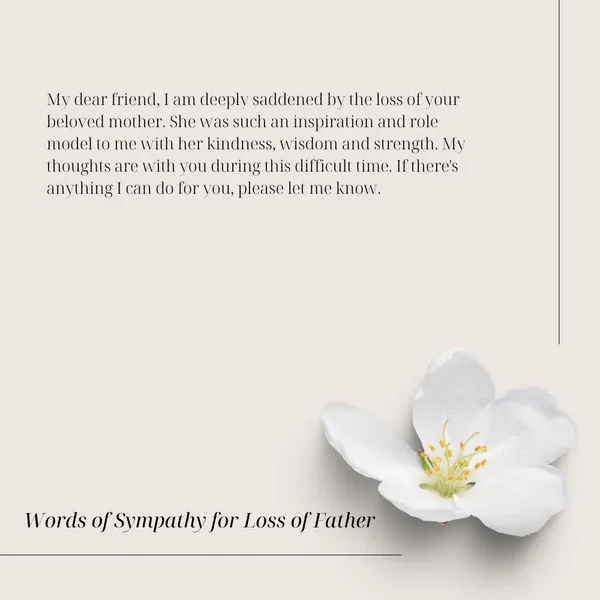
“Your mom was pure light. She made everyone feel like they were the most important person in the room. I’ll miss her warmth.”
“A mother’s love is the first love we know. I am so sorry you have to say goodbye to her. She lives on in your kindness.”
“She was such a force of nature. I see her resilience in you. Sending you so much love.”
Comfort for the loss of a mother
Loss of a Wife (For a Coworker)
“I was devastated to hear about your wife. She sounded like an incredible woman. We are all thinking of you.”
“Please accept my deepest sympathies. I know she was your world. We are holding space for you here.”
Loss of a Daughter
“There are absolutely no words for this. My heart is breaking for you. Your daughter was a beautiful soul.”
“This is a pain no parent should have to know. I am wrapping you in prayer and love. She will never be forgotten.”
“She brought so much joy in her short time here. We will always remember her smile.”
Sympathy for the loss of a child
Thinking of You: Anniversary and Card Ideas
Sometimes the hardest days are the milestones—the first birthday without him, or the anniversary of his passing. Sending a card on these days means the world because it shows you haven’t forgotten.
The Tide Poem Card
Simple imagery, like sea oats or a beach, can evoke a sense of peace. A card like this is perfect for writing a memory of a time you spent outdoors with the deceased.
Tide poem sympathy card
Grief Affirmation Cards
Grief isn’t a straight line. Sometimes a small card with a simple affirmation—”It is okay to not be okay today”—is a better gift than flowers. It gives the grieving person permission to feel.
Grief affirmation cards
How to sign off?
You don’t need to be formal. Try:
“Holding you in my heart,”
“With so much love,”
“Standing with you,”
At the end of the day, the specific words matter less than the fact that you reached out. A simple text, a card, or a shared memory keeps the connection alive when everything else feels broken.

 A gentle reminder that presence matters more than perfection
 Comforting words for a friend grieving their father
 Sympathy card ideas for a colleague
 Condolences for family members
 Messages for a widow
 Remembering a grandfather
 Supporting a spouse through grief
 Comfort for the loss of a mother
 Sympathy for the loss of a child
 Tide poem sympathy card
 Grief affirmation cards


