I know of f-stops, shutter speeds, and ISOs. I learned about them in college to get the grades, pass the classes, and get out. And then, I promptly forgot about them. If someone asks me what f-stop I used for a pretty photo, my honest answer is usually, “Whatever one worked.”
I do what my lens tells me to do. I adjust up and down, fast or slow, based on what I see rather than what I read. I’m not locked into the rigid way things are supposed to be done; I trust my eyes way more than I trust my memory. There is nothing wrong with shooting by numbers, just as there is nothing wrong with shooting by feel. You have to figure out which method makes you comfortable and go with that.
I grew up in Buffalo, NY, so I know a thing or two about snow. But now, at my age, I don’t really want to play in it anymore. You can get beautiful shots in the wintertime here in New England, like this view of our backyard. I opened a window in the house, took the photo, and immediately closed the window.
View of a snowy backyard through a window in New England
Here is the issue: I try to take a couple of photos a day to stay sharp, but when it is 10 degrees outside with a foot of snow on the ground… nope.
With our kids married and out of the house, I suddenly have more bedrooms than people. It is just me, my wife, and our dog, Boomer. My wife came up with the idea of using one of the spare bedrooms as a “studio,” especially for the winter months. We cleaned the room out—moving all the stuff our kids refused to take with them—and suddenly I had a photography studio. It even still has the Buffalo Bills wallpaper from back when my 35-year-old son was ten.
I had the space, but I didn’t have the gizmos I needed to make it actually work. Over the years, I’ve discovered a few things that make a home studio functional without breaking the bank.
Managing the Light
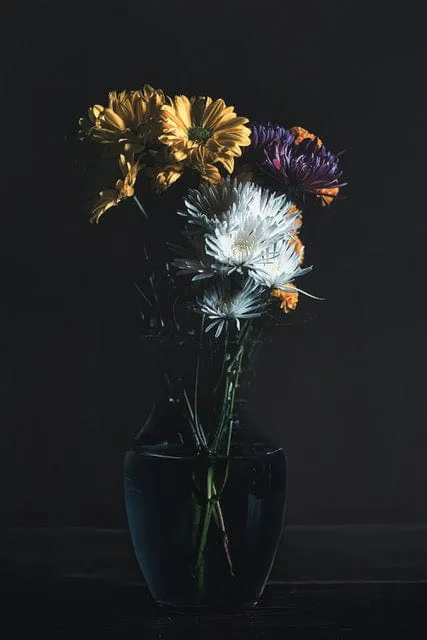
Windows will be a problem. Not only do they bring in unwanted light, but if you are shooting anything reflective—like a glass vase—you can’t just fix that reflection in post-production. Most times, trying to erase it just screws up the image.
The solution was something my wife suggested and, frankly, something I knew nothing about: buy room darkening drapes.
Still life photography of flowers in a darkened room
Black room darkening drapes saved the house studio. Regular drapes, shades, or blinds just won’t cut it. If you want to transform a spare bedroom, spend the $20-25 bucks on drapes that will truly keep the light out.
The beauty of this is control. You can use the drapes to let light in strategically. I do it all the time by opening them just a crack. To me, that sliver of natural sunlight adds a nuance and sweetness to a scene that a light bulb just can’t match.
Stability is Key
Buy the best tripod you can afford. To me, the heavier it is, the steadier it is. I also recommend getting an L Bracket Vertical adapter head, especially if your tripod head doesn’t tilt easily to hold your camera in a vertical position.
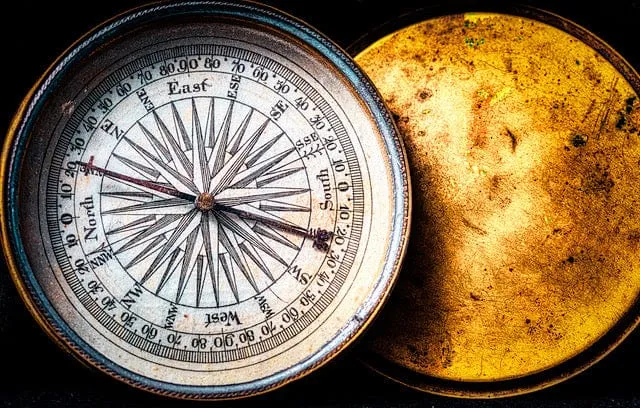
I also use a Macro Focusing rail on the tripod. It allows me to move the camera backward and forward without having to move and reset the legs. This really helps if you are shooting close-ups.
Close up still life photo of an antique compass
Hands-Free Shooting
If your camera works with a wireless remote, use it. Even slight vibrations from pressing the button can hose the sharpness of what you are shooting. A wireless remote lets you control the shutter from outside the immediate area. Depending on your camera model, we’re talking about $25-$40. It is cheap insurance for a crisp image.
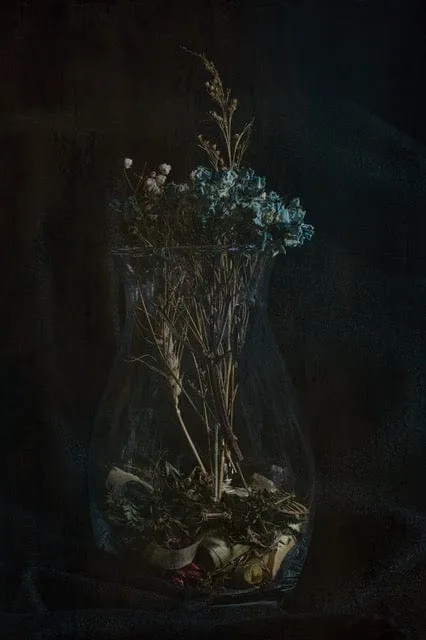
Close up detail of pink flowers against a dark background
Lighting and Power
There are dozens of lighting kits for sale out there. Keep it simple: get one that has two tall light stands and two small tabletop stands. That will give you all the versatility you need to take well-lit photos in a spare room.
Finally, a distinct “must-have” is a power adapter kit that fits your camera. This takes the battery out of the equation and powers the camera by plugging it directly into an electrical outlet. It is just easier to use, and there is no need to swap out dying batteries in the middle of a session.
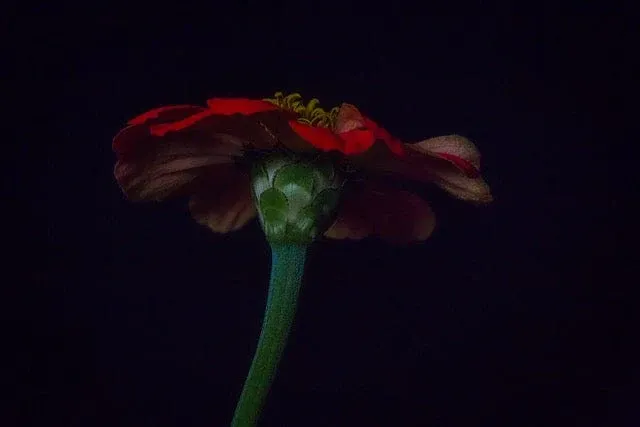
Photography lighting stand setup in a studio context
I hope you have the ability to snag a spare room in your house. It quickly turns into a place where you can take the time to play with and learn about your camera without being weather-dependent. Best of all, you can do all that in your comfy clothes.

 View of a snowy backyard through a window in New England
 Still life photography of flowers in a darkened room
 Close up still life photo of an antique compass
 Close up detail of pink flowers against a dark background
 Photography lighting stand setup in a studio context