In the vast lexicon of ancient Chinese aesthetics, flora has always served as more than mere decoration; it is a language of virtues, a silent poetry that transcends the written word. A sweet scent drifting through the ages, this botanical symbolism connects the tangible beauty of the natural world with the intangible resilience of the human spirit.
Within this tradition, which is actively revived today by the performing arts of Shen Yun, flowers act as cultural anchors. While the peony embodies luxurious nobility and the lotus represents an inspiring purity rising from the mud, the plum blossom (meihua) occupies a solitary, revered space in the artistic consciousness. It is a motif that does not merely decorate the stage but narrates a specific philosophical resilience.
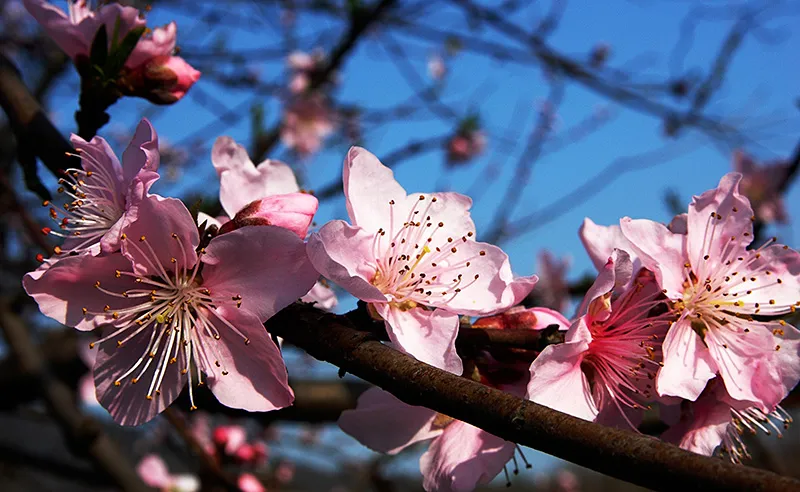
The distinctiveness of the plum lies in its defiance of the seasons. Unlike its floral counterparts that await the warmth of spring, the plum blossoms in the heart of midwinter. This botanical anomaly creates a striking visual paradox: five small, delicate petals radiating softness against the harsh, monochromatic canvas of snow and ice.
This contrast is central to its artistic interpretation. In the choreography of Shen Yun and the repertoire of its Symphony Orchestra, the plum blossom is treated not just as a visual prop, but as a narrative of the soul. The 2017 concert, featuring the piece “Plum Blossoms” sung by the renowned soprano Haolan Geng, utilized the human voice to mirror this floral resilience-delicate yet piercing, capable of cutting through the silence of winter.
The imagery of pink petals against white snow serves as a profound metaphor for perseverance and faith in the face of adversity. It suggests a courage that does not roar, but simply endures, leading the way toward the hope of a spring that has not yet arrived. This specific imagery has cultivated its own genre within the long tapestry of Chinese art history, spanning ink wash paintings and classical verse.
The Song Dynasty poet Lin Bu, often associated with the solitary life of a recluse, captured this sentiment in lines that have echoed for centuries. His verse praises the flower not for its abundance, but for its singular bravery:
After others fall, alone they bloom,In a garden small, they splendidly loom.
This integration of nature and philosophy extends beyond the stage and the scroll, finding its way into tangible artifacts of daily life. The motif’s translation into jewelry design, such as the Plum Blossom Ring crafted in gold and silver, represents an attempt to crystalize this ephemeral courage into a permanent form.
By wearing the symbol of the plum blossom, one adopts its narrative of grace under pressure. It is a quiet reminder of the “winter sentinel”-a tradition of beauty that gains depth and meaning not through ease, but through the passage of time and the weathering of the cold.