In the classical aesthetics of ancient China, the natural world was never merely decorative; it was a mirror for the human soul. Flowers, in particular, held a lexicon of their own, charged with profound meaning that transcended their ephemeral physical beauty. This rich tradition of botanical symbolism continues to breathe through the artistic repertoire of Shen Yun Performing Arts, where the stages are often graced by the luxurious nobility of the peony, the spiritual purity of the lotus, and the mystical holiness of the legendary udumbara.
Yet, among these celebrated blooms, one stands apart for its austere resilience and the timing of its arrival: the plum blossom (mei hua).
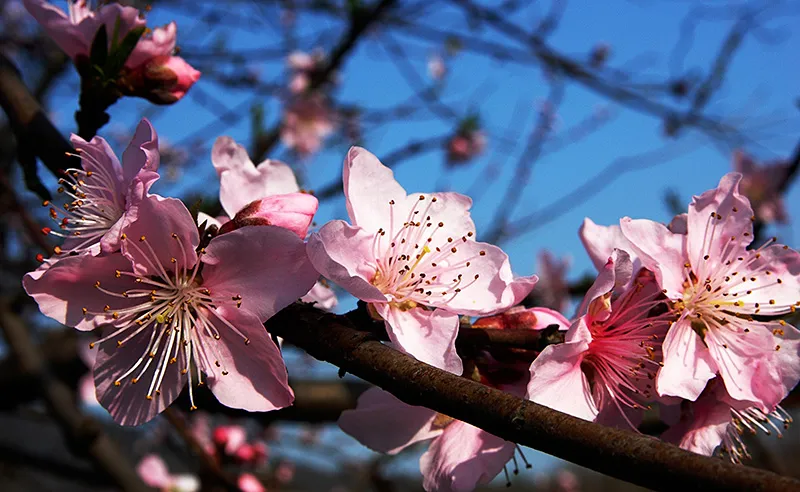
While the vernal equinox usually heralds the return of color to the landscape, the plum is unique in its biological rhythm. It does not wait for the warmth of spring. Instead, it blossoms in the heart of midwinter, offering a stark, poetic contrast to the desolate environment. Its five small, soft petals unfurl against the harshness of the biting cold, painting delicate strokes of pink or crimson upon a canvas of blank white snow.
Shen Yun dancers performing with fans depicting the plum blossom
This visual paradox-fragility thriving amidst adversity-has cemented the plum blossom as a powerful cultural symbol. It represents perseverance, unyielding faith, and the courage to lead the way toward hope when the world seems most dormant. It is not merely a flower; it is a testament to the endurance of the spirit.
This narrative of resilience is woven deeply into the artistic tapestry of the East. In the realm of performance, the motif appears frequently in Shen Yun’s choreography, capturing the flower’s brave elegance through movement. The symbolism extends into the auditory realm as well, notably in the composition “Plum Blossoms.” Performed by the world-renowned soprano Haolan Geng during the Shen Yun Symphony Orchestra’s 2017 concert, the piece utilized the human voice to carry the flower’s delicate yet piercing legacy.
Historically, the plum blossom cultivated its own genre within Chinese painting and literature, revered by scholars who saw their own noble aspirations reflected in its petals. The imagery of a solitary branch blooming in the snow became a metaphor for the integrity of the artist or scholar who stands firm in their principles, regardless of external circumstances.
Lin Bu, a celebrated poet of the Song Dynasty, captured this solitude in verses that have echoed through centuries. His poem delineates the flower’s quiet splendor:
The reverence for this winter bloom extends beyond the stage and the scroll, finding its way into personal adornment. The ethos of the plum blossom-its structural grace and its symbolic weight-has been interpreted by artisans into the form of the Plum Blossom Ring. Available in gold and silver, this piece serves not just as jewelry, but as a tangible reminder of that ancient perseverance. To wear the motif is to carry a piece of that winter courage, keeping the promise of spring close at hand.

 Shen Yun dancers performing with fans depicting the plum blossom