Great poetry distills the sprawling complexity of the human experience into a potent draught of words. Limiting the scope to poems under fifty lines forces a concentration of imagery and emotion that sprawling epics cannot replicate. The following selection ranks ten definitive works originally written in English, moving from the merely excellent to the truly transcendent.
10. “The Road Not Taken” by Robert Frost (1874-1963)
“Two roads diverged in a wood, and I—
I took the one less traveled by,
And that has made all the difference.”
Robert Frost poet
This piece is perhaps the most famous misunderstood poem in American literature. We often read it as a paean to individualism—a celebration of the brave soul who charts their own course. Yet, the wood is yellow, implying autumn and decay, and the narrator admits the paths were worn “really about the same.”
The true friction lies not in the choice itself, but in the reconstruction of memory. The narrator predicts their own future deception, knowing they will tell this story “with a sigh” ages hence, attributing a random turn to profound destiny. It tears at the fabric of our self-made myths; we are often just leaves blown by the wind, convincing ourselves we steered the gale.
9. “The New Colossus” by Emma Lazarus (1849-1887)
“Give me your tired, your poor,
Your huddled masses yearning to breathe free…”
220px-Emma_Lazarus
Few sonnets have been cast in bronze and mounted on the very gateway of a nation. Lazarus deliberately contrasts her “Mother of Exiles” with the “brazen giant of Greek fame”—the Colossus of Rhodes. Where the ancient wonder stood for conquering might and “storied pomp,” this new giant offers a “mild” gaze and a lamp.
The poem bridges the gap between the classical world and the American experiment. It suggests that true greatness is not found in the subjugation of lands but in the “imprisoned lightning” used to warm the homeless. It defines a national identity rooted not in ethnicity, but in a radical, golden-door hospitality.
8. “Ozymandias” by Percy Bysshe Shelley (1792-1822)
“My name is Ozymandias, king of kings:
Look on my works, ye Mighty, and despair!”
Percy_Bysshe_Shelley_by_Alfred_Clint_crop
Shelley delivers a masterclass in irony through a frame narrative. We do not see the statue; we hear of it from a traveler, distancing us further from the king’s original power. The “wrinkled lip” and “sneer of cold command” survive only because the sculptor—the artist—understood the tyrant better than the tyrant understood himself.
The devastating punchline lies in the empty desert surrounding the pedestal. The command to “despair” was meant to intimidate rivals with architectural grandeur; now, it warns the powerful that oblivion is inevitable. The “lone and level sands” serve as the ultimate equalizer, grinding the vanity of empires into dust.
7. “Ode on a Grecian Urn” by John Keats (1795-1821)
“‘Beauty is truth, truth beauty,—that is all
Ye know on earth, and all ye need to know.’”
Keats_urn
If Shelley’s sand erodes everything, Keats’s urn preserves it in a terrifying stasis. This poem acts as an antidote to the destruction of time, freezing a moment of “wild ecstasy” forever. The lover on the urn will never kiss his beloved, but she will never lose her beauty. It is a frantic trade-off: life without death, but also life without fulfillment.
The closing couplet remains one of literature’s most debated riddles. Keats suggests that in a world of suffering (“other woe than ours”), art provides the only sturdy metaphysical ground. The cold marble offers a permanent truth that warm, breathing flesh cannot sustain.
6. “The Tyger” by William Blake (1757-1827)
“Tyger Tyger, burning bright,
In the forests of the night…”
NPG 212; William Blake
Blake asks the terrifying theological question: Did the same God who made the gentle Lamb also forge this creature of “fearful symmetry”? The poem is a furnace of industrial imagery—hammers, chains, anvils—suggesting the tiger was hammered into existence rather than born.
It captures the sublime experience of nature—something that is simultaneously beautiful and deadly. By peering into the “distant deeps or skies” to find the fire of the tiger’s eyes, Blake suggests that our ordinary perception of good and evil is insufficient. The universe contains energies that are violently creative, defying simple moral categorization.
5. “On His Blindness” by John Milton (1608-1674)
“They also serve who only stand and wait.”
milton
Milton, who had served as a high-ranking official and political writer, found himself cast into darkness by mid-life. The poem tracks a painful psychological pivot from frustration to acceptance. He initially views his blindness as a waste of his “one talent” (writing), fearing divine chastisement for his inactivity.
The resolution comes not through a cure, but through a redefinition of service. God is reimagined not as a taskmaster requiring “day-labour,” but as a King whose state is so regal that patient endurance is as noble as frantic activity. It dignifies the stillness of suffering.
4. “A Psalm of Life” by Henry Wadsworth Longfellow (1807-1882)
“Lives of great men all remind us
We can make our lives sublime…”
A_Psalm_of_Life
Written during the height of the Industrial Revolution, Longfellow’s verses rebel against the “mournful numbers” of cold rationality. It is a rhythmic drumbeat against passivity. The poem argues that the soul does not merely sleep or turn to dust; the “grave is not its goal.”
The imagery of “footprints on the sands of time” offers a secular form of immortality. We act not just for ourselves, but to leave markers for the “shipwrecked brother” who follows. It transforms individual struggle into a communal legacy, urging us to be “heroes in the strife” regardless of the odds.
3. “Daffodils” by William Wordsworth (1770-1850)
“I wandered lonely as a cloud
That floats on high o’er vales and hills…”
William_Wordsworth_at_28_by_William_Shuter2
Wordsworth captures the “bliss of solitude” by inverting the relationship between man and nature. The narrator is the passive observer, “lonely as a cloud,” while the daffodils are the active crowd, “dancing” and “tossing their heads.”
The poem’s true power reveals itself in the final stanza. The experience of beauty is not transient; it is a stored resource. Later, in moments of vacancy or pensive boredom, the memory “flashes upon that inward eye.” Nature serves as an emotional battery, charging the human spirit long after the physical encounter has ended.
2. “Death, Be Not Proud” by John Donne (1572-1631)
“One short sleep past, we wake eternally
And death shall be no more; Death, thou shalt die.”
CIS:DYCE.5
Donne executes a metaphysical takedown of the Grim Reaper. He strips Death of its mystery, calling it a “slave to fate, chance, kings, and desperate men.” If opium can mimic sleep better than death can, then Death has no claim to superiority.
The sonnet relies on the paradox that by killing the body, Death actually liberates the soul into eternity, thereby destroying itself. It is a bold, intellectual bullying of our greatest fear, asserting that the end of biological life is merely a “short sleep” before the real waking begins.
1. “Sonnet 18” by William Shakespeare (1564-1616)
“So long as men can breathe or eyes can see,
So long lives this, and this gives life to thee.”
Cobbe_portrait_of_Shakespeare
This poem sits at the apex because it successfully performs the magic trick it describes. The narrator begins with a hesitant comparison—”Shall I compare thee?”—and immediately dismantles the simile. Summer is flawed; it is too hot, too windy, and inevitably transient. The beloved, however, must remain constant.
Shakespeare realizes that biology cannot sustain this constancy, so he pivots to art. The poem itself becomes the vessel of immortality. Every time a reader scans these lines, the subject is resurrected. It is an act of defiance against the “darling buds” that must rot, creating an “eternal summer” constructed entirely of ink and breath.

 Robert Frost poet
 220px-Emma_Lazarus
 Percy_Bysshe_Shelley_by_Alfred_Clint_crop
 Keats_urn
 NPG 212; William Blake
 milton
 A_Psalm_of_Life
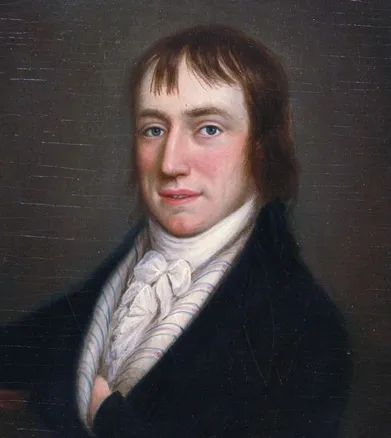 William_Wordsworth_at_28_by_William_Shuter2
 CIS:DYCE.5
 Cobbe_portrait_of_Shakespeare


