Selecting the right words for a funeral service often feels like trying to catch smoke with your bare hands. The emotion is too vast, the loss too jagged. A good poem doesn’t just fill the silence; it shapes the grief into something sharable, something that allows the room to breathe.
Poetry at a memorial service works best when it is brief. The mourners are already carrying a heavy cognitive load; they need clarity, not complexity. The power lies in the reader’s wavering voice and the shared understanding of the room, rather than the length of the stanza. Here is a curated selection of verses that range from the celebratory to the deeply sorrowful, chosen for their ability to resonate when words fail us.
1. “Loss” by Winifred M. Letts (1882-1972)
Winifred Letts, a playwright and novelist born in England, captured the tactile reality of absence in her work. “Loss” is not about abstract spiritualism; it is about the physical void left behind. It speaks to those who feel grief as a robbery—the theft of simple joys like the warmth of a fire or the anticipation of a footstep.
The poem lists the everyday elements that vanish alongside a loved one, from the “sun and moon” to the specific “path that leads to Faërie.” It validates the feeling that the world has physically dimmed.
“In losing you I lost my sun and moon
And all the stars that blessed my lonely night.”
2. “Crossing the Bar” by Alfred Lord Tennyson (1809-1892)
As the Poet Laureate during Queen Victoria’s reign, Tennyson understood the weight of public and private mourning. Written near the end of his own life, “Crossing the Bar” utilizes the extended metaphor of a sandbar—the ridge of sand between the harbor and the open ocean.
The tide here is not violent; it is “too full for sound and foam.” This piece is ideal for a service focused on peace and a fearless transition into the unknown. It suggests that death is merely a return to the “boundless deep” from which we came.
“I hope to see my Pilot face to face
When I have cross’d the bar.”
Biography of Alfred Lord Tennyson
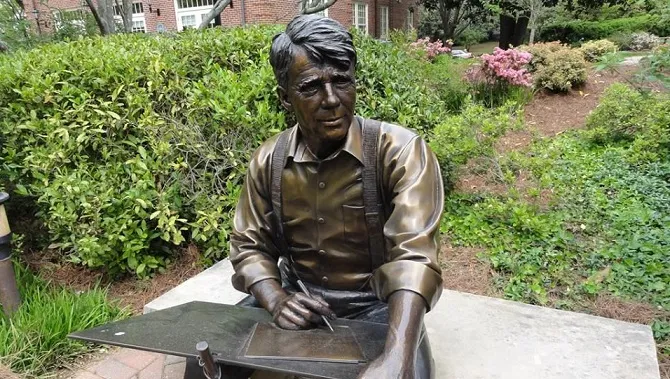
3. “Nothing Gold Can Stay” by Robert Frost (1974-1963)
Robert Frost often used the rural landscapes of New England to mask deep existential questions. This poem is famously short, a mere eight lines, yet it carries the heavy realization of impermanence. It is particularly poignant for the loss of someone young or a life that felt cut short—a “leaf” that subsided too quickly to “leaf.”
The imagery moves from the early gold of spring to the inevitable settling of day. It doesn’t offer false hope but rather a beautiful acknowledgment that transience is the price of beauty.
robert frost statue
“Nature’s first green is gold,
Her hardest hue to hold.”
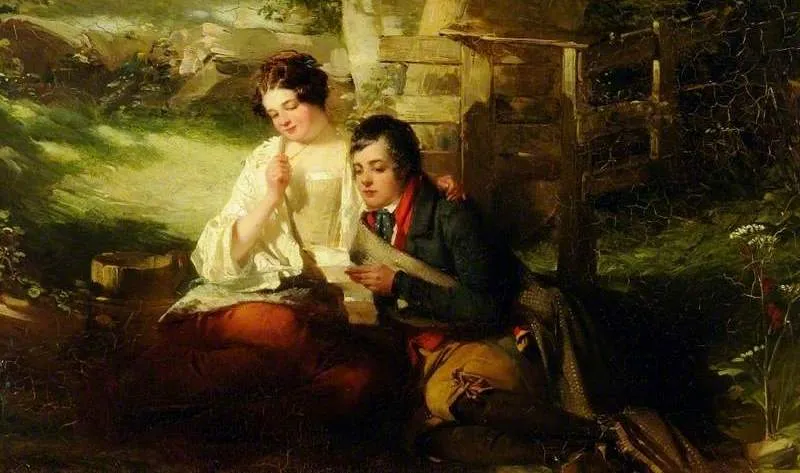
4. “Epitaph on My Own Friend” by Robert Burns (1759-1796)
Known globally for “Auld Lang Syne,” Scottish poet Robert Burns wrote this tribute for William Muir, a man who supported Burns and his father. It is a testament to character rather than achievement.
This choice suits a funeral for a person defined by their integrity and kindness. It strips away the need for grand accolades, focusing instead on the simple, powerful legacy of being “an honest man.” It posits that if an afterlife exists, the deceased is in bliss; if not, they still won the game of life by living well.
“If there’s another world, he lives in bliss;
If there is none, he made the best of this.”
poetry/robert burns/burns night
5. “The Departed” by John Banister Tabb (1845-1909)
John Banister Tabb, a priest and poet from Virginia, wrote with a spiritual density that belied the brevity of his lines. “The Departed” offers a comforting perspective on the connection between the living and the dead.
The poem suggests that separation is an illusion. Just as shadows are linked to the sun, the “spirits in eternity” reach back toward us. It is a graceful choice for those seeking reassurance that the bond of love survives the physical separation of death.
“They cannot wholly pass away
How far soe’er above…”
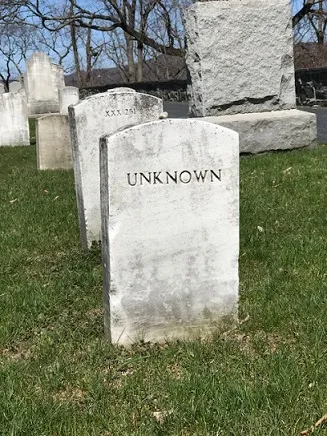
6. “Miss Me, but Let Me Go” (Unknown Author)
Often attributed to various sources ranging from Christina Rossetti to Edgar A. Guest, the true origin of this piece remains ambiguous. However, its popularity at funerals is undeniable. The tone is distinctly unselfish; it is a request from the deceased to the living to continue their lives.
This poem serves as a permission slip for joy. It acknowledges the pain of parting but insists that lingering in a “gloom-filled room” serves no one. It frames death as a solitary journey that everyone must eventually take, urging those left behind to bury their sorrows in good deeds.
grave of the unknown
“Miss me a little—but not for long
And not with your head bowed low.”
7. “Consolation” by Robert Louis Stevenson (1850-1894)
The Scottish novelist behind Treasure Island brings a narrative quality to this poem. Stevenson treats the journey of life as a physical path, one that is often “gusty” and “arduous.”
The central image is comforting: the deceased friend hasn’t vanished, but has simply walked slightly ahead, turning a corner that obscures them from view. They are “loitering” and “whistling,” waiting for us to catch up. It replaces the terror of abandonment with the patience of a paused conversation.
Robert Louis Stevenson by Henry Walter Barnett
“So that you too, once past the bend,
Shall meet again, as face to face, this friend…”
8. “Happy the Man” by John Dryden (1631–1700)
John Dryden, England’s first Poet Laureate, delivers a stoic and powerful message about ownership of one’s life. This is not a poem about weeping; it is about the triumph of having existed.
It resonates with the spirit of someone who lived on their own terms. The speaker defies the uncertainty of tomorrow by anchoring themselves in the certainty of the past. Fate cannot revoke the joys that have already been experienced. It is a declaration of victory against time.
“Tomorrow do thy worst, for I have lived today.”
dryden portrait
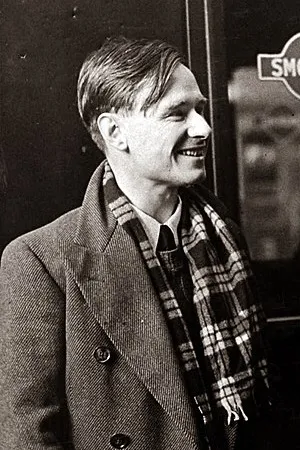
9. “Funeral Blues” by W.H. Auden (1907-1973)
W.H. Auden’s “Funeral Blues” (Stop all the clocks) gained massive cultural traction after being featured in the film Four Weddings and a Funeral. Unlike the gentler poems on this list, this piece captures the raw, screaming agony of grief.
It demands the world stop spinning because the speaker’s world has ended. It calls for the silencing of pianos, the dismantling of the sun, and the pouring away of the ocean. It validates the feeling that moving on is impossible and that the universe should acknowledge the magnitude of the loss.
WH auden poet
“Stop all the clocks, cut off the telephone,
Prevent the dog from barking with a juicy bone…”
10. “Music When Soft Voices Die” by Percy Bysshe Shelley (1792-1822)
Romantic poet Percy Bysshe Shelley wrote this brief, lyrical reflection shortly before his own untimely death by drowning. It is a study in sensory echoes.
Shelley observes how things linger after their source is gone: the vibration of music in the memory, the scent of violets. It is a soft, melodic choice for a service, focusing on the beautiful residue a life leaves behind. It whispers that love, like a dormant rose leaf, continues to slumber within us even when the beloved is gone.
poet shelley
“Music, when soft voices die,
Vibrates in the memory…”

 Biography of Alfred Lord Tennyson
 robert frost statue
 poetry/robert burns/burns night
 grave of the unknown
 Robert Louis Stevenson by Henry Walter Barnett
 dryden portrait
 WH auden poet
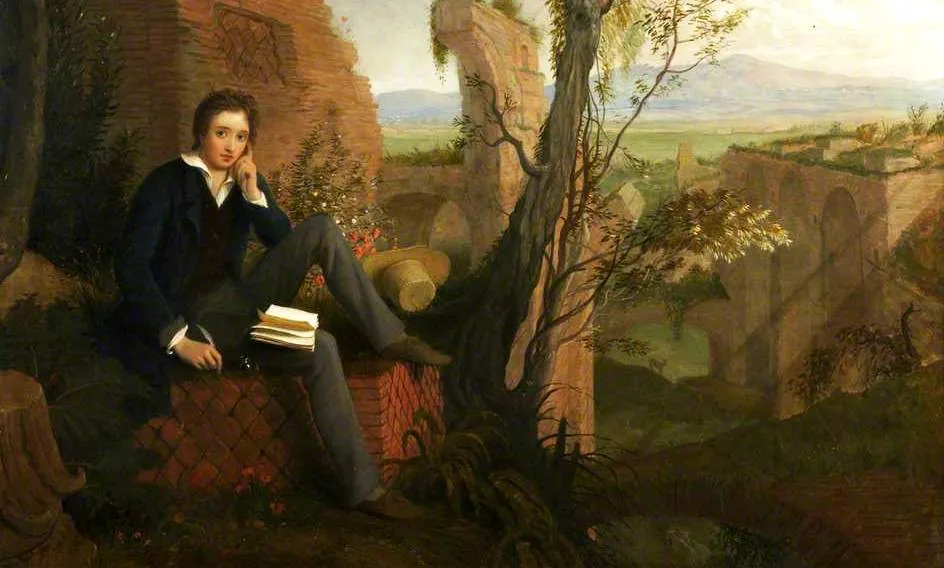 poet shelley


