Literature is rarely a solitary endeavor; it is a conversation across centuries. Sometimes that conversation is a whisper of reverence, other times a shout of betrayal. When a poet addresses another, the veil of fiction drops. We see the anxiety of influence, the bitterness of political disappointment, or the pure, unadulterated joy of discovering a kindred spirit.
Here is a curated look at ten moments where the masters turned their gaze not to nature or love, but to their own reflection in the eyes of others.
10. “When I Behold the Greatest” by Robinson Jeffers
“Then I renew my faith with firmer oaths, / And bind with more tremendous vows a spirit”
Robinson Jeffers, the stone-mason poet of the California coast, did not tolerate compromise. He viewed William Wordsworth’s acceptance of the Poet Laureateship not as an honor, but as a spiritual death-a surrender to the “granaries” of establishment and the coin of kings.
Jeffers constructs a fortress of integrity here. He sees the “cowardice of custom” swallowing a genius and uses that revulsion to fortify his own walls. It is a poem about the terrifying ease with which an artist can slide into mediocrity for comfort. Jeffers watches the fall, shudders, and carves his own vow into the rock: stay wild, stay prone, never yield to the “pittance.”
9. “To Wordsworth” by Percy Shelley
Percy Bysshe Shelley by Alfred Clint
“Thou hast like to a rock-built refuge stood / Above the blind and battling multitude”
Where Jeffers felt contempt, Shelley felt grief. This is an elegy for a man who was still alive. To the Romantics, Wordsworth was the “lone star,” the guide who taught them that nature spoke a holy language. Seeing him turn conservative, abandoning the radical liberty of his youth, broke Shelley’s heart.
The sonnet does not scream; it mourns. Shelley paints himself as the one left behind in the cold, while the mentor retreats into the warmth of conventionality. The sorrow here is heavy, palpable-the specific pain of realizing your hero has ceased to be the person who saved you, leaving you to carry the torch alone in the “winter’s midnight roar.”
8. “Poets and Their Bibliographies” by Lord Alfred Tennyson
Biography of Alfred Lord Tennyson
“You should be jubilant that you flourish’d here / Before the Love of Letters, overdone”
Tennyson offers a historical encyclopedia compressed into fourteen lines, touching on the agonizing perfectionism of the ancients. He nods to Virgil, who supposedly spent entire days polishing ten lines, and Horace, who advised letting a poem cure for nine years before release.
There is a modern anxiety humming beneath the classical references. Tennyson envies the ancients not for their talent, but for their silence. They flourished before the noise, before the “Love of Letters” became a swamp of criticism and over-analysis. It is a wistful look at a time when a poet could just be, without the weight of a thousand bibliographies crushing the song.
Amy Lowell does not just describe Keats; she inhales him. The poem is a sensory overload, bursting with “spiced winds,” “golden showers,” and “crimson-sphered completeness.” She treats Keats not as a statue on a pedestal, but as a terrifyingly fragile force of nature-a genius hanging by a “twisted tendril.”
The admiration here is visceral. Lowell, an Imagist, uses color and texture to bridge the gap between her modern world and Keats’s shortened life. She bows before him, asking the “boyish” master to come near, to let her hear just a faint throbbing of the music that defines him. It is a lush, desperate invocation.
6. “On Sitting down to Read King Lear Once Again” by John Keats
Portrait of John Keats 1819
“When I am consumed in the fire, / Give me new Phoenix wings to fly at my desire.”
Reading is often portrayed as a passive, safe activity. Keats knew better. He approaches Shakespeare’s King Lear not as a book, but as a furnace. He bids farewell to “golden tongued Romance”-the safe, pretty poetry-to throw himself into the “fierce dispute” of tragedy.
There is a reckless courage in these lines. Keats prepares to be “consumed.” He understands that true art requires the destruction of the self, a burning away of “impassion’d clay” to reach something eternal. He enters the forest of the play knowing he might not come out the same, praying only for the wings to rise from the ashes.
5. “Dante” by Henry Wadsworth Longfellow
Henry Wadsworth Longfellow by Julia Margaret Cameron
“Thy sacred song is like the trump of doom; / Yet in thy heart what human sympathies”
Longfellow, the great translator of Dante, understood the Italian master’s dual nature: the terrifying judgment of the Inferno and the tender, beating heart beneath it. He sees Dante walking the “realms of gloom,” stern and awful, yet filled with the soft light of stars.
Dante Alighieri looking at stars
The tragedy of Longfellow’s own life informs every syllable. Having lost his wife to a horrific fire, the “fiery tomb” and the search for peace are not academic exercises. When Longfellow describes Dante seeking refuge in the cloister, whispering “Peace!”, it is his own voice we hear echoing off the convent walls. The scholarship dissolves; only the shared sorrow remains.
4. “Chaucer” by Henry Wadsworth Longfellow
“He listeneth and he laugheth at the sound, / Then writeth in a book like any clerk.”
If “Dante” is the night, “Chaucer” is the break of day. Longfellow shifts gears effortlessly, capturing the earthy, raucous spirit of the Canterbury Tales. We leave the gloom for a lodge in a park, surrounded by hunting hounds and the smell of ploughed fields.
This is poetry as oxygen. Longfellow strips away the “old man” image to reveal the “poet of the dawn.” He hears the laughter, the crowing cock, the simple, crude joy of being alive. It serves as a perfect counterweight to the heaviness of the previous entry, proving that the literary canon has room for both the “trump of doom” and the “laugh at the sound.”
3. “To an American Painter Departing for Europe” by William Cullen Bryant
William Cullen Bryant portrait
“Gaze on them, till the tears shall dim thy sight, / But keep that earlier, wilder image bright.”
William Cullen Bryant addresses his friend Thomas Cole, the founder of the Hudson River School, right before Cole leaves for the Grand Tour of Europe. It is a plea for preservation. Bryant knows Europe offers “fair scenes” and deep history-graves, ruins, paths worn down by centuries of feet.
But Bryant champions the raw, untamed power of the American landscape: the “lone lakes,” the “bison,” the “desert eagle.” He fears the sophistication of the Old World will dull Cole’s eye for the wild sublimity of the New. It is a patriotic, protective sonnet, urging the painter to drink in the history but never let go of the “wilder image.”
2. “Scorn Not the Sonnet” by William Wordsworth
Wordsworth by Benjamin Robert Haydon
“with this key / Shakespeare unlocked his heart”
Wordsworth, often the target of younger poets, here takes the offensive. He defends the sonnet form against critics who dismiss it as a trivial toy. He summons the ghosts of the greats-Shakespeare, Petrarch, Tasso, Dante, Milton-standing them in a phalanx to protect the fourteen lines.
For Wordsworth, the sonnet is not a cage; it is a “trumpet.” It is the “glow-worm lamp” that cheers the weary traveler. The poem functions as a roll call of honor, a reminder that the most constrained structures often yield the most “soul-animating strains.” He vindicates the form by showing the giants who wielded it to heal their own wounds.
1. “On First Looking into Chapman’s Homer” by John Keats
“Silent, upon a peak in Darien.”
Keats returns to the top spot with the ultimate poem about the discovery of poetry. He confesses he had never truly breathed the “pure serene” of Homer until he heard George Chapman’s translation “speak out loud and bold.”
It is a moment of total, physical epiphany. Keats compares the sensation of reading to an astronomer discovering a new planet or an explorer staring at the Pacific Ocean for the first time. The silence in the final line is deafening. It captures that rare, holy instant where art strikes us dumb, leaving us standing on a precipice, staring out at a new world we never knew existed. Literature, Keats argues, is not just words; it is a new geography.

 Percy Bysshe Shelley by Alfred Clint
 Biography of Alfred Lord Tennyson
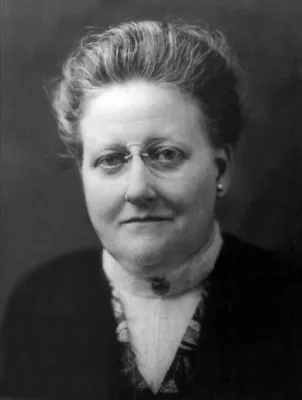 Amy Lowell portrait
 Portrait of John Keats 1819
 Henry Wadsworth Longfellow by Julia Margaret Cameron
 Dante Alighieri looking at stars
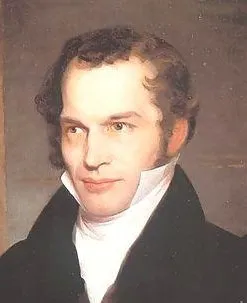 William Cullen Bryant portrait
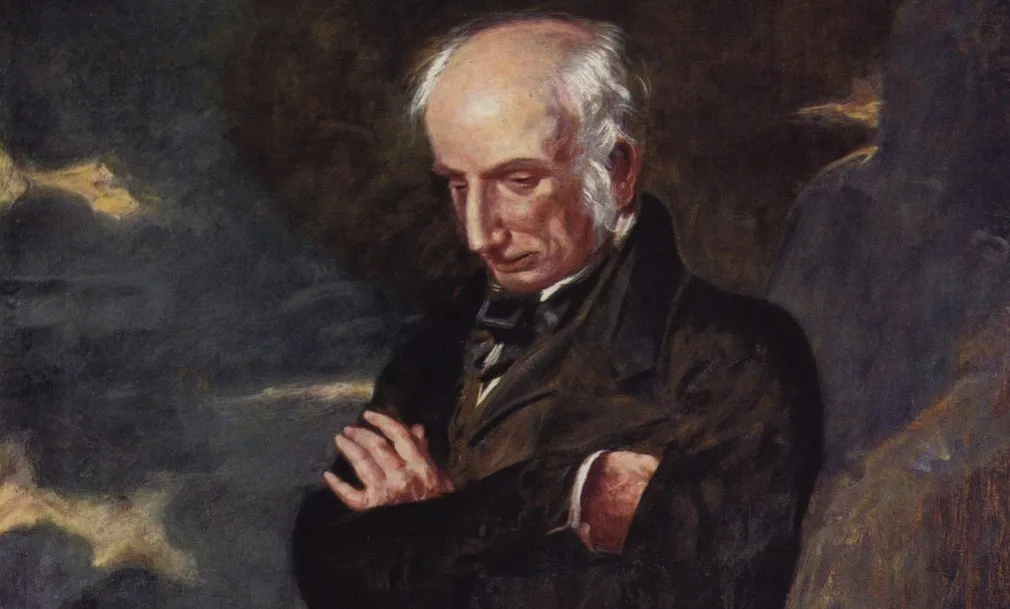 Wordsworth by Benjamin Robert Haydon


