In an industry often defined by the ephemeral—the fleeting trends of seasons and the rapid turnover of consumption—Brunello Cucinelli stands as a custodian of permanence. He has built an empire not merely on the softness of cashmere, but on the solidity of stone and the weight of moral philosophy. His approach to fashion transcends the cut of a blazer or the weave of a sweater; it is an exercise in “humanistic capitalism,” a quiet revolution that seeks to harmonize profit with human dignity.
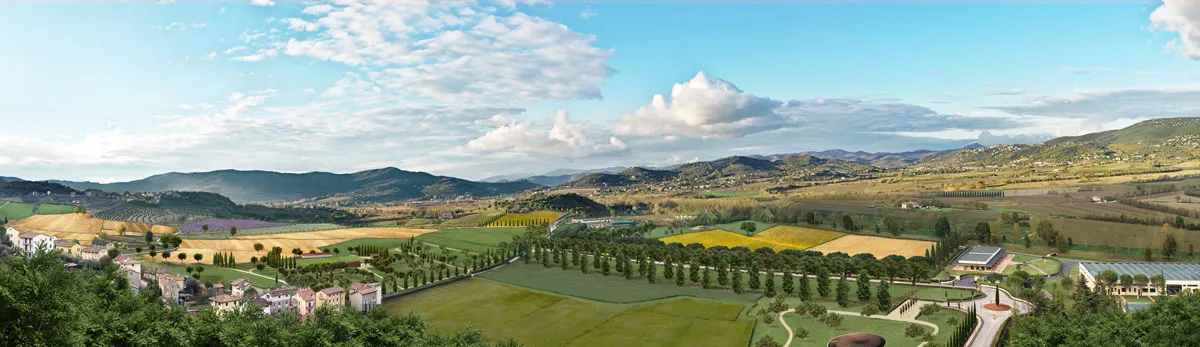
The Umbrian hamlet of Solomeo, restored from medieval dereliction to a sanctuary of industry, serves as the physical manifestation of this ethos. Here, amidst the scent of lavender and olive trees, Cucinelli operates not as a typical CEO, but as a temporary guardian of beauty.
BC_SOLOMEO-E-SCUOLA-DEI-MESTIERI
The Custodian of Beauty
Cucinelli’s headquarters, housed within a 14th-century fortress, challenges the brutalist efficiency of modern manufacturing. Dressed in corduroy and his signature cashmere, Cucinelli moves through Solomeo with the air of a caretaker rather than a conqueror. “I’ve always considered myself a temporary custodian of the places where I live and work,” he reflects. This perspective draws heavily from the memoirs of Emperor Hadrian, finding solace in the idea that we own nothing truly, save for the responsibility we hold toward the land and its history.
The restoration of Solomeo was not a vanity project but a reclamation of heritage. Walking the cobblestone streets in 1985, Cucinelli saw potential in the ruins—a vision of a workplace where the serenity of the environment would seep into the labor itself. The result is a seamless integration of culture, art, and industry, where the stress of production is tempered by the timelessness of frescos and ancient masonry.
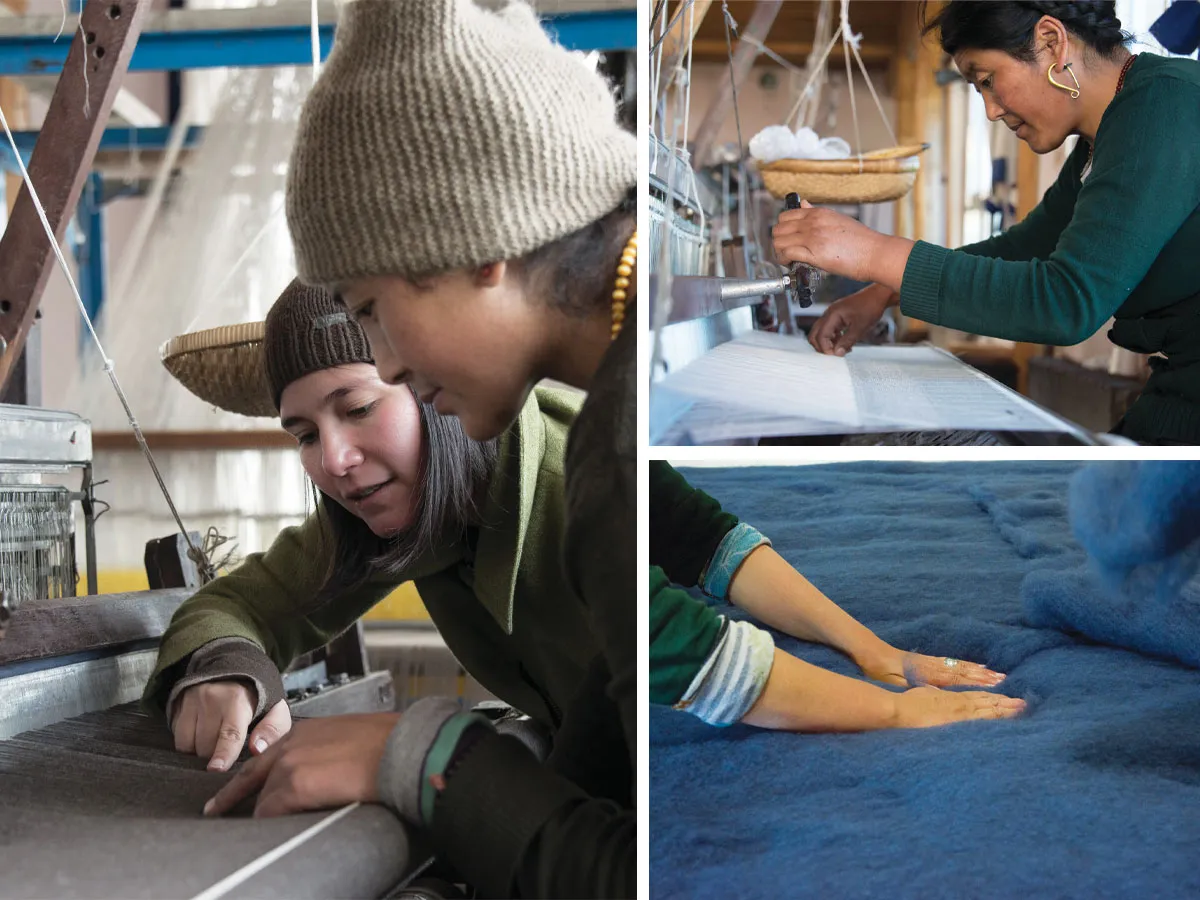
If Solomeo provides the structural context, cashmere provides the tactile soul of the Cucinelli brand. The journey began in the 1970s, fueled by a loan of half a million lire and a youthful audacity to dye the typically neutral fiber in “all the colors of the rainbow.” For Cucinelli, cashmere is the “noblest of fibers,” a material that commands respect due to its scarcity and the labor required to harvest it.
Sourced from the Hircus goats of Mongolia, the wool acts as a bridge between the raw majesty of nature and the refined “sprezzatura”—the studied carelessness—of Italian style. The math of luxury here is stark: one sweater represents the sheared wool of four goats over two years. This inherent value demands that the final product be treated not as a disposable commodity, but as an heirloom meant to be worn and treasured for a lifetime.
cashmere-fur-yarn
The Moral Law Within
The aesthetic harmony of Cucinelli’s world is deeply rooted in a personal history of observed indignity. The transition from a quiet farming life to an urban existence when he was fifteen exposed him to the harsh realities of industrial labor. Witnessing his father return from a cement factory, humiliated and tearful, instilled in Cucinelli a lifelong vow: whatever his path, it would be paved with respect for the human spirit.
This resolve was crystallized through philosophy. During his university years, the robust theological and political debates of the local coffee shops led him to Immanuel Kant, whose words—“The starry sky above me, and the moral law within me”—became a guiding north star.
The business model that emerged is one where profit serves purpose. In Solomeo, employees are paid significantly above the industry standard. The workday is rigid in its limits, prohibiting after-hours emails to ensure the sanctity of private life. The company cafeteria is a restored farmhouse serving traditional Umbrian dishes, fostering a communal ritual of nourishment that honors the Italian rhythm of life.
The physical expansion of Cucinelli’s vision extends beyond the factory walls into the cultural life of the valley. The construction of the Teatro Cucinelli, a 240-seat theater built by local masons, stands as a deliberate “gift to humanity.” Inspired by the late Renaissance elegance of Sabbioneta and Parma, it features a curved Ionic portico and an inscription dedicating the structure to the eternal values of beauty and aspiration.
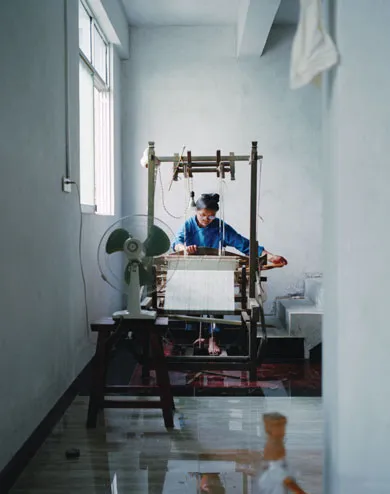
This is where the “Project for Beauty” finds its highest expression. It is not enough to clothe the body; one must also clothe the mind. By embedding a theater, a library, and a School of Craftsmanship into the industrial complex, Cucinelli asserts that the artisan is an artist, and the laborer is a philosopher. The school ensures the transmission of fading disciplines—masonry, tailoring, darning—to a new generation, securing the longevity of Italian craftsmanship.
Brunello Cucinelli_Office
The Architecture of Resilience
When the world faced the silence of the pandemic, Cucinelli responded not with panic, but with the epistolary grace of a stoic. His letters—”Spring Letter” and “A Letter for the New Time”—served as anchors for his community, reminding them that dignity and hope are not subject to market fluctuations.
This resilience is built into the very stones of Solomeo. Cucinelli’s gaze is fixed on the horizon of centuries, not quarters. Whether designing a collection influenced by the subtle palettes of his daughters, Camilla and Carolina, or planning a park that will mature over decades, the intent remains singular. He is building a legacy where the “Supreme Good” is accessible through work, and where the output of industry causes as little damage as possible to the earth and the soul.

 BC_SOLOMEO-E-SCUOLA-DEI-MESTIERI
 BrunelloCucinelli stato-finale-area-Parchi-della-Custodia
 BrunelloCucinelli_Solomeo
 cashmere-fur-yarn
 BrunelloCucinelli_HomeandStudio
 Brunello Cucinelli_MatchSet_02
 Brunello Cucinelli_Office
 BrunelloCucinelli_Solomeo_01
 Brunello Cucinelli MatchSet