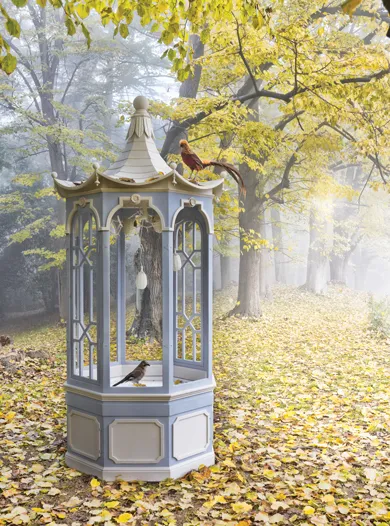
The ascent to Poggio ai Segugi is a journey through time as much as terrain. As the wheels traverse the rustic road winding through the Mugello hills—land once held by the Medicis—the modern world begins to dissolve. Here, amidst 1,650 acres of Tuscan wilderness, the pheasants roam with the confidence of rightful heirs, greeting visitors at the gates. This is not merely a country manor; it is the physical manifestation of Stefano Ricci’s psyche: a sanctuary where the untamed natural order coexists with the highest refinements of Florentine civilization.
Ricci, the patriarch of his eponymous bespoke menswear brand, dominates this space not as a landlord, but as a warden. His estate, perched atop a hill, serves as a vantage point—a motif that recurs in his branding, symbolized by the eagle. It suggests a man accustomed to looking far ahead, past the horizon of fleeting trends. The hunter’s lodge adjacent to the main house reveals a crucial aspect of his character: the outdoorsman who understands that true preservation requires a hands-on engagement with the ecosystem.
Poggio ai Segugi
The Architecture of Character
Entering the manor feels like a seamless transition from the perfection of nature to the perfection of man. The architecture is strictly Tuscan—rustic limestone walls, arched doorways, and stately windows that frame the rolling hills like Renaissance paintings. It is an aesthetic that mirrors the city of Florence, lying less than 70 kilometers away, yet here it feels distilled, quieter.
Inside, the atmosphere shifts from rustic to regal. The interior is adorned with the Stefano Ricci home collection, where hand-crafted crystal water glasses and hand-hammered silver wine goblets sit in silent conversation with taxidermied hunting trophies. This juxtaposition is deliberate. It balances the raw, masculine vitality of the hunt with the delicate, obsessive craftsmanship of the silversmith.
Ricci himself fills the room with an aura that matches his brand’s tripartite motto: “Honour, Power, Pride.” Yet, this is not the cold power of a corporate tycoon; it is the warm, bearded gravity of a patriarch who views his role through the lens of heritage. “I am a normal person in a normal family, which has old tradition,” Ricci notes. This ethos is the inheritance of his two sons, Niccolò (CEO) and Filippo (Creative Director), who now stand alongside him as custodians of this legacy.
The Stefano Ricci home collection adorns the founder’s estate interior.
A Resistance Against the Ephemeral
In an industry often defined by fluidity and rapid obsolescence, Ricci stands as a bulwark of traditionalism. His philosophy on menswear is uncompromising. He perceives a sharp dichotomy in the fashion world: the designers who blur gender lines, and the “real tradition” of men’s clothing—a world of tailoring, structure, and distinct masculinity.
This worldview is not born of stubbornness, but of a deep reverence for the “spirit of Florence.” For Ricci, a suit is not just cloth; it is a cultural continuation. Growing up in the cradle of the Renaissance—the birthplace of Dante, da Vinci, and Michelangelo—he absorbed the lesson that true beauty requires patience. This is evident in his “Patchwork” tie series, arguably the most expensive in the world.
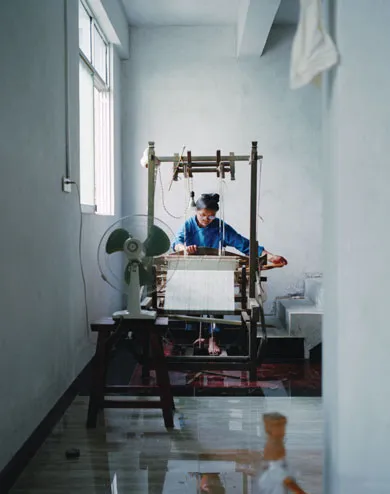
These are not merely accessories; they are textile mosaics. Hundreds of small silk fragments are hand-sewn, utilizing fabric spun on looms so ancient they can yield only enough silk for two ties in a single hour. In a world obsessed with scaling production, Ricci’s choice to embrace such inefficiency is a radical act. It prioritizes the “aura” of the object over its commercial velocity.
Stefano Ricci grew up in Florence, where he learned the essence of quality and classic design.
The Alchemist of Silk
Ricci’s career began in 1972 with a collection of ties, driven by a desire to create the finest neckwear in existence. By 1974, his work was already being lauded at Pitti Uomo. But his most significant contribution to the history of craftsmanship came decades later, not as a designer, but as a savior.
In 2010, the Ricci family acquired the Antico Setificio Fiorentino. Hidden down a Florentine alleyway, this legendary silk mill had been producing fabrics for royalty since 1786. The acquisition was less a business transaction and more a duty of care. The industrial revolution and the race for cheaper textiles had pushed such artisanal mills to the brink of extinction.
Ricci and tradition are inseparable in his designs and life.
Stepping through the burnt-red door of the Setificio is an auditory experience as much as a visual one. The rhythmic thumping and clicking of 17th and 18th-century semi-automatic looms create a mechanical symphony that has played uninterrupted for centuries. In one corner, a warper designed by Leonardo da Vinci—his sketches still adorning the walls—remains in use.
This is the anchor of the Ricci philosophy: the refusal to let the machine replace the hand. While a modern machine can finish a task in a minute, the four to five hours spent by a human hand imbue the object with a soul that technology cannot replicate. This conviction led to the formation of “Classico Italia,” a consortium Ricci helped found to protect the integrity of the “100% Made in Italy” label against the rising tide of outsourced production.
Clockwise from left: A Stefano Ricci bespoke suit incorporates 186 handcrafted steps; every piece of clothing is handmade, true to its artisanal Florentine lineage; master craftsmen and apprentices work side by side to ensure that the quality remains the world’s best.
Vision Beyond Borders
Despite his intense focus on local heritage, Ricci possesses the eagle’s distant gaze. In 1993, he opened his first monobrand boutique in Shanghai, a move considered risky at the time. While others looked at economic data, Ricci looked at the people. “I was looking at the way the young generation was moving, walking, the energy of the eyes,” he recalls.
He understood that the appetite for genuine heritage transcends language. The Chinese market, though separated by vast distance and culture, recognized the value of the Florentine artisan. Today, with over 50 boutiques worldwide—each designed personally by Ricci and built by Florentine craftsmen—the brand has proven that hyper-localism, when executed with absolute integrity, becomes universal.
Left: Antico Setificio Fiorentino is one of the last remaining traditional artisanal silk manufacturers in the world. Right: Its hand-operated and semi-mechanical 17th- and 18th-century looms weave exquisite silks, embellished by a warper designed by Leonardo da Vinci.
The Continuity of the thread
The narrative of Stefano Ricci is ultimately one of succession. Whether it is the donation of game meat to local towns, the preservation of Da Vinci’s machinery, or the mentorship of his sons, the focus is always on what remains.
“I don’t want to be luxury, I want to be different,” Ricci asserts. In his lexicon, “luxury” is a marketing term; “quality” is a moral imperative. As he stands in Poggio ai Segugi, surrounded by the fruits of his labor and the history of the land, it is clear that he sees himself as a link in a chain. The “Patchwork” ties and the bespoke suits are merely the medium; the message is the endurance of Florentine culture itself.
Stefano Ricci S.p.A. is truly a family affair — Filippo as creative director (left), Stefano, patriarch and lead designer (right), and Niccolò (center), CEO.
“I really feel very lucky to make some contribution to the preservation of these traditional crafts,” he reflects. It is a humble admission for a man who has built an empire, but it rings true. In the end, the master of the manor is simply the one who holds the keys for the next generation.

 Poggio ai Segugi
 The Stefano Ricci home collection adorns the founder’s estate interior.
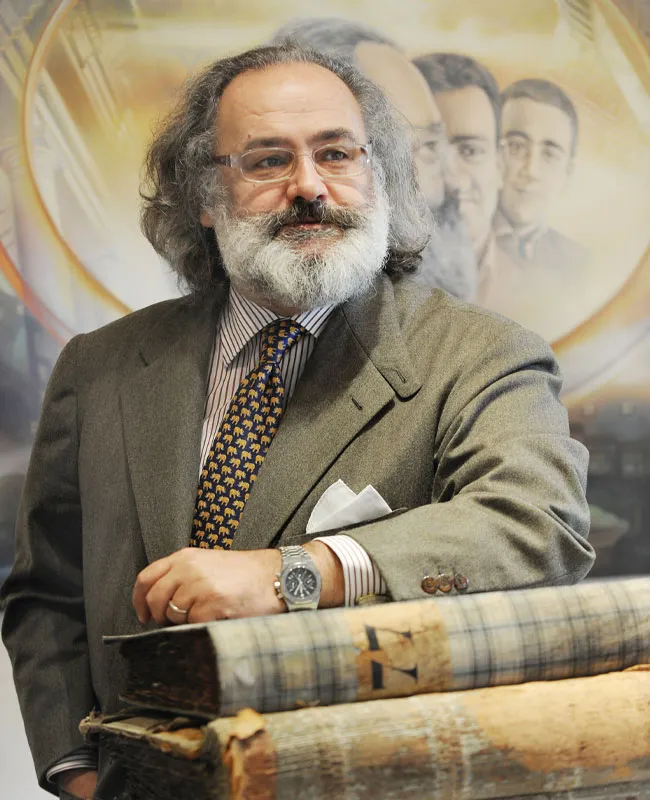 Stefano Ricci grew up in Florence, where he learned the essence of quality and classic design.
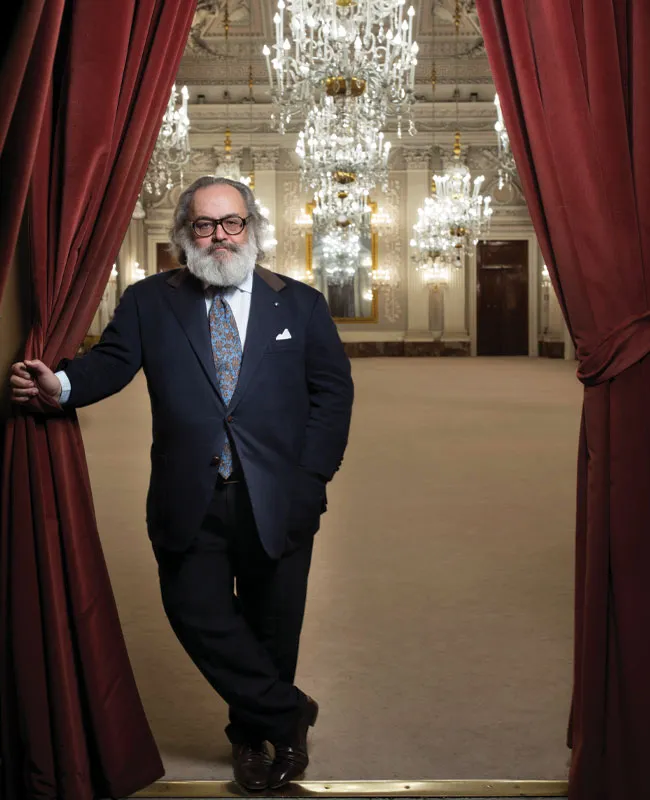 Ricci and tradition are inseparable in his designs and life.
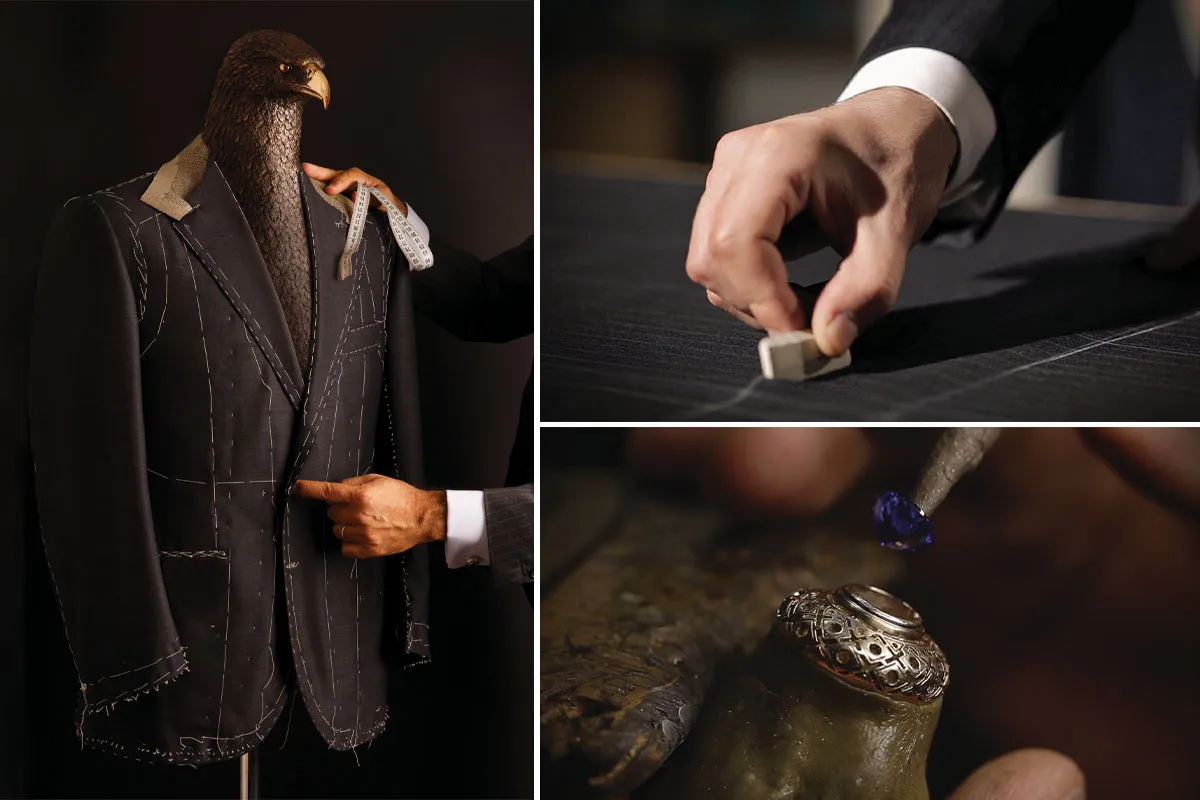 Clockwise from left: A Stefano Ricci bespoke suit incorporates 186 handcrafted steps; every piece of clothing is handmade, true to its artisanal Florentine lineage; master craftsmen and apprentices work side by side to ensure that the quality remains the world’s best.
 Left: Antico Setificio Fiorentino is one of the last remaining traditional artisanal silk manufacturers in the world. Right: Its hand-operated and semi-mechanical 17th- and 18th-century looms weave exquisite silks, embellished by a warper designed by Leonardo da Vinci.
 Stefano Ricci S.p.A. is truly a family affair — Filippo as creative director (left), Stefano, patriarch and lead designer (right), and Niccolò (center), CEO.