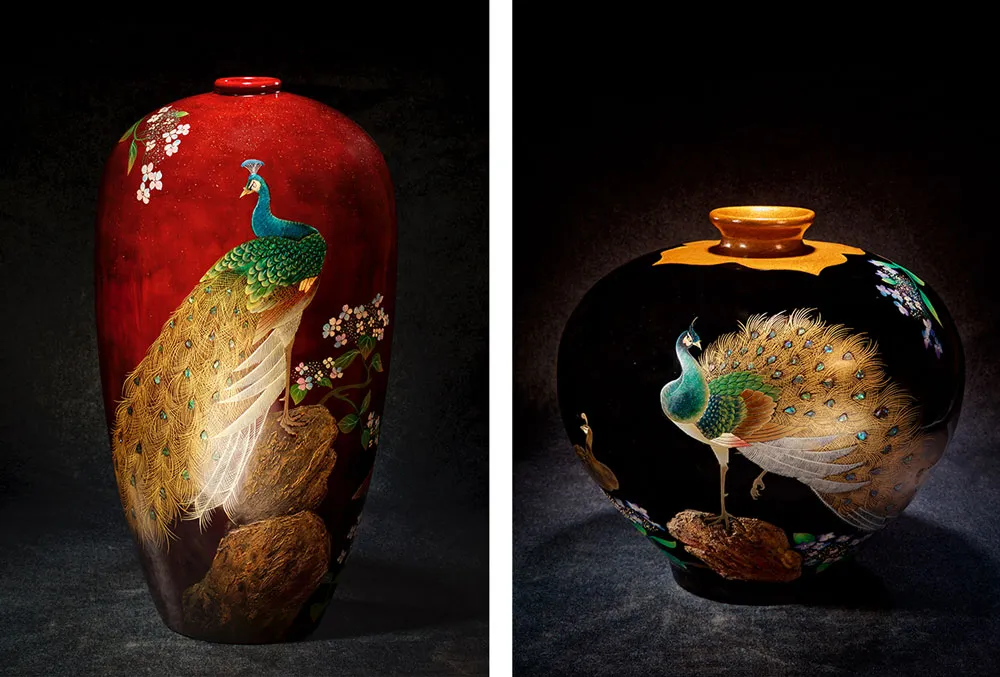
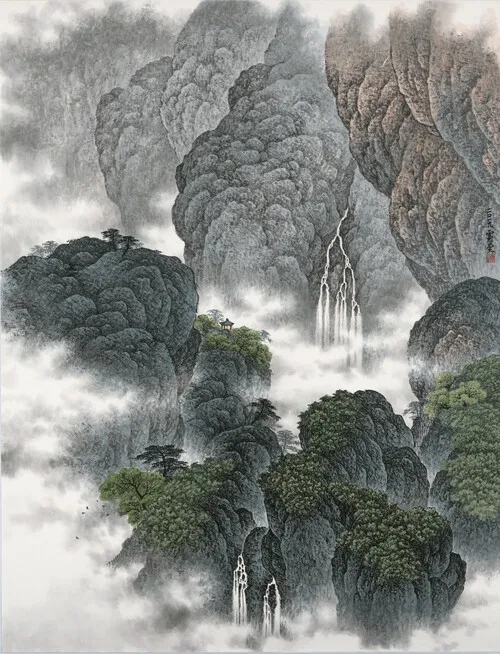
There is a profound sophistication inherent in lacquer painting, a quiet intensity that demands more than a passing glance. It is an art form defined not merely by its visual composition, but by the depth of its materiality—precise, refined, and deceptively delicate. The viewer is first seduced by the vibrancy of the colours and the enigmatic lustre of the surface, a shine that seems to hold light within it rather than simply reflecting it. Yet, beneath this polished exterior lies a history of immense patience, where stroke upon stroke accumulates into tranquil, idyllic imagery that defies the passage of time.
Tracing its lineage back some 7,000 years to ancient China and appearing in Japan three millennia ago, lacquer art began as a dialogue between utility and beauty. In its earliest iterations, the resin served a functional purpose, providing a waterproof, protective coating for daily objects. However, the allure of the medium soon transcended utility. It evolved into a vehicle for embellishment, and eventually, into a painting technique in its own right—a discipline requiring a mastery of chemistry as much as aesthetics.
High Crest Showcasing Emerald Green II by Wang Hsien-zhi, displaying the vibrant depth of lacquer art
From Imperial Courts to Rue Cambon
The journey of lacquer from the East to the West is a testament to its universal allure. By the 17th century, trading posts had begun bartering these luxury objects, introducing Europe to the mysterious, glossy treasures of the Orient. However, it was in the 20th century that lacquer found one of its most famous advocates in the fashion icon Coco Chanel.
Her apartment on Rue Cambon in Paris became a sanctuary for this art form. Chanel surrounded herself with exquisite Chinese Coromandel screens, characterized by dark mahogany lacquer intricately inlaid with mother-of-pearl. These ebony screens were more than mere decoration; they were a profound source of inspiration, influencing designs that remain integral motifs for her brand to this day. Through her patronage, the ancient craft found a new context, bridging the gap between traditional artisanry and high fashion.
Detailed texture of a lacquer artwork, highlighting the meticulous surface quality
The Guardian of the Resin
Despite its influence on contemporary art and fashion, the true essence of lacquer often remains obscure to the modern public. Wang Chun-wei, a third-generation lacquer artist, stands as a custodian of this fading knowledge. For Wang, the preservation of this craft is not just about technique, but about maintaining a connection to a specific cultural geography.
“It’s a pity that there aren’t many people who understand lacquer art—its history and process,” Wang observes. He describes lacquer as the quintessential Eastern art form, deeply rooted in the soil of Asia. The medium’s key ingredient—the resin derived from lacquer trees—is biologically tied to the “Lacquer Road,” a distinct belt spanning various Asian nations.
The exclusivity of the material is dictated by nature itself. “It was crucial that they came from this area because once the trees were transplanted, they would no longer have any resin,” Wang explains. This botanical reality makes the Lacquer Road a rare treasure, rendering the art form inextricably unique to the region.
Three generations of the Wang family, masters of lacquer painting
A Lineage of Patience and Precision
The creation of lacquer art is an arduous process, historically reserved for the nobility and imperial courts. Craftsmen would painstakingly apply raw lacquer over tableware, furniture, vases, and jewellery boxes, layering the resin before embellishing it with precious materials. Gold and silver powders, iridescent pearls, and shells were inlaid to create intricate narratives on the dark, glossy void of the lacquer base.
Over centuries, distinct regional iterations emerged. Japan developed its signature maki-e (sprinkled picture) technique, while China and Korea perfected the art of mother-of-pearl inlay. Yet, regardless of the stylistic variation, the underlying discipline remains the same: a demand for absolute precision.
Close-up of a lacquer piece showing the intricate application of color and texture
For the Wang family, this meticulousness is a heritage passed down from Wang Ching-shuang to his son Wang Hsien-zhi, and now to Wang Chun-wei. Each piece is a testament to the endurance of the artist, requiring a meditative focus to manipulate a material that is both fluid and stubborn. In a world that increasingly favors speed, lacquer painting remains a sanctuary of slowness, where time is captured and preserved in layers of resin and light.

 High Crest Showcasing Emerald Green II by Wang Hsien-zhi, displaying the vibrant depth of lacquer art
 Detailed texture of a lacquer artwork, highlighting the meticulous surface quality
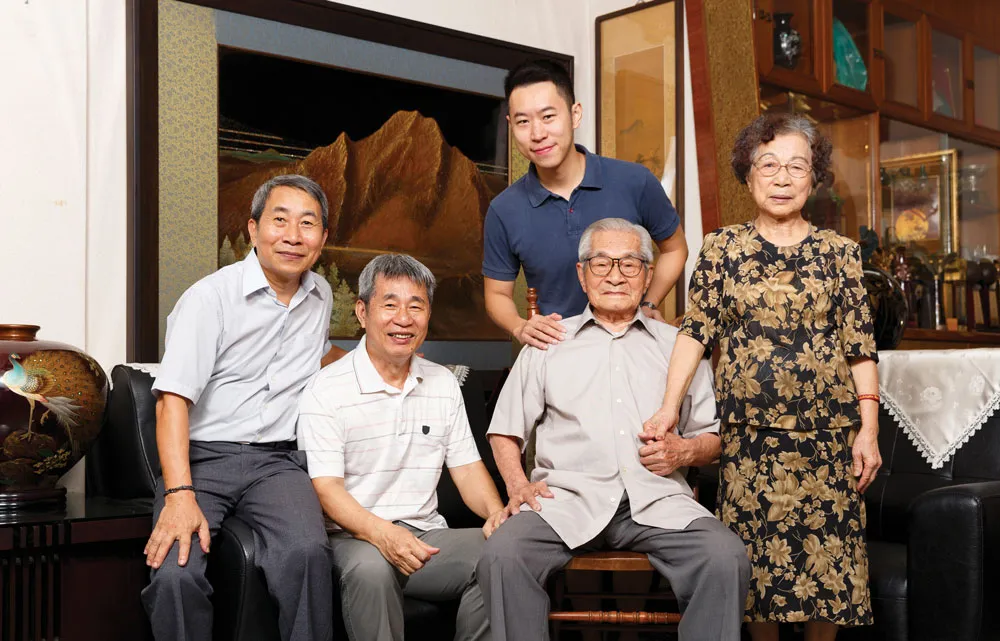 Three generations of the Wang family, masters of lacquer painting
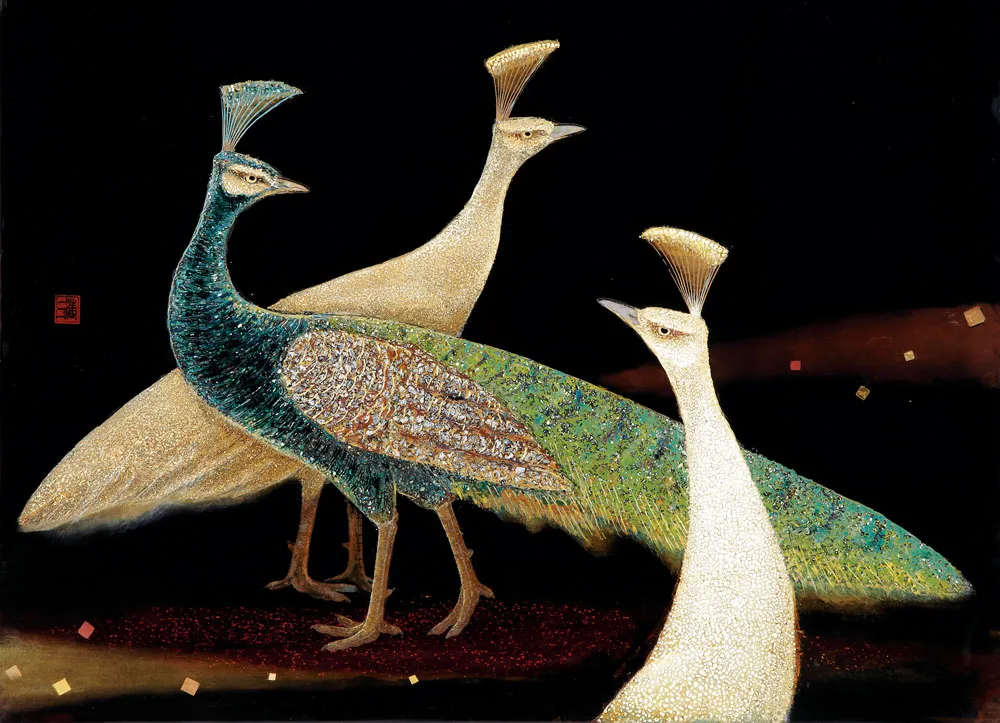 Close-up of a lacquer piece showing the intricate application of color and texture