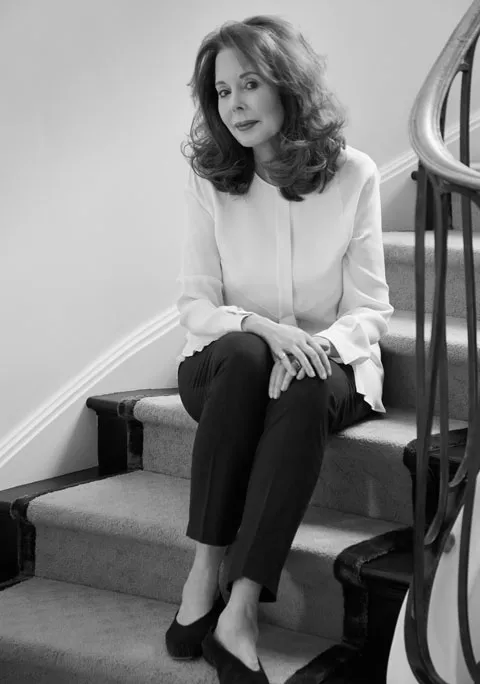
The Park Avenue Armory, with its Gilded Age interiors and vast drill hall, has long stood as a cathedral for the decorative arts. Yet, space requires spirit to truly come alive. Returning to this historic venue, Salon Art + Design 2024 does not merely occupy the hall; it reinterprets it. Under the newfound leadership of Executive Director Nicky Dessources, the fair has shifted its axis—moving away from a purely transactional marketplace toward a curated ecosystem where the boundaries between fine art and collectible design dissolve into a single, fluid conversation.
Dessources, bringing nearly a decade of experience from Sanford L. Smith + Associates, approaches this tenure with a curator’s eye for cohesion. Her vision is one of “fresh energy” and “refinement,” transforming the fair into a vibrant platform for inclusivity. The objective is not just display, but dialogue—a bridging of worlds where the antique informs the contemporary, and the established elevates the emerging.
Nicky Dessources
The Architecture of Arrival
The experience of Salon begins at the threshold. This year, the transition from the chaotic rhythm of New York streets to the sanctuary of the Armory is orchestrated by Brad Thornton, founder of Thornton Projects. Tasked with reimagining the entryway, Thornton does not compete with the building’s heavy architectural heritage; instead, he engages with it.
His installation honors the Armory’s grandeur while injecting a modern syntax—a visual prelude that prepares the visitor for the eclecticism inside. “Brad understands Salon’s unique energy,” notes Dessources. It is a stage-setting that signals the fair’s dual commitment: respecting history while relentlessly pursuing the new. This philosophy extends to the fair’s curatorial backbone, now fortified by a Design & Art Advisory Council. Acting as a bridge between galleries, collectors, and artists, this body of experts ensures that the selection remains intellectually rigorous, blending the past and present into an ongoing narrative.
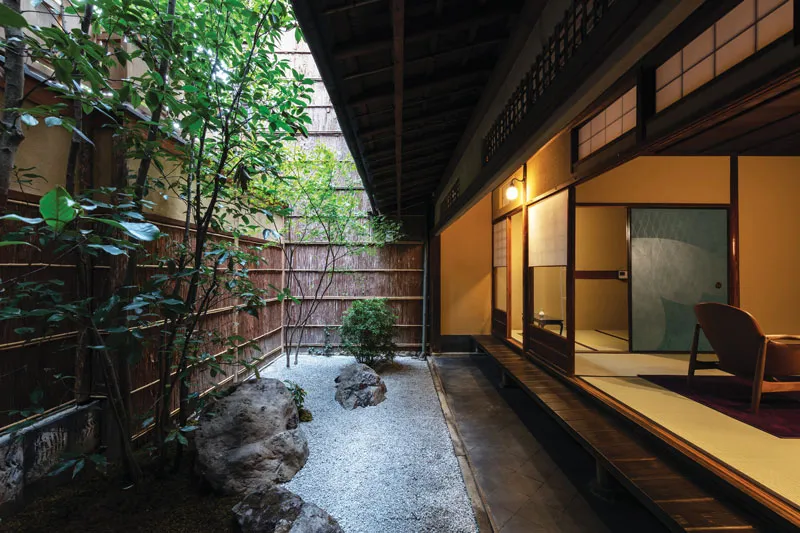
Salon Art + Design Atmosphere
Echoes of Antiquity
Amidst the influx of contemporary innovation, the presence of the classical serves as a necessary anchor, reminding us that form and beauty are ancient pursuits. A standout articulation of this timeline is the Roman Marble Torso of Bacchus.
Inspired by Praxiteles’ Apollo Lyceius from the fourth century BC, this marble fragment carries the weight of millennia. It depicts Dionysos—the god of wine and revelry—in a state of idealized relaxation. The piece is not merely a sculpture; it is a study in the “divine form,” capturing the softness of flesh in cold stone. Placing such a historic artifact within a design fair creates a powerful juxtaposition, forcing a comparison between the ancient chisel and modern fabrication, proving that the pursuit of the sublime is a constant across eras.
Roman Marble Torso of Bacchus
The Poetics of Materiality
The dialogue continues into the realm of craft, where the manipulation of material becomes a language of its own. Ippodo Gallery’s debut presentation, Growing Roots: The Next Generation of Japanese Art, introduces a meditative counterpoint to Western design. Here, the focus shifts to the mastery of substance—gold, silver shibuichi, mother-of-pearl, and clay.
Central to this presentation is Tetsuya Ishiyama’s Inlaid Large Jar. The work is a testament to the quiet power of surface and depth. Ishiyama’s technique goes beyond mere decoration; the inlay process is an act of embedding memory into the vessel. The result is an object that feels both grounded and ethereal, demanding a slower, more tactile appreciation from the viewer.
Inlaid Large Jar by Tetsuya IshiyamaDetail of Tetsuya Ishiyama work
Illuminating the Inner World
Moving from the solid to the luminous, Gallery FUMI presents a solo exhibition by New York ceramic artist Jeremy Anderson, titled The Space Inside. This installation functions less like a booth and more like an ecosystem. Anderson invites viewers into a personal, imaginative realm—a “peaceful world” born from the solitude of home.
The highlight of this immersive environment is the Ephyra Pendant installation. A cluster of stoneware and glass orbs, the piece hangs like a constellation of biological forms. Accompanying these are illuminated orbs that resemble fantastical vines, blurring the line between lighting design and organic sculpture. Anderson’s work, incorporating wheel-thrown ceramics with beading, lustre, and cast bronze, suggests a hidden, otherworldly narrative, turning the utility of a lamp into a creature of wonder.
Ephyra Pendant Installation by Jeremy Anderson
The Fragility of Nature
Completing this circuit of sensory experiences is the work of Irish ceramic artist Jennifer Hickey, making her U.S. debut with Liz O’Brien Gallery. Hickey’s sculptures are studies in fragility and accumulation. Living in the West of Ireland, she translates the rhythms of nature into porcelain.
Her works, such as Peony, Seedling, and Sweet Violet, are constructed from thousands of fine porcelain components—petals, feathers, scales—painstakingly sewn onto tulle netting. The result is deceivingly light, evoking the swirling texture of a rose or the sudden movement of a startled bird. In the context of the Armory’s heavy, historic architecture, Hickey’s porcelain clouds offer a moment of breathless delicacy, embodying the fair’s capacity to house both the monumental and the microscopic.
Porcelain object by Jennifer HickeyDetail of Jennifer Hickey work
Through these varied intersections—Brazilian mid-century furniture at Bossa, ancient marble, Japanese inlay, and Irish porcelain—Salon Art + Design 2024 succeeds in its mission. It constructs a space where the past and present do not just coexist, but actively inform one another, leaving visitors with a renewed sense of the profound connection between life and the objects we choose to inhabit it.

 Nicky Dessources
 Salon Art + Design Atmosphere
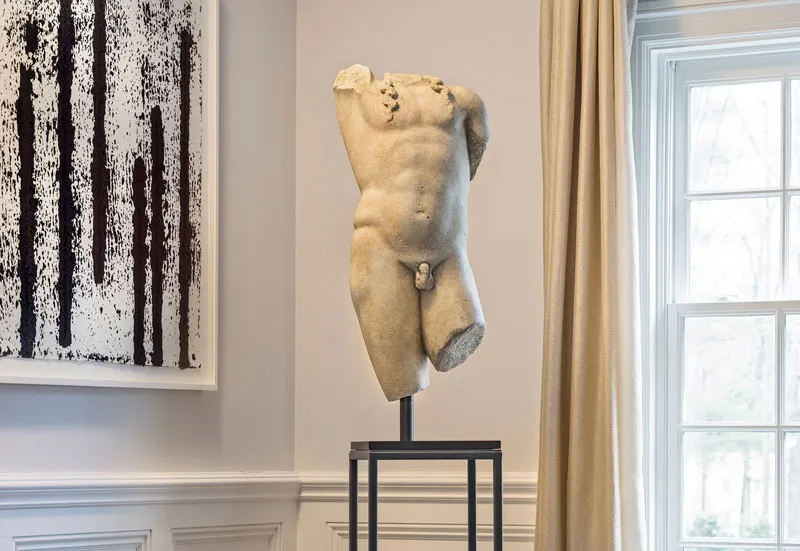 Roman Marble Torso of Bacchus
 Inlaid Large Jar by Tetsuya Ishiyama
 Detail of Tetsuya Ishiyama work
 Ephyra Pendant Installation by Jeremy Anderson
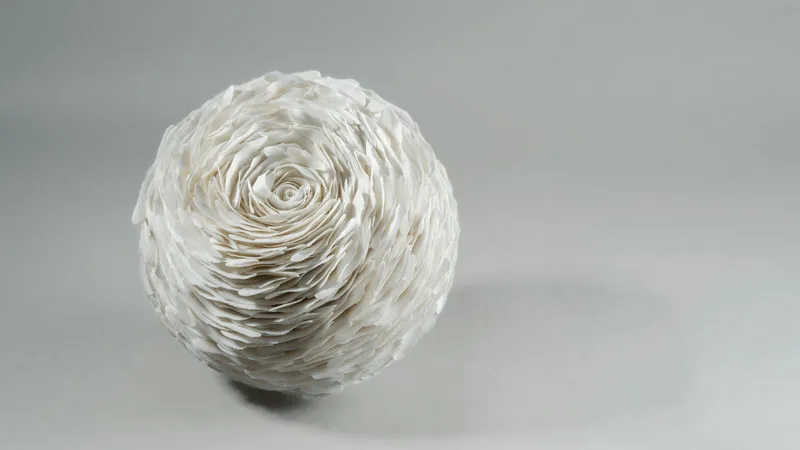 Porcelain object by Jennifer Hickey
 Detail of Jennifer Hickey work