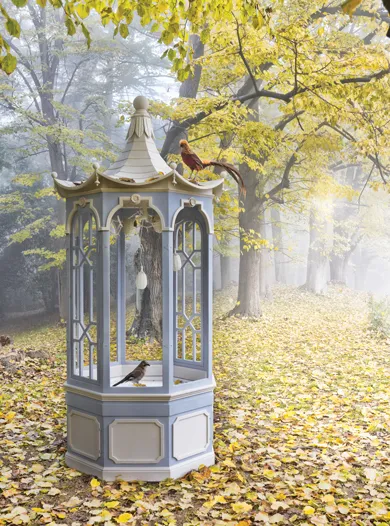
In the quiet corners of Vancouver, far removed from the ephemeral trends of digital design, there exists a sanctuary where the decorative arts are not merely preserved but vigorously reinvented. Since 1983, Gorman Studios has operated less like a modern commercial firm and more like a Renaissance guild—a humble atelier where the hands of artisans breathe life into some of the world’s most opulent surfaces.
Under the direction of founder Peter Gorman, the studio has become a custodian of vanishing techniques, from the delicate intricacies of Chinoiserie to the luminous depths of reverse glass painting. It is a place where history is measured in layers of lacquer and palladium leaf.
The Pedigree of Craft
The survival of high craftsmanship often hangs by a slender thread, passed from one master to a singular apprentice. By the mid-20th century, the great decorative lineages of Europe were fading, casualties of war and shifting industrial tastes. The revival of these arts in North America traces back to Isabella O’Neil in New York City during the 1950s, and subsequently to Gail Lawrence in San Francisco.
chinoiserie panel by Gorman Studios*“Menagerie” room screen featuring palladium leaf, ink wash, and japanned oil paints.*
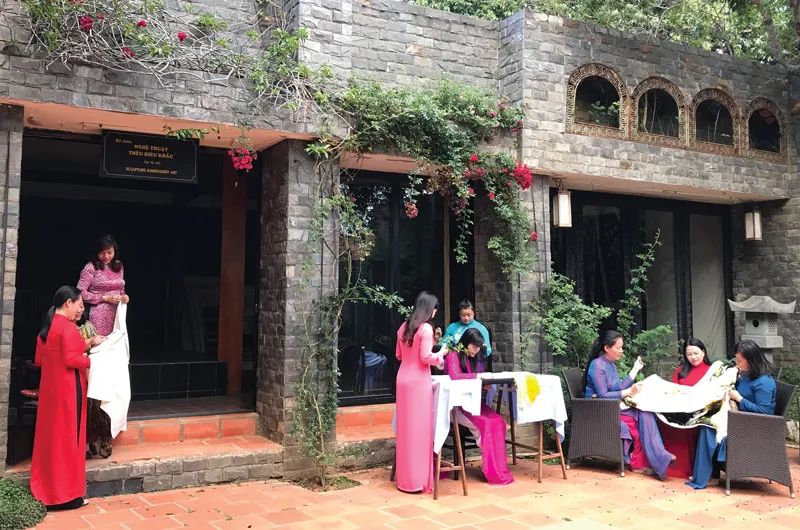
It is within this rare lineage that Peter Gorman stands. As the protégé of Gail Lawrence—widely considered the living authority on authentic Chinoiserie techniques—Gorman became the first decorative painter of his caliber in Vancouver in the early 1980s. This mentorship was not simply about learning to paint; it was an initiation into a philosophy of patience and precision. The studio operates on this guild model today, mentoring professional artists to expand the boundaries of what decorative art can achieve.
Peter Gorman, Founder and Creative Director of Gorman Studios.*Peter Gorman, Founder and Creative Director of Gorman Studios.*
The Luminous Depth of Glass
While rooted in tradition, Gorman Studios is defined by its willingness to transpose ancient techniques onto modern scales. The studio has become particularly renowned for its mastery of verre églomisé (reverse glass painting) and the application of Oriental lacquers.
The technical audacity required to execute these works is immense. One of the studio’s most significant breakthroughs involves the sheer scale of their glassworks. In a departure from the modest sizes of the past, Gorman and his team have successfully created single-piece glass panels measuring 11 feet high by 6 feet wide—a feat unmatched even by European ateliers.
unique hand-painted antiqued mirror by Gorman studios*A custom-designed, hand-painted antiqued mirror by Gorman Studios in a London residence designed by Oro Bianco Interior Design.*
This innovation allows for the creation of immersive environments, such as raised Chinese lacquer rooms where the walls themselves seem to possess a liquid depth. For a project in Jakarta, the studio produced massive panels that maintain a contemporary feel while utilizing proprietary techniques to ensure stability and luminosity.
how gorman studio produced their Raised Oriental lacquered chinoiserie pannels*Raised Oriental lacquered panels for a residential kitchen in Indonesia, showcasing depth and luminosity.*
Echoes of the Apollo
The spiritual core of Gorman Studios lies in its dialogue with history. A pivotal moment for Peter Gorman occurred fourteen years ago at the Schönbrunn Palace in Vienna. While photographing Chinoiserie rooms for a client, he discovered that the palace curators were struggling to find European artisans capable of restoring the intricate works.
This realization—that the knowledge was fading from its continent of origin—sparked a renewed commitment to teaching. Gail Lawrence joined Gorman in his studio, not just to paint, but to transmit the “DNA” of the craft to a new generation.
beautiful hand-painted chinoiserie pannels by gorman studios*Exquisite hand-painted Chinoiserie panels demonstrating the studio’s mastery of traditional motifs.*
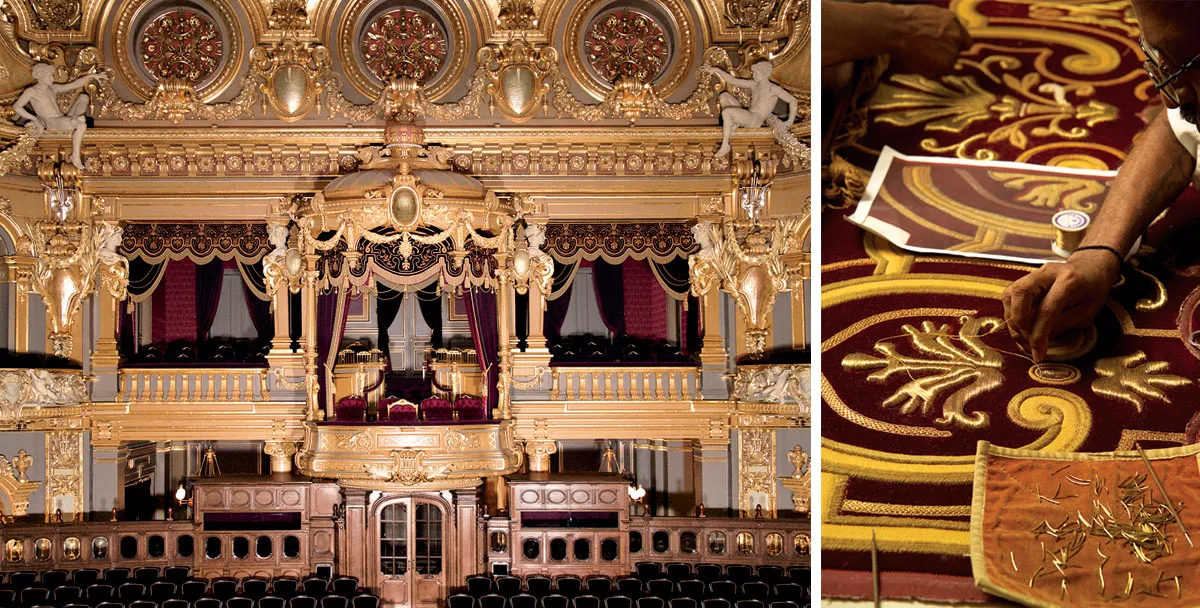
For Gorman, the decorative arts are the visual legacy of civilization. He recalls a profound moment in the Apollo Ballroom of the Louvre in Paris, gazing at the painted ceilings and realizing that his work was part of a continuum stretching back centuries. In a poetic turn of fate, years later, a client would hand him a photograph of that very room, commissioning a space inspired by its grandeur.
A Universal Language of Ornament
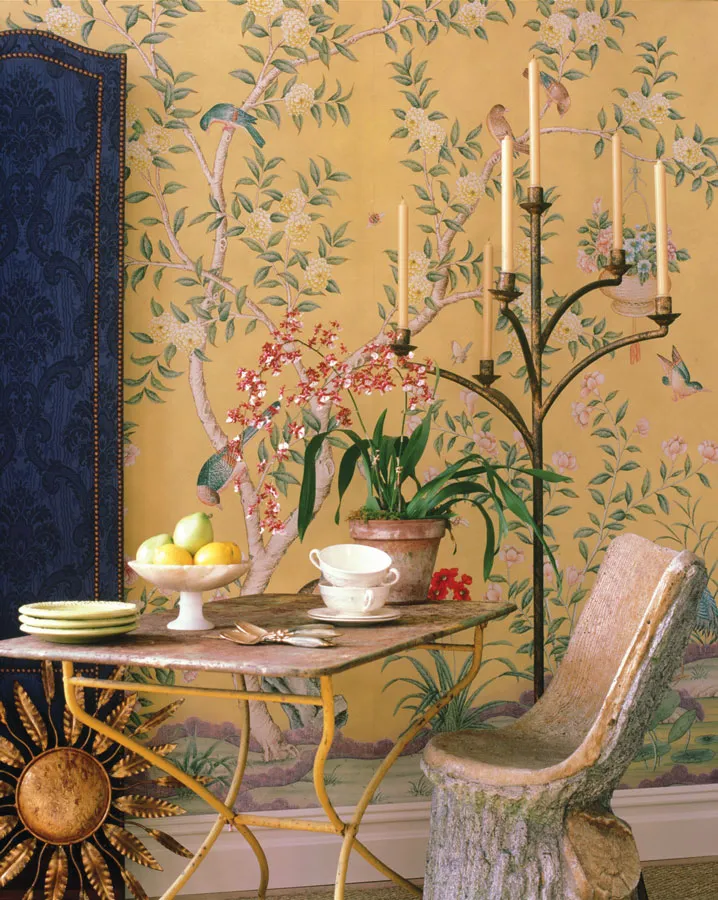
The term “Chinoiserie” is often reductive, but in the hands of Gorman Studios, it reveals its true complexity. It is not merely an imitation of Chinese art but a distinct European decorative language with regional dialects. As Gail Lawrence identified, there are over 30 distinct styles—German, French, Italian, Portuguese, and even Mexican Chinoiserie—each influenced by local painters interpreting Eastern aesthetics through their own cultural lens.
a project by gorman studio*Detail of a Gorman Studios project, highlighting the rich texture and nuanced styling of their work.*
Today, the studio’s work graces palaces in the United Arab Emirates, residences in Japan, and estates in Texas and California. It is a testament to the fact that while the specific styles may have become “lost arts” in some regions of Asia, the spirit of this craftsmanship remains alive. It survives not through stagnation, but through the vibrant, evolving practice of artists who understand that a wall is not just a barrier, but a canvas for history.
Private residence in Dallas, painted by Gorman Studios*Private residence in Dallas, TX. Canvas sections of casing under painted oil glazes, created in the studio and assembled on site.*

 chinoiserie panel by Gorman Studios*“Menagerie” room screen featuring palladium leaf, ink wash, and japanned oil paints.*
 Peter Gorman, Founder and Creative Director of Gorman Studios.*Peter Gorman, Founder and Creative Director of Gorman Studios.*
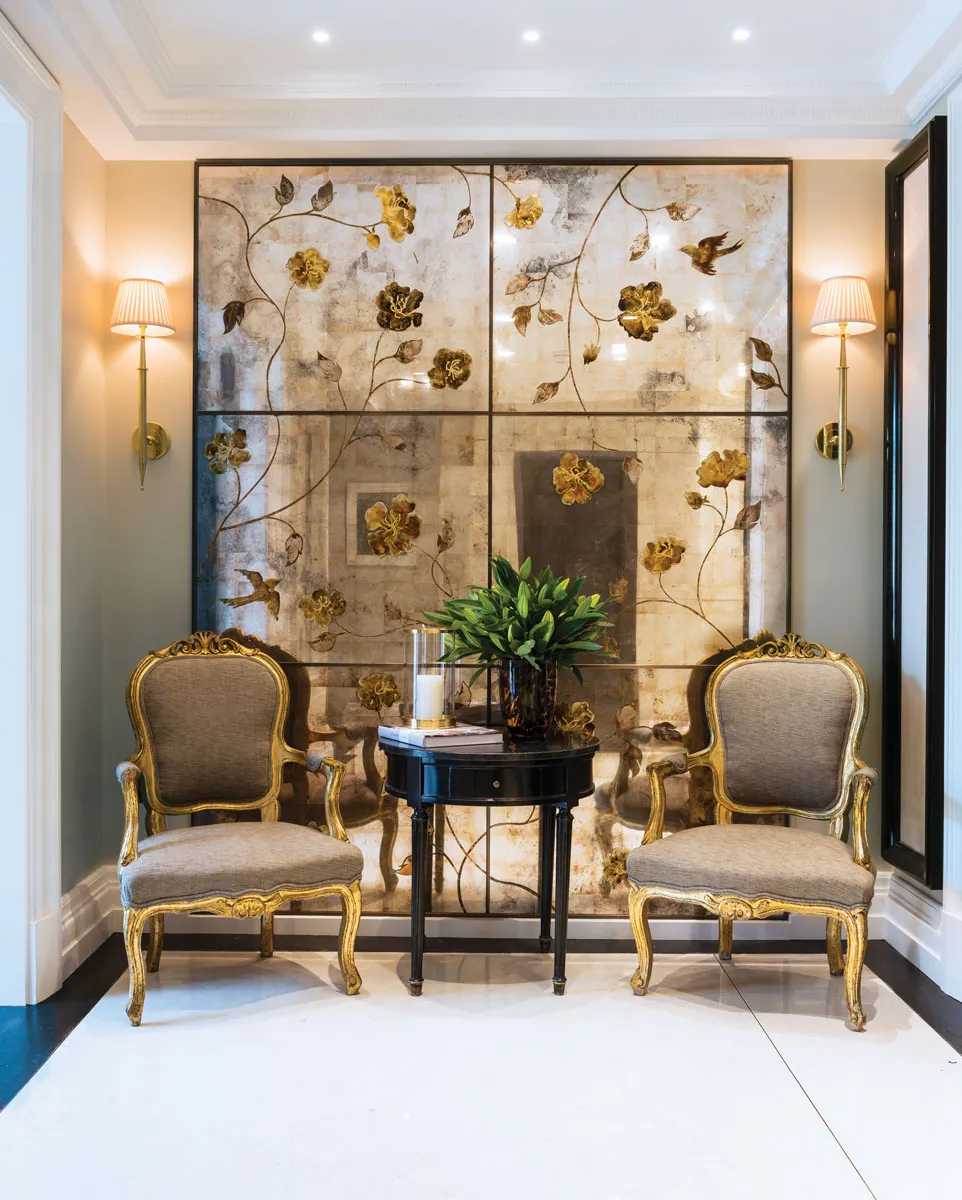 unique hand-painted antiqued mirror by Gorman studios*A custom-designed, hand-painted antiqued mirror by Gorman Studios in a London residence designed by Oro Bianco Interior Design.*
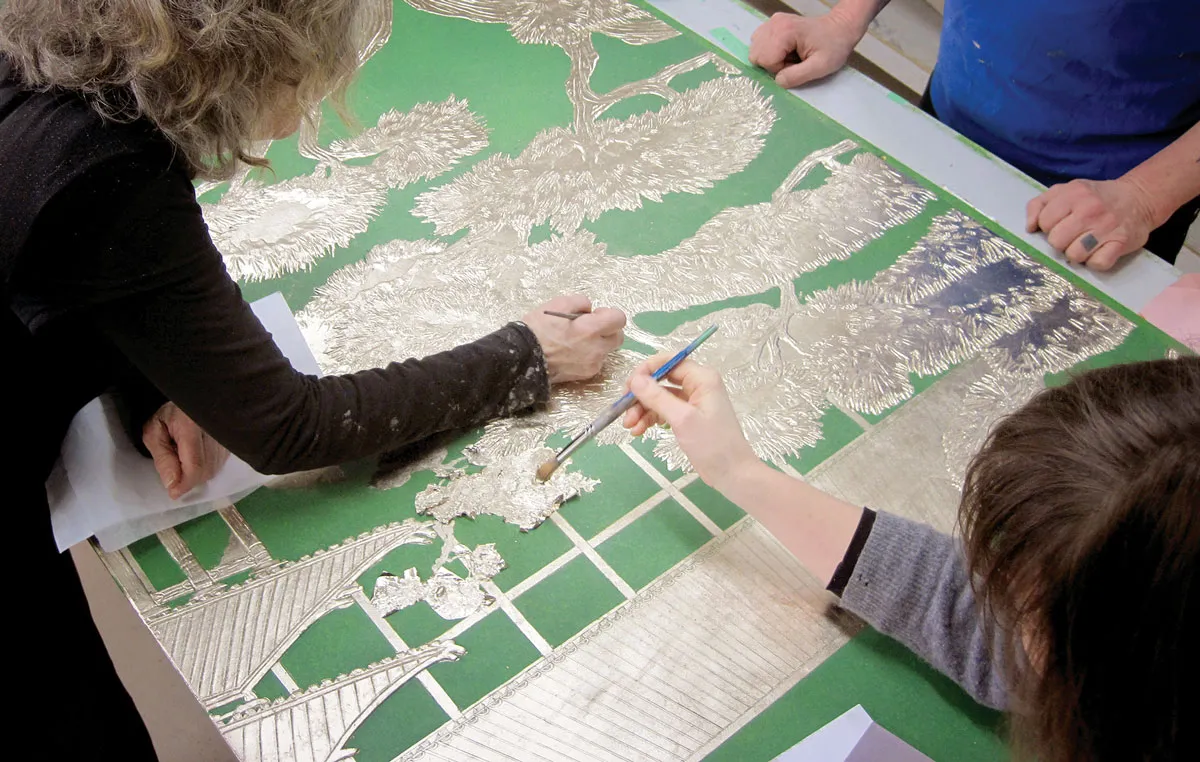 how gorman studio produced their Raised Oriental lacquered chinoiserie pannels*Raised Oriental lacquered panels for a residential kitchen in Indonesia, showcasing depth and luminosity.*
 beautiful hand-painted chinoiserie pannels by gorman studios*Exquisite hand-painted Chinoiserie panels demonstrating the studio’s mastery of traditional motifs.*
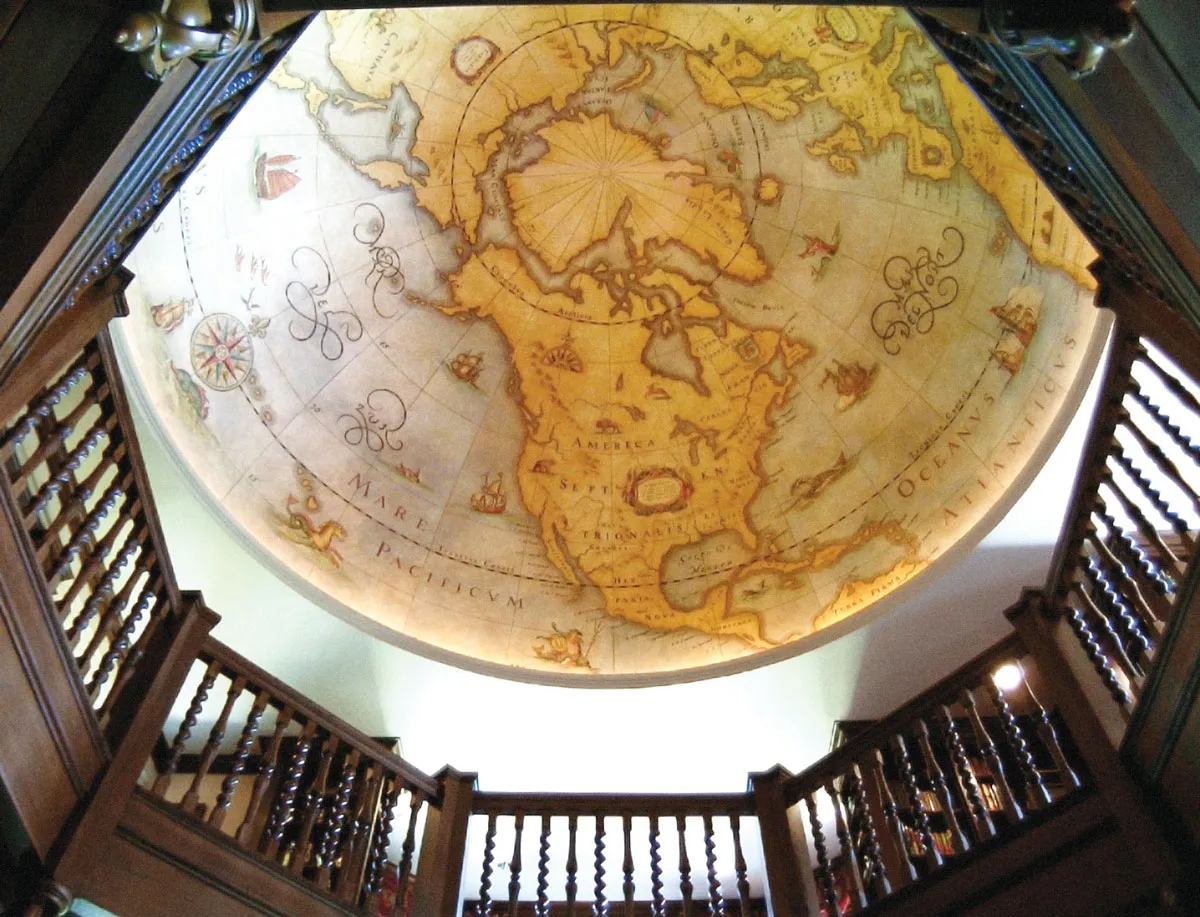 a project by gorman studio*Detail of a Gorman Studios project, highlighting the rich texture and nuanced styling of their work.*
 Private residence in Dallas, painted by Gorman Studios*Private residence in Dallas, TX. Canvas sections of casing under painted oil glazes, created in the studio and assembled on site.*