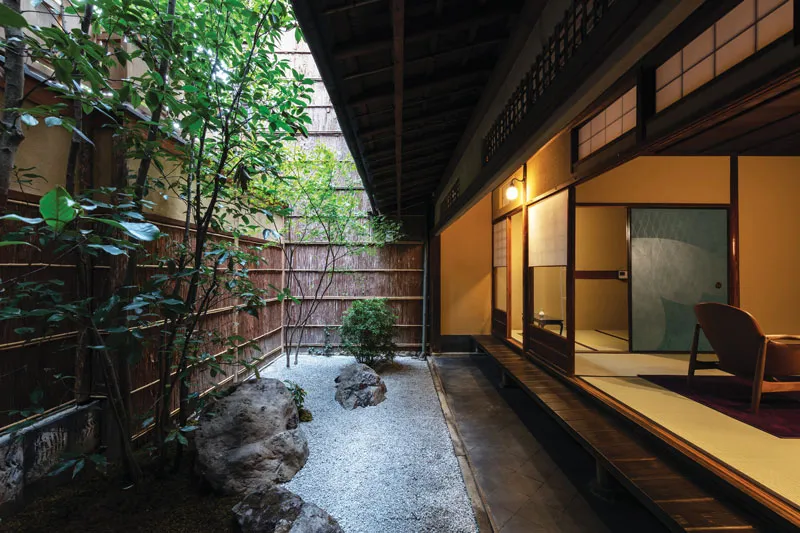
In the vast, four-millennium-old tapestry of Traditional Chinese Medicine (TCM), health is not merely the absence of illness, but a dynamic architecture of opposites. The philosophy of yin and yang suggests that existence relies on the tension and harmony between dualities-dark and light, rest and movement, cold and heat.
When these energies stabilize, a universal life force known as qi flows effortlessly through the body’s invisible geography-the meridians. In ancient Asia, this flow was maintained naturally through a lifestyle attuned to the rhythms of the seasons, the practice of qigong, and the quiet discipline of the “middle way.” Today, as modern acceleration disrupts this delicate equilibrium, we look backward to move forward. Across the globe, specific sanctuaries have emerged to curate this return to the center, applying ancient wisdom to the restoration of the modern spirit.
Canyon Ranch
Tucson, Arizona; Lenox, Massachusetts; Las Vegas, Nevada; Woodside, California; and at Sea
For nearly four decades, Canyon Ranch has stood as a pioneer in bridging the gap between Western empirical science and Eastern energetic philosophies. It is not merely a retreat but a convergence point where the stark, grounding beauty of the American landscape meets the subtle, fluid concepts of Chinese healing. The approach here is integrative; the theory of qi is not treated as a mystical abstraction but as a tangible component of physiological health.
Inside the sanctuary, Chinese herbal consultations and meditative classes take place
The programming at Canyon Ranch delves deep into the mechanics of vitality. Guests are introduced to the concept of healing energy through a multiplicity of modalities, including Chinese herbal consultations and acupuncture. However, the experience extends beyond the treatment room. The environment itself plays a crucial role in the realignment of the self.
Canyon Ranch offers Chinese yoga practices in the high Sonoran Desert at sunrise
In the high Sonoran Desert, for instance, the practice of Chinese yoga at sunrise takes on a profound dimension. The arid, expansive silence of the desert amplifies the internal quietude sought in meditation, allowing guests to substantive learning experiences in exercise physiology that feel rooted in the earth.
Group meditative practices are combined with Chinese yoga instruction in intimate settings
This synthesis of environment and movement is central to the Canyon Ranch ethos. Whether it is a group meditation in an intimate studio or climbing natural rock in the Catalina Mountains, the physical exertion is always counterbalanced by mindful awareness. The rock-climbing programs, led by experts, encourage a tactile connection with nature, mirroring the internal strength cultivated through qi practices.
Rock-climbing experts take guests into the Catalina Mountains
Ananda in the Himalayas
India
Perched on a ridge overlooking the spiritual town of Rishikesh, Ananda in the Himalayas occupies a space that feels suspended between the earthly and the divine. The geography alone dictates a sense of reverence: to one side, the grounding flow of the Ganges River; to the other, the soaring foothills of the Himalayas. The estate surrounds the 100-acre Viceregal Palace of the Maharaja of Tehri Garhwal, anchoring the wellness experience in a deep legacy of Indian royalty and hospitality.
The 100-acre Viceregal Palace of the Maharaja of Tehri Garhwal serves as the reception area
The retreat serves as a custodian of traditional Indian sciences, yet it seamlessly incorporates the wisdom of its neighbors. While the foundation is built on Ayurveda and Vedanta, the wellness menu is enriched with Chinese yoga, meditation, and massage therapies. This cross-pollination of ancient systems creates a holistic environment where the boundaries between different healing traditions dissolve.
Ananda overlooks the town of Rishikesh and the Ganges River Valley
The grounds themselves are a lesson in tranquility, patrolled by peacocks and shaded by ancient sal forests. An elevated yoga pavilion offers a vantage point over the treetops, allowing practitioners to breathe in rhythm with the expansive landscape. Here, the external environment-the visual quiet of the valley and the scent of the forest-acts as a catalyst for internal stillness.
Outdoor yoga and meditation balance the mind, body, and spirit
The Yoga Pavilion is more than a structure; it is a dedicated space for the integration of traditional Ayurveda with international wellness experiences. It stands as a testament to the belief that true health requires a harmonious dialogue between the body’s physical movements and the mind’s stillness.
The Yoga Pavilion integrates traditional Ayurveda with international wellness experiences
Kamalaya
Thailand
On the tropical southern coastline of Koh Samui, Kamalaya is defined not by what was built, but by what was preserved. The heart of this sanctuary is a centuries-old cave, once a place of deep meditation for Buddhist monks. The resort radiates outward from this hallowed void, honoring the silence that inhabited the space long before the arrival of modern wellness seekers.
The new 25-metre lap pool in Kamalaya near the fitness centre
Kamalaya’s approach to healing is a sophisticated blend of Eastern and Western therapies. The philosophy of duality is applied tangibly in their cuisine, which is inspired by yin and yang principles to support internal balance. The wellness programs are extensive, addressing modern maladies such as burnout and stress through qi-centred meridian cleansing and personal yoga synergy.
The Hilltop Yoga Pavilion offers a panorama of the sea and outlying islands
The architecture encourages a vertical ascent toward clarity. The Hilltop Yoga Pavilion, perched atop the rugged coastline, offers a panoramic sweep of the sea and distant mountains, providing a visual release that complements the physical release of the therapies.
Facilities encircle a centuries-old cave once used by Buddhist monks
Yet, the experience always returns to the ground level, to the quiet density of nature. The Amrita Café-named after the Sanskrit word for ‘divine nectar’-allows guests to dine informally amidst lotus ponds. It is a reminder that nourishment is environmental as well as nutritional.
Situated atop Lion Hill in the historic town of Lijiang, a UNESCO World Heritage site, Amandayan exists in a region where Taoism has flourished for over 2,500 years. The resort is a quiet echo of this profound history, overlooking the Longshen Temple and the Black Dragon Lake, with the snow-capped mountains standing guard in the distance.
Amandayan Resort overlooks Lion Hill and the Longshen Temple
The design and ethos of Amandayan are deeply rooted in the local vernacular. The architecture borrows from the styles of ancient Tibetan nomads and the indigenous Nakhi people, creating a sense of place that is both regal and rustic. Inside, the wellness approach integrates locally grown herbs with traditional Chinese Medicine, utilizing acupuncture and bamboo massage to manipulate the flow of qi.
Amandayan’s architecture reflects the styles of ancient Tibetan nomads
The interiors continue this dialogue with the region, decorated with materials native to Yunnan-Yunnan pine, Dongbei elm, and intricate Nakhi embroidery. These tactile elements ground the guest in the specific cultural soil of Lijiang, making the stay a sensory immersion into the local heritage.
Suites are decorated with Yunnan pine, Dongbei elm, and Nakhi linen
Guests are also invited to witness the cultural vibrancy of the area through the Lijiang Impression Show. Performed by over 500 local artists, it is the highest landscape performance in the world, serving as a grand, living backdrop to the intimate stillness found within the resort walls.
The Lijiang Impression Show is performed by more than 500 local artists
Aman Spa at Amanemu
Shima, Japan
In the forests of Ise-Shima, Amanemu reinterprets the classic Japanese ryokan tradition through a lens of quiet luxury. The resort is built around the restorative power of water, embracing the centuries-old onsen (hot spring) culture. The thermal spring garden serves as the communal heart of the spa, where guests can drift between daybeds and mineral-rich pools.
The outdoor thermal spring garden features onsen pavilions and daybeds
The healing philosophy here acknowledges the inseparable link between body and mind, a core tenet of Chinese thought adopted by Japanese medicine. Treatments often utilize Kampo therapy-a Japanese study of herbs derived from TCM-combining local algae and pearl powder from the nearby Ago Bay. These ingredients are chosen for their potent antioxidants and their ability to signal collagen regrowth, merging beauty rituals with deep healing.
Suites provide scenic views and feature private onsen baths
Every suite features its own square bathtub filled with the same nutrient-dense hot spring water, allowing for private contemplation. The connection to the landscape is unbroken; the resort overlooks Ago Bay, the source of the world-renowned Mikimoto pearls. As the sun sets over the water, the distinction between the bather and the natural world softens, facilitating a profound state of relaxation.
Sunset on Ago Bay, near the Aman Spa at Amanemu
Anantara
Guiyang, China, and Global Sites
Since its inception in Hua Hin, Thailand, in 2001, Anantara has expanded its portfolio globally while maintaining a strong commitment to indigenous healing traditions. Across its properties, particularly those in China, the spa menus are deeply informed by Chinese therapies that prioritize the mechanical and energetic manipulation of the body.
The spa lobby at the Anantara Sanya Resort
Practitioners here are skilled in Tui Na, a form of therapeutic massage that functions somewhat like acupuncture without needles. By using fingers and hands to apply rhythmic pressure to specific points, therapists stimulate the flow of blood and qi, aiming to dissolve blockages and alleviate pain. This hands-on approach is complemented by Chi Nei Tsang, an abdominal massage that blends Chinese and Thai traditions to address the emotional tension often stored in the internal organs.
Guest rooms provide open-air terrace views of the pool and South China Sea
The setting for these treatments is designed to induce a state of receptivity. At locations like Anantara Sanya, treatment rooms offer an ambient environment that feels connected to China’s healing past, while guest rooms open onto terraces with views of the South China Sea or lush gardens.
Treatment rooms allow an ambient environment for unique Chinese treatments
Whether on the coast of Hainan Island or deep within the mainland, the focus remains on the movement of energy. The proximity to Serenity Bay at the Sanya Resort provides a final, elemental layer to the experience-the rhythmic sound of the ocean echoing the restored rhythm of the body.
The Anantara Sanya Resort’s private beach on Serenity Bay

 Inside the sanctuary, Chinese herbal consultations and meditative classes take place
 Canyon Ranch offers Chinese yoga practices in the high Sonoran Desert at sunrise
 Group meditative practices are combined with Chinese yoga instruction in intimate settings
 Rock-climbing experts take guests into the Catalina Mountains
 The 100-acre Viceregal Palace of the Maharaja of Tehri Garhwal serves as the reception area
 Ananda overlooks the town of Rishikesh and the Ganges River Valley
 Outdoor yoga and meditation balance the mind, body, and spirit
 The Yoga Pavilion integrates traditional Ayurveda with international wellness experiences
 The new 25-metre lap pool in Kamalaya near the fitness centre
 The Hilltop Yoga Pavilion offers a panorama of the sea and outlying islands
 Facilities encircle a centuries-old cave once used by Buddhist monks
 Amrita Café offers informal dining amidst lotus ponds
 Amandayan Resort overlooks Lion Hill and the Longshen Temple
 Amandayan’s architecture reflects the styles of ancient Tibetan nomads
 Suites are decorated with Yunnan pine, Dongbei elm, and Nakhi linen
 The Lijiang Impression Show is performed by more than 500 local artists
 The outdoor thermal spring garden features onsen pavilions and daybeds
 Suites provide scenic views and feature private onsen baths
 Sunset on Ago Bay, near the Aman Spa at Amanemu
 The spa lobby at the Anantara Sanya Resort
 Guest rooms provide open-air terrace views of the pool and South China Sea
 Treatment rooms allow an ambient environment for unique Chinese treatments
 The Anantara Sanya Resort’s private beach on Serenity Bay