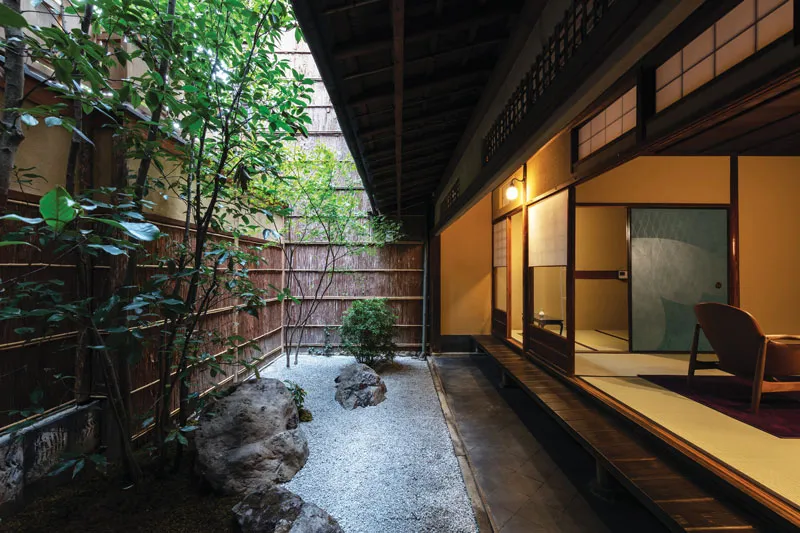
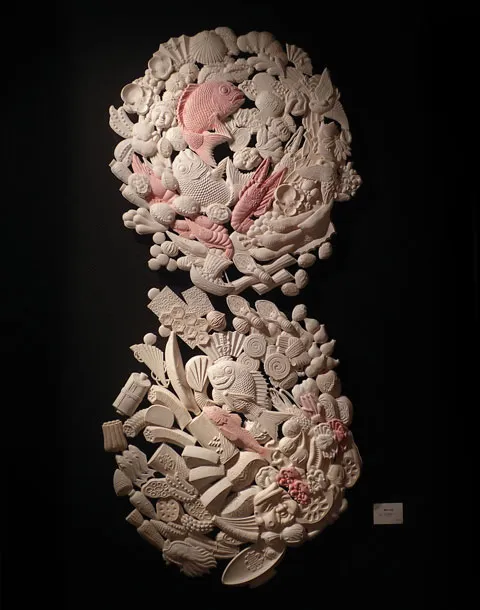
In the Western imagination, mindfulness is often compartmentalized—a specific hour dedicated to the yoga mat or the meditation cushion. However, within the tapestry of Japanese culture, mindfulness is not an act separate from living; it is the texture of life itself. It is found in the steam rising from a kettle, the precise placement of a bowl, or the quiet immersion into warm water.
These are not merely habits for health; they are aesthetic choices. By elevating the mundane to the level of ritual, daily existence becomes a continuous form of moving meditation, inviting a profound sense of balance and refined beauty into the home.
Shojin Ryori: The Devotion of Sustenance
To understand Shojin Ryori is to look beyond the simple definition of vegetarian cooking. Developed over centuries by Buddhist monks, this culinary tradition is an exercise in spiritual geometry. The etymology reveals its depth: “Sho” implies focus; “jin” suggests advancing along the path; “ryori” is the act of cooking. Thus, the kitchen becomes a dojo, and the meal a vehicle for enlightenment devoid of worldly attachment.
Monk-Kakuho-Aoe
For the monk, and increasingly for the layperson seeking anchored living, the preparation of food is an act of appreciation. It is not about dominant flavors or excessive indulgence, but rather the principle of harmony. The cuisine favors water over fat, allowing the intrinsic character of seasonal ingredients to emerge without distortion.
When one engages with Shojin Ryori, the act of eating shifts from consumption to communion. The practice demands the removal of digital distractions—phones, books, screens—leaving only the diner and the dish. By chewing slowly and remaining fully present, the meal becomes a study in texture and gratitude, a silent dialogue between the body and the earth that sustains it.
Hara Hachi Bu: The Aesthetic of Restraint
In the pursuit of longevity, particularly among the centenarians of Okinawa, there exists a concept known as Hara Hachi Bu. rooted in Confucian philosophy, it translates to the instruction to cease eating when one is eighty percent full. While modern science validates this through the lens of metabolic health and oxidation reduction, artistically, it is an appreciation of Ma—the negative space.
Less-food
Overconsumption is a form of clutter for the internal system. Just as a minimalist room allows the eye to rest, leaving the stomach slightly empty allows the body’s energy to be directed toward restoration rather than laborious digestion. This restraint protects the body from the accelerated aging caused by cellular oxidation, preserving vitality.
The visual presentation assists this discipline. The use of multiple small plates creates a landscape on the table, offering visual satisfaction that replaces the need for volume. It is a practice of deliberate slowness, allowing the stomach’s muscle memory to reset, finding luxury in sufficiency rather than excess.
Chado: The Architecture of Silence
Chado, or the “Way of Tea,” is perhaps the most codified intersection of art, philosophy, and routine. With roots in Zen Buddhism spanning over four centuries, it transforms the simple chemistry of hot water and leaves into a sanctuary. On the surface, the actions are humble: boiling, whisking, serving, drinking. Yet, beneath these mechanics lies a profound choreography of respect.
Chadao
The tea ceremony is a temporary withdrawal from the “dust of the world.” It does not require the strict formalities of a grand master to be felt; it requires only intention. It is the deliberate carving out of a fifteen-minute window where time is suspended.
Whether seated in a dedicated corner or at a kitchen table, the environment is curated to induce serenity. The choice of vessel matters—a rough-hewn clay cup often holding more spirit than fine china. The preference for quality loose-leaf tea over industrial bags signifies a commitment to the genuine experience. In these moments, holding the warm bowl with gratitude, the host and guest (even if they are the same person) enter a shared, intimate space of stillness.
Ofuro: The Ritual of Purification
In Japan, the bath (Ofuro) is distinct from the shower. While the latter is a functional act of cleaning the body, the former is a sacred ritual of cleansing the spirit. One washes before entering the tub, ensuring that the time spent soaking is dedicated entirely to the dissolution of fatigue and the purification of the mind.
Japanese Bath
The Ofuro is a sensory composition. It is the weightlessness of the body in water, the rising steam, and the enveloping heat that separates the day from the night. It is a space of solitude where the mind is allowed to drift, unmoored from the demands of society.
Enhancing this water ritual involves elements of nature. The addition of sea salts mineralizes the water, mimicking the ocean’s restorative properties. Herbal infusions—eucalyptus for breath, lavender for nerves, or rose petals for softness—transform the bath into a therapeutic landscape. Even the lighting is adjusted, often dimmed or replaced by candlelight, to honor the transition into rest. In this immersion, the boundary between the self and the water blurs, leaving one in a profound state of well-being.

 Monk-Kakuho-Aoe
 Less-food
 Chadao
 Japanese Bath