“What is this life if, full of care, We have no time to stand and stare?”
The verses of Welsh poet William Henry Davies serve as a gentle admonition, a reminder of the quietude required to truly witness the world. In the oil paintings of Taiwanese artist Chang Kuo Erh, this invitation to pause becomes a visual mandate. His canvases, teeming with whimsical scenes of the natural world, do not merely depict flora and fauna; they arrest the chaotic momentum of modern life, offering a sanctuary where even the most ordinary subjects are infused with a profound, resonant spark of life.
Self-portrait by Taiwanese painter Chang Kuo Erh.
Born in Taichung, Taiwan, in 1963, Chang has been an avid painter since childhood. Yet, his artistic gaze is not fixed solely on the present. “I’ve always been deeply influenced by Song Dynasty Neo-Confucianism,” he reflects. His work represents a synthesis of mediums and eras—using the Western tradition of oil painting to explore the centuries-old aesthetics of Eastern culture.
A Thousand-Year Resonance
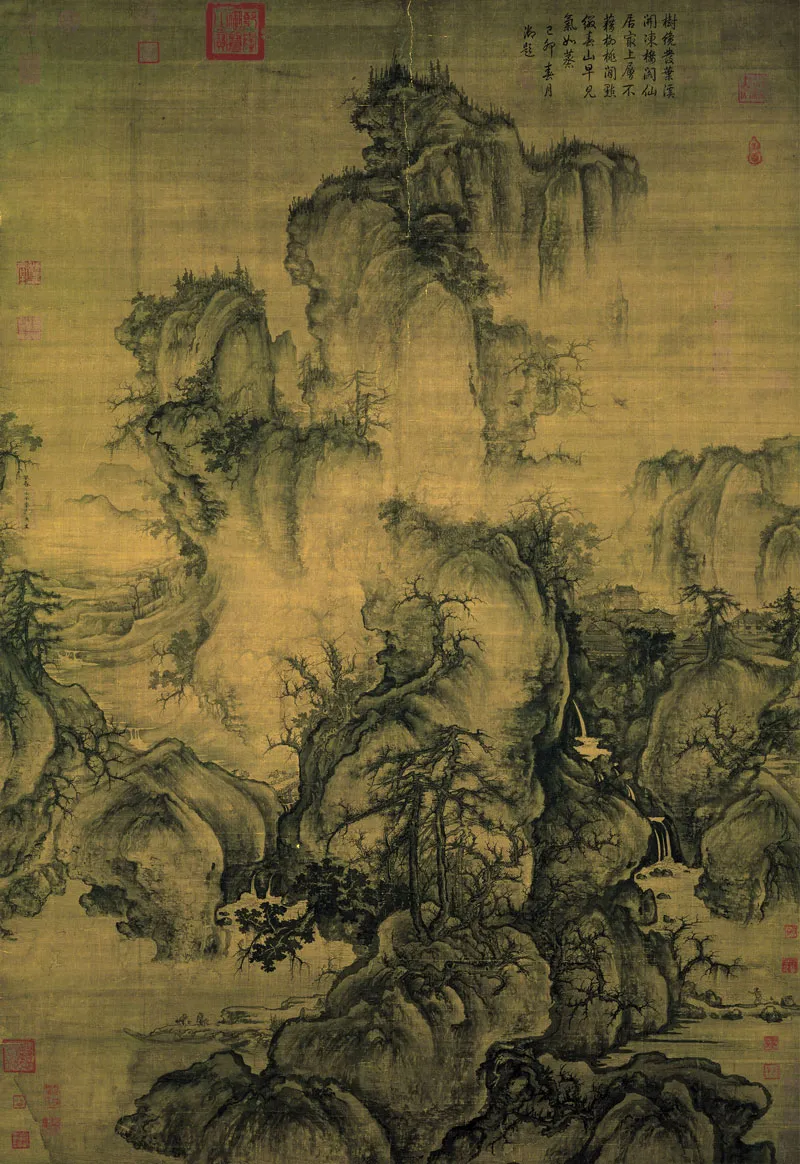
To understand Chang’s work, one must look back to the flower-and-bird paintings of the Song Dynasty, often regarded as the zenith of Chinese art history. These ancient works were defined by their ability to transcend mere representation. Minimalistic yet elegant, the Song masters sought not just to replicate the physical characteristics of a bird or a bloom, but to capture its inner spirit—the qi that animates the living world.
Chang channels this thousand-year-old heritage with a tangible sense of reverence. Whether depicting new blooms, fallen leaves, or windswept grasses, his compositions convey the transience of beauty. Like his predecessors, he aims to leave a lingering poetic impression, a reverberation of nature’s quiet grandeur that has influenced East Asian aesthetics for a millennium.
Chang’s oil painting Celebration of Life depicts branches filled with life.
The Alchemy of Color and Void
In works such as Celebration of Life, Chang’s mastery of color and narrative becomes evident. The painting captures a metamorphosis of seasons within a single frame: branches are laden with leaves transitioning from verdant emerald to autumnal gold and fiery red. It is a microcosm of abundance, adorned with a green beetle and perching birds—humble subjects elevated to symbols of the nurturing cosmos.
However, the power of Chang’s work lies as much in what is absent as what is present. Adopting the classical Chinese technique of negative space, or liubai, he practices the art of “using emptiness to enhance what is there.” By carefully curating the void, Chang guides the viewer’s eye to the focal point, allowing the subject to breathe. It is in this balance of vibrant oil and deliberate emptiness that Chang Kuo Erh bridges the gap between the tangible and the spiritual, inviting us to stand, stare, and find the sublime in the silence.

 Self-portrait by Taiwanese painter Chang Kuo Erh.
 Chang’s oil painting Celebration of Life depicts branches filled with life.