In the quiet, climate-controlled corridors of the art world, time moves differently. While the market chases the new and the immediate, the conservator operates on a scale of centuries, engaged in a silent dialogue with history. It is a vocation that demands a rare convergence of chemistry, art history, and manual dexterity—a profession where it takes a decade to reach proficiency and a lifetime to achieve mastery.
Historically, this has been a solitary pursuit. The image of the conservator is often one of an isolated artisan working in a dimly lit atelier. However, in Chicago, Heather Becker has rewritten this narrative, transforming the preservation of art from a solitary act into a collective, multidisciplinary science.
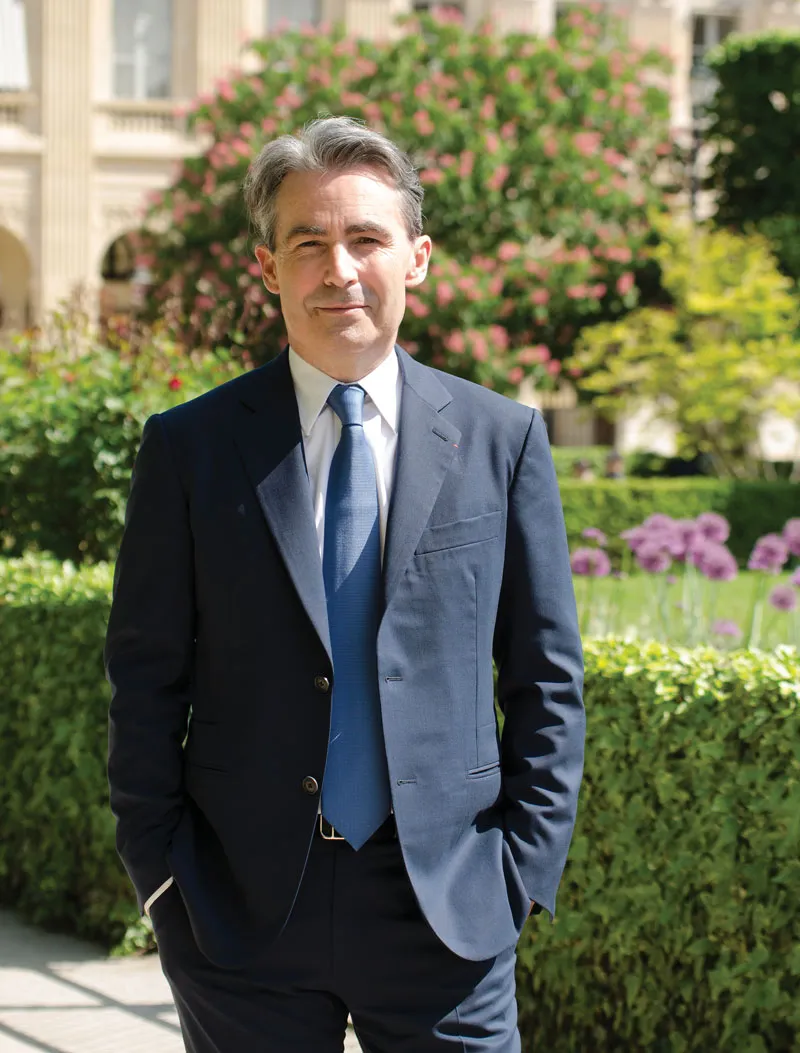
Heather Becker, owner of The Conservation Center in Chicago
The Stewardship of Time
To understand Becker’s work at The Conservation Center, one must first distinguish the delicate philosophy that separates conservation from restoration. In the popular imagination, these terms are often interchangeable, yet in practice, they represent opposing ethics.
Restoration is often a cosmetic endeavor, using techniques to make an object appear “new” or market-ready, sometimes at the cost of its historical truth. Conservation, by contrast, is an act of stewardship.
“Conservators learn to respect the original materials,” Becker explains, emphasizing a core tenet of the discipline: reversibility. A true conservator never permanently alters a work or strips away its historical value—such as the patina earned over decades. Their interventions stabilize the object, arresting decay without erasing the passage of time. It is not about deception; it is about revealing the authentic voice of the piece as it exists today.
A Vision of Unity
Becker’s journey into this world began in 1989. A young art student and recent graduate, she joined The Conservation Center under the tutelage of its founder, Barry Bauman. Initially seeking a role in business development to preserve her own creative energy for painting, she soon found herself orchestrating a much larger canvas.
At the time, the center was a modest operation—a team of ten, with Bauman focusing on paintings and relying on a fragmented network for other mediums. Becker recognized a structural flaw in the industry: the siloed nature of expertise. A collector with a damaged Louis XIV chair, a torn oil canvas, and a water-damaged photograph would traditionally need to visit three different studios.
“A conservator can’t say, ‘I can treat everything,'” Becker notes. “That’s usually a sign that someone isn’t well-qualified.”
Proficiency in conservation requires a monastic dedication to a specific material. One does not master both porcelain and paper; the chemistry is too distinct, the physical properties too divergent. Becker’s insight was not to demand generalists, but to gather a pantheon of specialists under a single roof.
From a private collection, Portrait of a Man is a photograph mounted onto a board. It was conserved by the Paper Department.
The Cathedral of Disciplines
Over three decades, Becker—who eventually acquired the company from Bauman—systematically expanded the center’s capabilities. She transformed it into North America’s largest private art conservation laboratory, a distinction usually reserved for massive institutions like the Getty Museum.
The Conservation Center now houses twelve distinct disciplines. It is a rare ecosystem where experts in gilding, rare books, textiles, murals, antique furniture, and photography work in proximity. This proximity allows for a holistic approach to collections that are rarely uniform.
“Conservation labs usually focus on one or two disciplines, but it’s quite unusual to have 12 disciplines and so many experts under one roof,” says Becker. “The average in the industry is three to four conservators.”
Today, the staff of 32 includes 25 specialized conservators. This density of talent creates a unique intellectual environment. When a complex object requires knowledge of both wood preservation and textile care, the dialogue happens across the room, not across the city.
The Human Element of Preservation
The greatest challenge in building this institution was not technical, but human. Finding conservators with the requisite level of expertise is difficult; retaining them is essential. The continuity of care is vital for long-term projects and repeat clients who trust their collections to specific hands.
Becker has cultivated an environment of stability, with over half the staff remaining with the center for more than 15 years. “We have a stable group. We’re like a family,” she reflects.
Close-up image of a painting conservator surface cleaning an oil painting.
This stability ensures that the center remains a bastion of memory. In a world that often discards the old for the new, Becker and her team stand as guardians. They do not merely fix what is broken; they maintain the physical integrity of our cultural heritage, ensuring that the stories embedded in paint, paper, and wood survive to be read by future generations.

 Heather Becker, owner of The Conservation Center in Chicago
 From a private collection, Portrait of a Man is a photograph mounted onto a board. It was conserved by the Paper Department.
 Close-up image of a painting conservator surface cleaning an oil painting.