In the quiet intersection where Swiss horology meets Japanese craftsmanship, Chopard continues its annual observance of the Lunar New Year. The passage of time is often measured in seconds, but within the L.U.C XP Urushi collection, it is measured in layers of tree sap and the patience of a master’s hand. For the Year of the Water Rabbit, the maison unveils a timepiece that captures a celestial narrative through the ancient medium of Urushi lacquer.
A Tableau Under the Moonlight
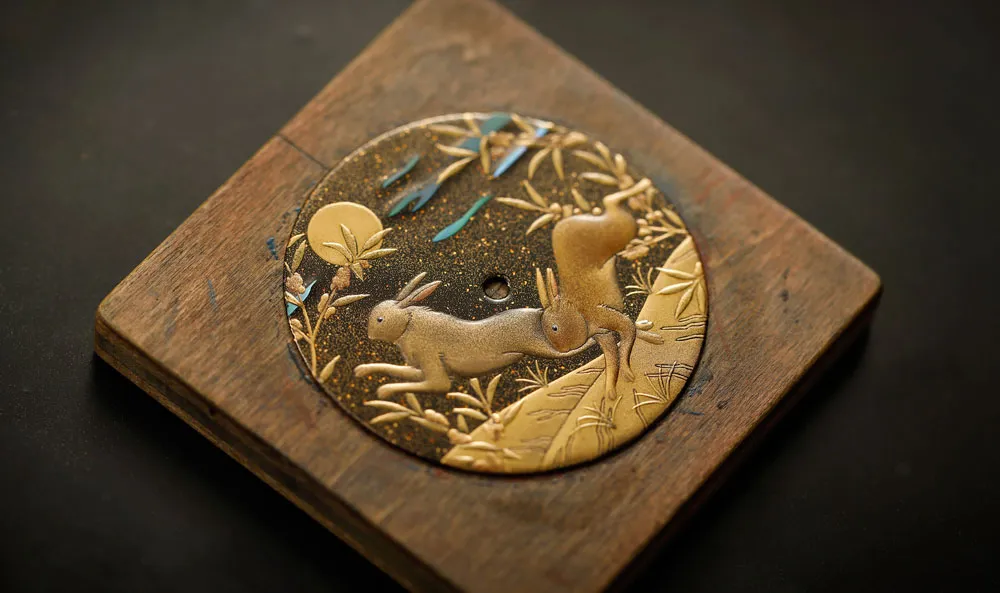
The dial of this limited edition—restricted to a mere 88 pieces—is less a clock face and more a miniature canvas of mythology. Framed by a 39.5 mm case of ethical 18-karat rose gold, the scene depicts two rabbits suspended in motion. They appear agile and alert, bounding through a landscape defined by Chinese olive trees. This choice of flora is deliberate, symbolizing success and the achievement of peace, anchoring the energetic movement of the animals.
Close-up of the Urushi lacquer dial showing rabbits and olive trees
The composition is illuminated by a full moon, a radiant focal point that bridges the visual narrative with the ancient legend of the Jade Rabbit. In folklore, this mythical creature inhabits the moon, pounding the elixir of life in a mortar. Here, the celestial body serves as a serene backdrop to the terrestrial vitality of the rabbits, creating a balance between the stillness of the heavens and the activity of life below.
Full view of the Chopard L.U.C XP Urushi Year of the Rabbit watch
The Alchemy of Urushi
The profundity of this timepiece lies in its medium. The term “Urushi” refers not merely to the technique but to the material itself—the sap of the lacquer tree (Toxicodendron vernicifluum). This is a substance governed by nature’s slow rhythm; the resin is harvested only once a year. Following extraction, it undergoes a maturation process lasting three to five years, transforming from a raw natural fluid into a highly resistant, honey-textured lacquer.
Master artisan Minori Koizumi working on the dial
Executing this dial requires the expertise of Minori Koizumi, a Japanese master artisan whose skills are the result of generations of transmitted knowledge. The process is one of accumulation. Koizumi applies the lacquer in extremely fine, translucent layers. Each stratum must cure and harden before the next can be applied, a cycle that demands patience and an intuitive understanding of how the material reacts to humidity and air.
Detail of the artisan applying fine gold powder to the lacquer
To bring light into the darkness of the black lacquer, the artisan employs Maki-e. This technique involves sprinkling gold flakes—and in this instance, mother-of-pearl inlays—between the layers of still-wet lacquer. The result is a depth that flat paint cannot achieve; the gold appears to float within the surface, catching the light like stars trapped in amber.
Tools and materials used in the Urushi and Maki-e process
One Hundred and Sixty Hours
The creation of a single dial for the L.U.C XP Urushi Year of the Rabbit commands over 160 hours of meticulous labor. It is a solitary pursuit where the artisan must control every variable, from dust particles to the precise viscosity of the lacquer.
Angled view emphasizing the thin profile and lacquer depth
The resulting object is a testament to the preservation of intangible heritage. While the movement inside drives the hands forward, the face of the watch remains a static, preserved moment of artistry—a fusion of Swiss mechanical precision and the soulful, organic discipline of Japanese lacquerware.

 Close-up of the Urushi lacquer dial showing rabbits and olive trees
 Full view of the Chopard L.U.C XP Urushi Year of the Rabbit watch
 Master artisan Minori Koizumi working on the dial
 Detail of the artisan applying fine gold powder to the lacquer
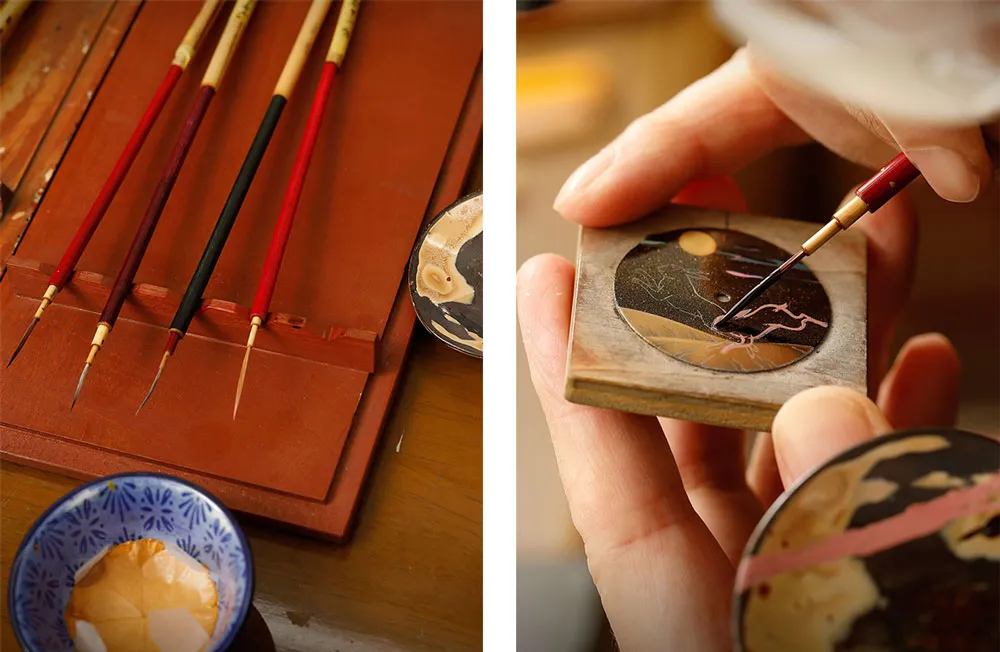 Tools and materials used in the Urushi and Maki-e process
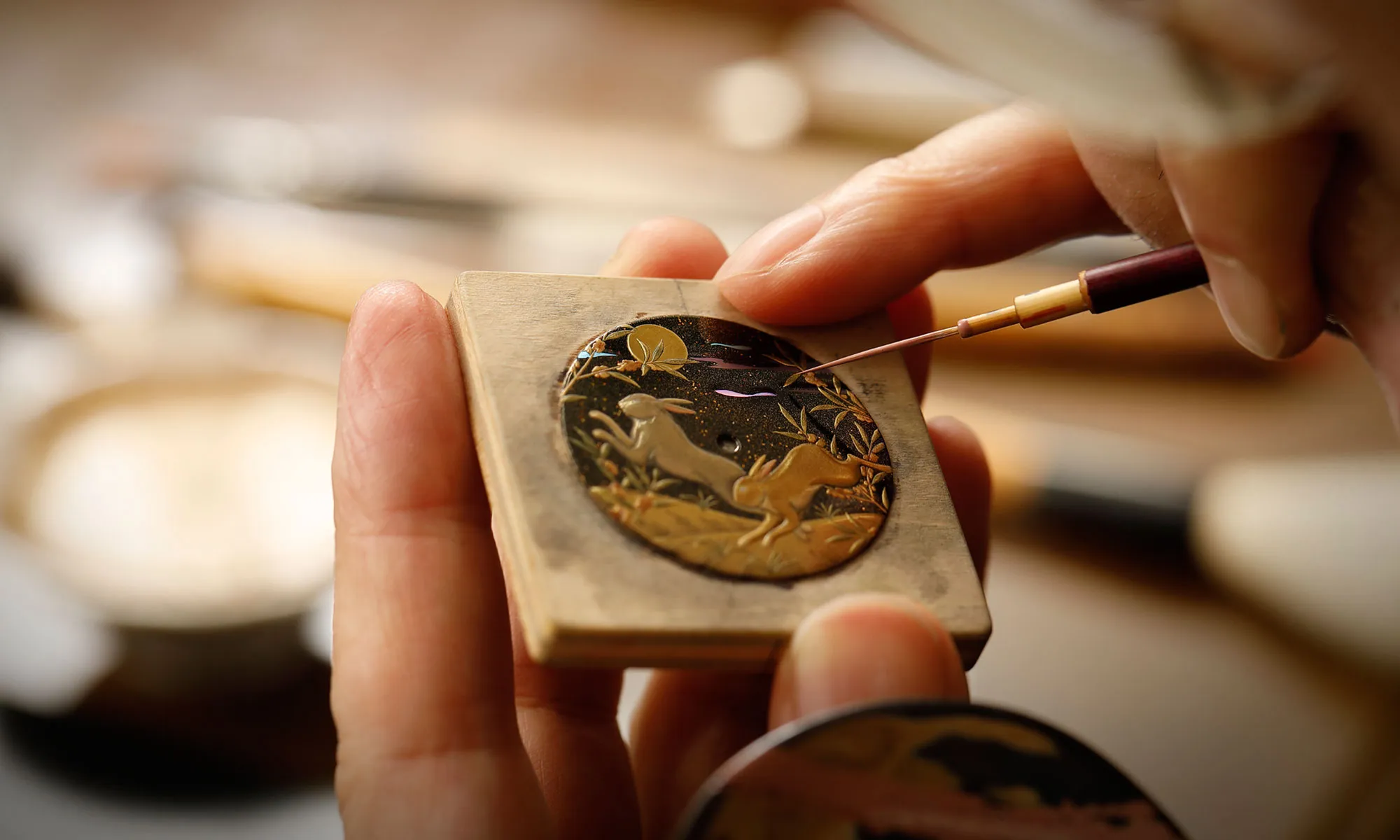 Angled view emphasizing the thin profile and lacquer depth