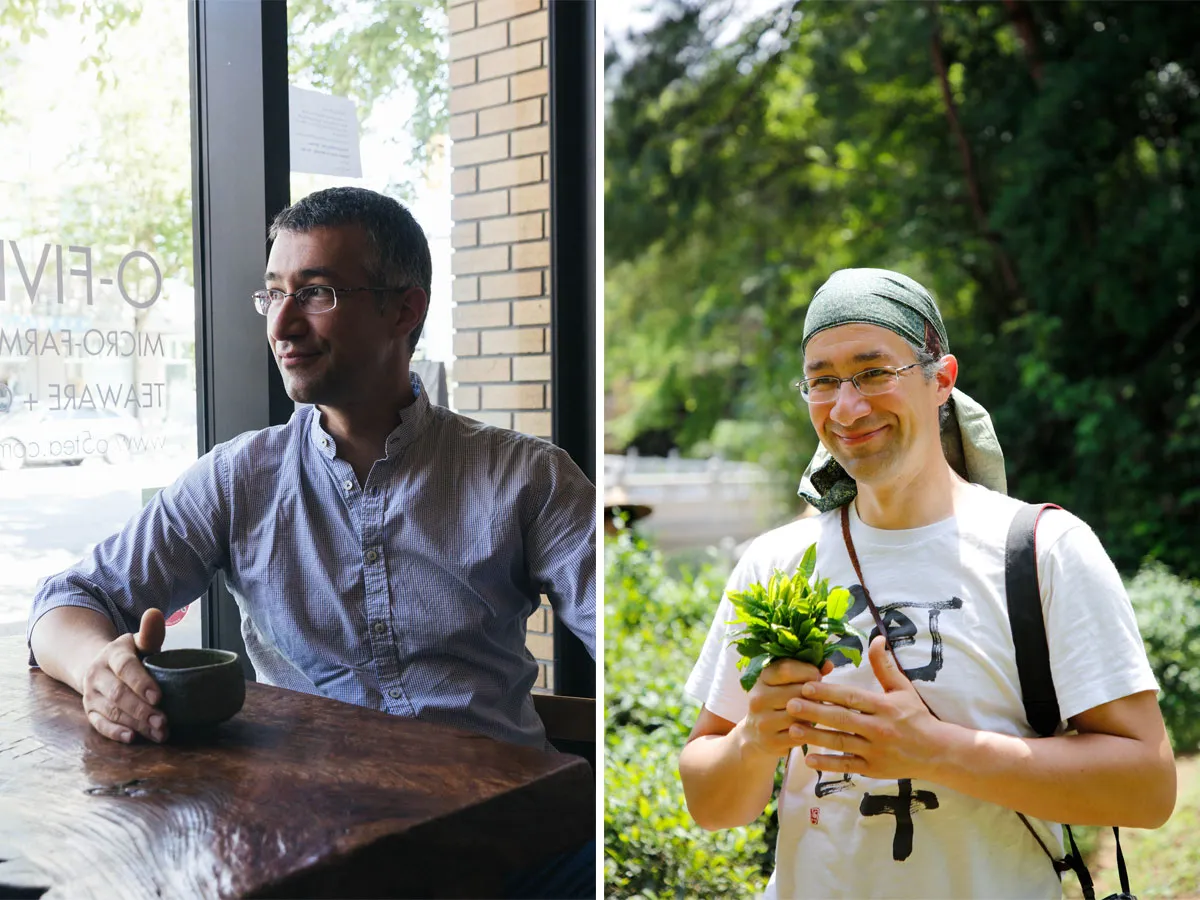
For Nader Rasti, the allure of antiquity is not found in the clamor of the marketplace, but in the silent, enduring gaze of a statue that has survived a millennium. Born in the UK into a British-Iranian family of avid collectors, Rasti’s childhood was spent navigating the contours of ancient sculptures rather than playing on sports fields. This early immersion laid the foundation for a career defined by a discerning eye, leading him from the halls of Christie’s London—where he served as Director of the Chinese Ceramics and Works of Art Department—to the helm of his own gallery, Rasti Fine Art.
Today, he is recognized not merely as a dealer, but as a curator of “presence”—specializing in Chinese jade, hardstone carvings, and the profound, often overlooked artistry of the Song Dynasty (960–1279).
Nader Rasti, curator of precious Chinese jade, hardstone carvings, and sculpture.
The Architecture of Patience
Rasti’s approach to collecting operates on a timeline that defies the frenetic pace of the modern art world. He deliberately steps away from prevailing trends, seeking instead to illuminate works that history—and the market—may have momentarily underappreciated. This philosophy is best exemplified by his curation of Arcane Realms, a collection of Buddhist and Daoist frescoes and stucco pieces.
It took seven years to assemble these works, a testament to the scarcity and fragility of the medium. These frescoes, unique to their period, offer a rare glimpse into the spiritual atmosphere of ancient temples. Because they were originally housed in dimly lit sanctuaries, sheltered from the bleaching effects of sunlight, many retain their original, vibrant pigments. For Rasti, their value lies not just in their provenance, but in their preservation—fragments of a spiritual world that remain miraculously intact.
The Weight of a Gaze
Among the epochs of Chinese history, the Song Dynasty stands as a zenith of cultural and artistic refinement. It was a period that favored the literati and the subtle over the ostentatious. Rasti observes that the art of this era possesses a singular quality: a hyper-realism that transcends mere physical likeness to capture the psychological essence of the subject.
This phenomenon is most palpable in the sculpture of luohans—enlightened beings in the Buddhist tradition. Rasti recounts a particular attachment to a white marble luohan head from the Song period. Years after selling it to a friend and prominent collector, the memory of the piece lingered. During a casual lunch, the opportunity to reclaim it arose, and Rasti purchased it back immediately, without waiting to hear the price.
Left: A dry lacquer head of a luohan from the Southern Song Dynasty. Right: A large white marble head of a luohan from the Song Dynasty.
The allure of such pieces lies in their uncanny ability to inhabit a room. Unlike the stylized or idealized forms of other dynasties, Song sculptures were often modeled on living people. The result is a profound sense of company; when facing the marble head, or its counterpart made of dry lacquer, one feels the distinct sensation of being observed. The dry lacquer technique, in particular, allowed for a delicacy of modeling that rendered the face with startling humanity, creating a connection across centuries that is both intimate and eerie.
The Wit of the Artisan
The sophistication of Song art is also found in its deceptive simplicity. Whether in ceramics or stone carving, the aesthetic favored purity of form, where the slightest error would be glaringly visible. This demand for perfection pushed artisans to engage with their materials in ingenious ways.
A striking example in Rasti’s collection is a jade figure of a blindfolded boy. The piece demonstrates the artisan’s ability to collaborate with the stone rather than dominate it. The raw material was a combination of black and white stone; the carver strategically utilized the black inclusion to form the blindfold covering the boy’s eyes, turning a material irregularity into the focal point of the narrative.
A Song Dynasty jade figure of a blindfolded boy made from black and white stone.
Rasti discovered this small masterpiece at an auction in Japan. Recognizing the wit and rarity of the carving—which the auction house had estimated at a mere $100 to $150—he authorized a bid of up to $22,000 to ensure its acquisition. It was a decisive move that underscores a collector’s true insight: the ability to see the priceless ingenuity in an object that others might dismiss as a curiosity.
Through these artifacts, from the gaze of a luohan to the playful carving of jade, the spirit of the Song Dynasty persists. It is a legacy of quiet perfection, safeguarded by those who, like Rasti, take the time to listen to the stones.

 Nader Rasti, curator of precious Chinese jade, hardstone carvings, and sculpture.
 Left: A dry lacquer head of a luohan from the Southern Song Dynasty. Right: A large white marble head of a luohan from the Song Dynasty.
 A Song Dynasty jade figure of a blindfolded boy made from black and white stone.