In the vocabulary of traditional Asian architecture, the window is rarely a mere aperture for ventilation or a utilitarian source of daylight. It functions, rather, as a deliberate instrument of curation. By rejecting the expansive, unbridled view in favor of a selected glimpse, the window transforms the chaotic natural world into a composed tableau, framing the external reality for the contemplation of those within.
This architectural philosophy treats the window as the “eye” of the building—a threshold where the boundary between interior and exterior dissolves into a poetic exchange. It is here that the physical structure mediates a spiritual connection. As the Buddha once observed, “What you think, you become. What you feel, you attract. What you imagine, you create.”
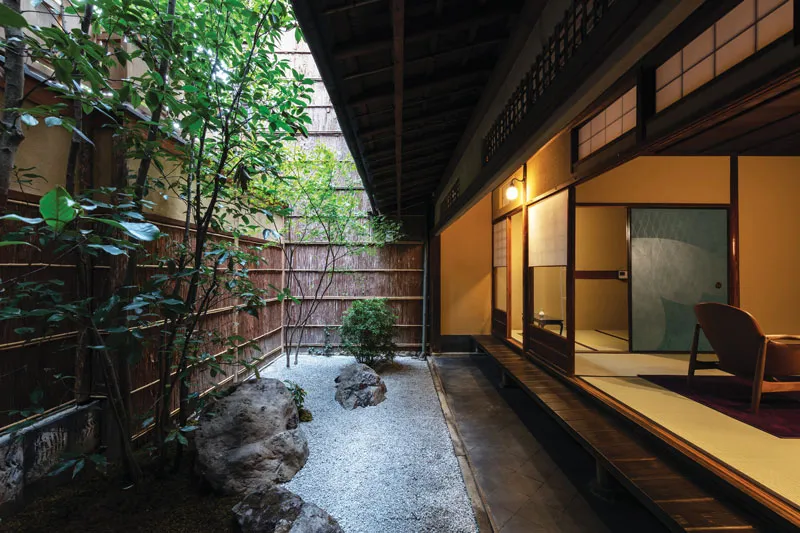
In this context, the window becomes the physical manifestation of that sentiment. Through its frame, we do not just see nature; we construct a private reality, turning a garden into a living painting and allowing the imagination to wander through the aestheticized void.
Green leaves budding through a window frame
The Curated Landscape
The genius of the classical Chinese garden, particularly those found in Suzhou, lies in the concept of “borrowed scenery” (jie jing). The architect creates a window not to reveal the whole, but to isolate a part—a single branch, a cluster of rocks, or a patch of sky. This reductionist approach creates a sense of intimacy and focus that a panoramic glass wall often dilutes.
When one stands before these openings, the window frame acts as a picture frame. The red blossoms or green willows outside are no longer wild vegetation; they become elements of a static composition, frozen momentarily by the architectural borders.
Classic Garden architecture in Suzhou
In the temples of JiangNan, this interplay creates a dialogue between the sacred interior and the natural exterior. A simple, geometric frame can elevate a humble branch into a symbol of seasonal impermanence. The viewer is invited to pause and engage with the view not as background noise, but as a focal point of meditation.
The photography of Tangshi Su captures this delicate balance, where the window does not merely allow us to look out, but actively brings the “rouge smile” of spring into the quietude of the room.
A window framing flowers at a Temple in JiangNan
Geometry and the Leaking of Light
Beyond the simple square or circle, traditional fenestration often employs complex geometric patterns. These are not merely decorative grilles; they act as a filter for reality. When the view is fractured by these lattice patterns, the window behaves like a painting on the wall, abstracting the world outside into shapes and colors.
The visual experience becomes textural. The eye does not rush to the horizon but lingers on the interplay between the wooden craftsmanship and the light filtering through it.
Geometric pattern window acting as a painting
This technique leads to the phenomenon known as “leaking scenery” (lou jing). In perforated windows found in garden corridors, the ornamental patterns conceal as much as they reveal. They create a sense of mystery, urging the viewer to move closer or change perspective.
As the sun traverses the sky, the shadows cast by these intricate grilles shift across the floor, marking the passage of time. The architecture becomes a dynamic entity, where the scene changes not just with the seasons, but with the hours of the day.
At the Five Mountain Peak Garden in Suzhou, the architectural intent reaches a pinnacle of precision. Here, the ornate window frames are designed with the specificity of a tailor-made suit for the landscape they overlook. The frame itself is an object of beauty, rivaling the view it captures.
This duality forces the viewer to appreciate the lens as much as the subject. It serves as a reminder that our perception of the world is always framed by our context—physically by the building, and metaphorically by our mind.
Ornate window frame at Five Mountain Peak Garden in Suzhou
Scripture in Light
In contemporary interpretations of this tradition, the window evolves from a frame of nature to a vessel of wisdom. At the Water Moon Monastery in Taiwan, designed by Artech Architects, the concept of the window is reimagined through the massive wooden walls.
Here, the “window” is the text itself. The hollowed-out characters of the Heart Sutra allow light to penetrate the interior hall. As the sun shines through the script, the sacred text is projected onto the interior surfaces in ephemeral pools of light. The outside world is literally filtered through the wisdom of the Sutra before it touches the inside. In this transcendent moment, the architecture achieves its highest purpose: transforming the physical rays of the sun into a tangible experience of spiritual illumination.
The Heart Sutra wall at Water Moon Monastery in Taiwan

 Green leaves budding through a window frame
 Classic Garden architecture in Suzhou
 A window framing flowers at a Temple in JiangNan
 Geometric pattern window acting as a painting
 Perforated window creating leaking scenery effects
 Ornate window frame at Five Mountain Peak Garden in Suzhou
 The Heart Sutra wall at Water Moon Monastery in Taiwan