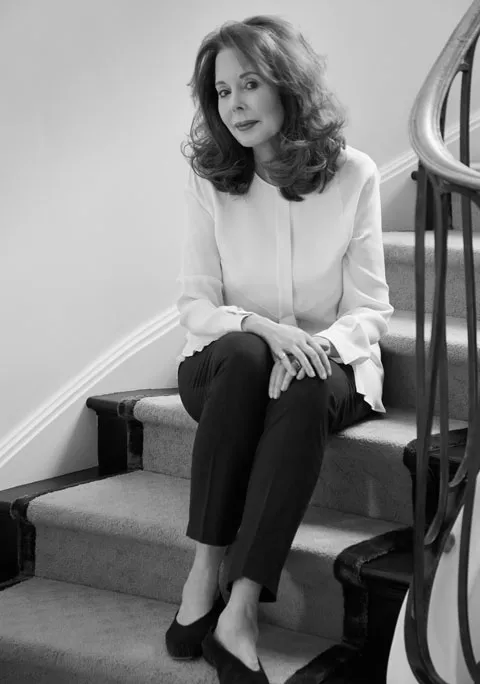
Four decades ago, a profound exchange took place between a father and his son—a moment that would silently shape the trajectory of a contemporary artistic master. A young Wu Kuan Te received a simple, blue-covered volume. It was not merely a book, but a vessel of ancient consciousness: the Dao De Jing, written by the sage Lao Tzu millennia ago. Accompanying the gift was a prophetic murmur from his father: “If you manage to comprehend it one day, your life will take a different course.”
That blue book became more than a possession; it became a nightly ritual and a spiritual compass. For Wu, the text was not a rigid manual but a living entity. He would turn to a random page before sleep, musing over the cryptic verses, allowing the philosophy of the Dao—the natural Way of the cosmos—to seep into his subconscious. Over time, these nightly contemplations began to manifest physically, flowing from his mind through his brush and onto the canvas.
The Perspective of the Universe
The education system often trains the eye to analyze the world through a strictly human lens—categorizing, utilizing, and defining. Wu Kuan Te’s journey with the Dao De Jing, however, offered an alternative vision. “At school, we’re taught to see things from a human perspective,” Wu reflects, “yet what I learned from the Dao De Jing is to see everything within this world from the perspectives of the universe and nature.”
This shift in vantage point is the defining characteristic of his oil paintings. To gaze at a Wu Kuan Te masterpiece is to abandon the ego and dive headfirst into the dynamic, breathing motion of the earth. His compositions are not static snapshots of scenery; they are organic systems in flux. Lush vegetation and drifting clouds do not just coexist; they interweave with an elegance that mimics the biological and meteorological rhythms of the planet.
Oil painting 'Mirror in the Heart' by Wu Kuan Te depicting the reflection of vibrant trees on the water’s surface
Navigating Time and Transience
In works such as Mirror in the Heart, Wu explores the delicate boundary between reality and illusion. The painting captures the reflection of vibrant trees upon a water surface, yet the execution suggests something deeper than mere optical physics. It speaks to the transience of life—the way existence ripples and changes, much like an image cast upon a moving stream.
Wu’s artistic narrative unfolds like a meandering river, navigating the complex dimensions of time and space. There is a palpable sense of flow in his brushwork, a surrender to the inevitable movement of nature. His art evokes an unconscious, profound yearning—an admiration for the great, silent forces that govern the cosmos.
Decades after receiving that blue book, Wu Kuan Te continues to glean wisdom from its pages. His art stands as a testament to that early promise: a life that did indeed take a different course, flowing in harmony with fate, guided by the timeless wisdom of the Dao.

 Oil painting 'Mirror in the Heart' by Wu Kuan Te depicting the reflection of vibrant trees on the water’s surface