The narrative of Chinese art is often written in ink and wash, yet its true spirit is forged in fire, carved from toxic sap, and ground from the very earth itself. To understand the artistic legacy of a civilization spanning five millennia is to look beyond the surface of the image and into the alchemy of its creation. It is a world where patience is measured in layers of lacquer, and where the grinding of gemstones births the colors of a dynasty.
In 2023, the global art world turned its gaze toward these intricate dimensions of Chinese heritage. From the imperial workshops of the Qing Dynasty to the quiet studios of the 19th century, five distinct exhibitions have curated a new dialogue with the past. These presentations do not merely display artifacts; they unravel the threads of technique, resilience, and material mastery that define the aesthetic soul of the East.
The Patience of Sap: Lacquer as Time Capsule
Delightful Luxury: The Art of Chinese Lacquer Asian Art Museum, San Francisco | February 08 – September 18, 2023
Lacquer is perhaps the most demanding of mediums, a testament to the artisan’s endurance. Derived from the caustic sap of the Toxicodendron vernicifluum tree, it requires a humid environment to cure and infinite patience to perfect. The exhibition at the Asian Art Museum does not simply showcase objects; it chronicles the transformation of a liquid defense mechanism into an enduring symbol of status and beauty.
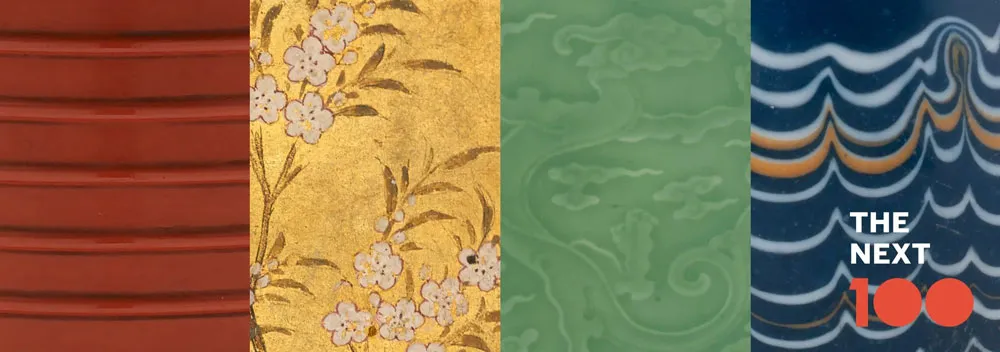
Lacquerware exhibiting intricate red carving and relief details
Spanning thousands of years, the seventy works on display reveal how lacquer evolved from a protective coating for wood into a medium of sculptural relief. The curation highlights the versatility of the craft, moving from the solemnity of imperial court treasures to the intimacy of scholarly artifacts.
Among the defining pieces is a cosmetic box from the Southern Song Dynasty, its surface engraved with a delicacy that belies the material’s hardness. Nearby, a tray from the Ming Dynasty shimmers with mother-of-pearl inlay, a technique that introduces light into the darkness of the lacquer. The narrative culminates in the Qing era with a layered, multi-colored table screen from the reign of the Qianlong emperor—a piece that serves as a masterclass in the complexity of carving through contrasting strata of color.
The Alchemy of Pigment
Journey of Color Freer Gallery of Art, Washington, D.C. | Opening Early 2023
Color in ancient Asian art was never merely a visual choice; it was a physical connection to the landscape. Before the advent of synthetic dyes, the artist’s palette was a collection of crushed minerals, harvested plants, and ground insects. The Journey of Color at the Smithsonian’s National Museum of Asian Art strips away the finished image to reveal the raw materials that made it possible.
Vibrant textile artwork displaying traditional Chinese patterns and colors
The exhibition presents thirty-four items not just as art objects, but as evidence of chemical and botanical knowledge. Visitors are invited to understand the labor behind the luminosity: the pulverization of lapis lazuli to achieve a profound blue, or the processing of gold to create a divine glow. By focusing on the origins of these pigments, the curators highlight the symbiotic relationship between the artisan and the natural world. Each hue tells a story of trade routes, geology, and the relentless human desire to capture the fugitive colors of nature and bind them to silk and paper.
A Silence Between Centuries
Paintings and Ceramics in Dialogue The Cernuschi Museum, Paris | April 14 – July 30, 2023
There exists a profound resonance between the minimalist purity of Song Dynasty ceramics and the expressive ink experiments of the 20th century. The Cernuschi Museum explores this trans-temporal conversation in an exhibition honoring the legacy of art historian and collector Harley Preston. By bequeathing nearly 200 objects to the museum, Preston enabled a curation that bridges the gap between the ancient and the modern.
A display of traditional Chinese ceramics and scroll paintings
The exhibition is structured as a visual dialogue. On one side, the monochromatic glazes of Chinese ceramics from the 5th to the 19th centuries offer a lesson in restraint and form. On the other, 20th-century Chinese paintings provide a counterpoint of fluid motion and calligraphic energy. This juxtaposition invites the viewer to see the continuity of the Chinese aesthetic spirit—how the silence of a ceramic vessel informs the empty space in a modern ink wash.
Expanding the scope, the exhibition also delves into Japanese aesthetics, featuring Nihonga painting and Mingei ceramics. The inclusion of Watanabe Seitei’s series on the twelve months adds a layer of seasonal rhythm to the collection, further emphasizing the East Asian reverence for nature’s cycles.
Unveiling the Twilight Era
China’s Hidden Century British Museum, London | May 18 – October 8, 2023
The 19th century in China was a period of seismic shifts, caught between the twilight of the Qing Dynasty and the dawn of the Republic. Often overshadowed by the grandeur of earlier eras or the turbulence of the 20th century, this era is brought into sharp focus in China’s Hidden Century. This collaborative effort between the British Museum and London University challenges the narrative of decline, proposing instead a story of extraordinary resilience and cultural adaptation.
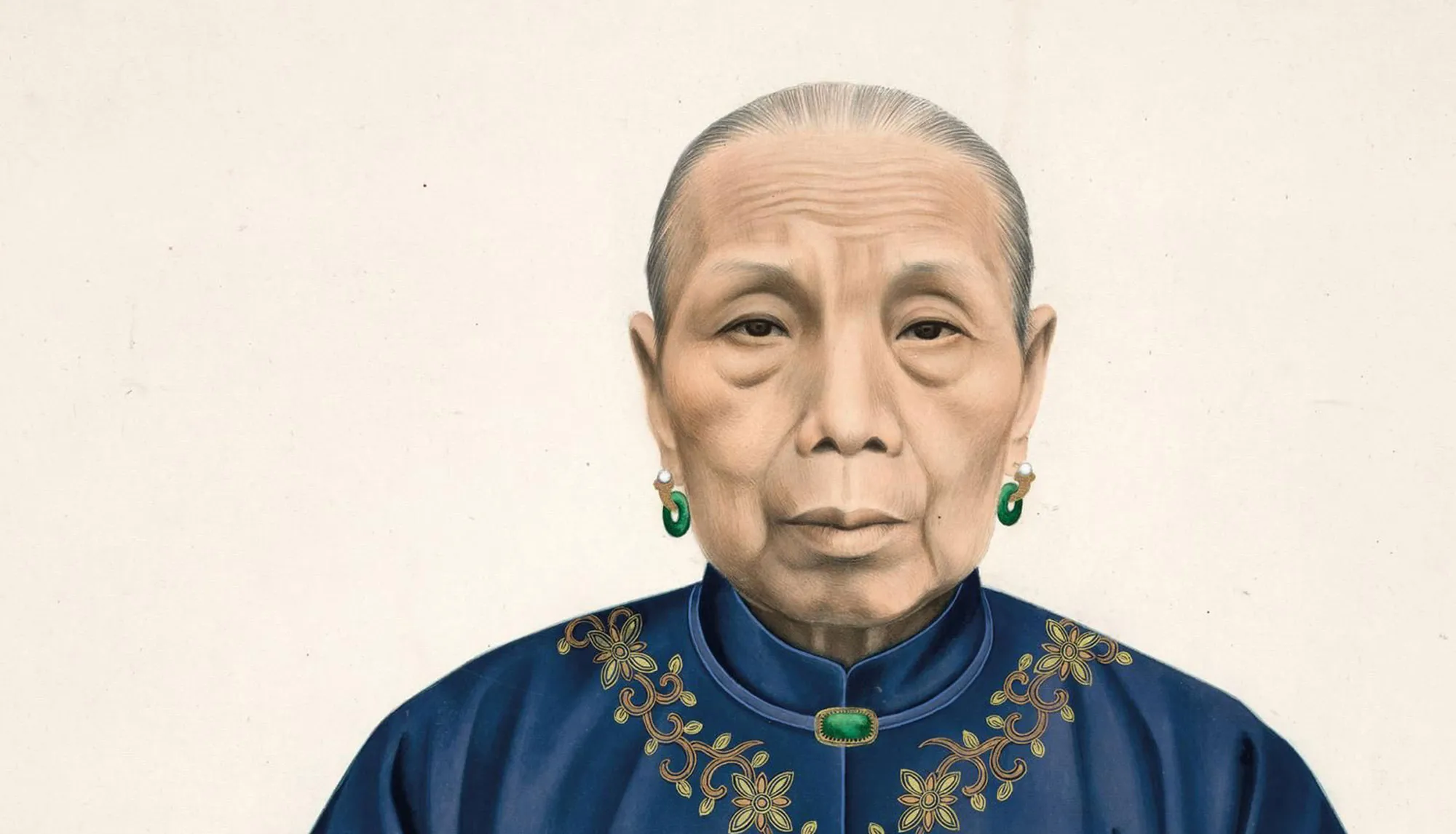
Detailed view of an ornate 19th-century Chinese textile
Covering the years 1796 to 1912, the exhibition examines the creative undercurrents that persisted despite political upheaval. The objects selected are deeply personal, offering glimpses into lives lived during a time of transition. From the grandeur of a silk robe commissioned by the Empress Dowager Cixi—a figure of immense power and controversy—to the cloisonné vases gifted to King George V, the artifacts bridge the gap between the Forbidden City and the wider world. The curation moves beyond the court, shedding light on the furnishings, fashions, and daily realities of a society navigating the friction between tradition and modernity.
The Peak of Porcelain Perfection
The Imperial Porcelain with Painted Enamels National Palace Museum, Taipei | Jan 13, 2022 – Dec 31, 2023
If lacquer represents patience and ink represents philosophy, then painted enamel porcelain represents the zenith of technical precision. The National Palace Museum presents The Imperial Porcelain with Painted Enamels, a deep dive into the falangcai wares that defined the aesthetic standards of the Qing court.
Exquisite painted enamel porcelain bowl with floral motifs
Focused primarily on the 18th century, this exhibition traces the evolution of a style that demanded the utmost control over fire and color. These pieces were not mass-produced; they were the result of the imperial court workshops’ relentless pursuit of perfection. The painted enamels, with their vibrant Western-influenced palettes and traditional Chinese motifs, embody a moment of artistic synthesis. The exhibition highlights the intricate details—the shading of a petal, the gradient of a background—that turned porcelain vessels into portable canvases, highly sought after by emperors and connoisseurs alike.

 Lacquerware exhibiting intricate red carving and relief details
 Vibrant textile artwork displaying traditional Chinese patterns and colors
 A display of traditional Chinese ceramics and scroll paintings
 Detailed view of an ornate 19th-century Chinese textile
 Exquisite painted enamel porcelain bowl with floral motifs