The trajectory of an artist is rarely a straight line; often, it is a negotiation between disparate worlds. For dancer Yi Li, this negotiation began in the quiet expanse of southern Germany, far removed from the crimson curtains and orchestral swells of the global stage. Born to a Chinese mother and a father from Munich—a city famed for the mechanized precision of BMW and the boisterous traditions of Oktoberfest—Li’s childhood was defined not by pirouettes, but by the earthy realities of farm life.
Portrait of Shen Yun dancer Yi Li looking contemplative
A Duality of Roots
Li’s early years were spent in a pastoral setting where the imagination was fed by the tangible: horseback riding, cattle, and the open air. While she consumed European fairytales and read of Buckingham Palace, she did not envision herself as the princess in the tower. She was a child of the soil, content in the quietude of the countryside.
Yet, a subtle undercurrent of heritage was always present. It was Li’s mother who introduced a counter-rhythm to the German farm life, weaving threads of Eastern culture into her daughter’s upbringing. Between flute lessons and ballet classes—staples of a Western arts education—her mother insisted on the preservation of their Chinese roots, teaching Li the language and the practice of meditation. It was a duality that Li lived but did not yet fully embody, a dormant seed waiting for the right climate to break the surface.
That climate arrived when Li was thirteen. During a European tour of Shen Yun Performing Arts, a company renowned for reviving classical Chinese dance, Li and her mother sat in the audience. It was there, amidst the spectacle of revived legends, that a casual suggestion transformed into a life-altering pivot. A notice in the program book regarding the Fei Tian Academy of the Arts—the training ground for Shen Yun dancers—prompted an audition.
In a sequence of events that unfolded with the swift inevitability of a storybook plot, the German farm girl packed her bags. She left behind the horses and the hills for New York, trading the known comforts of Munich for the rigorous, disciplined world of classical Chinese dance.
The Architecture of Pain and Silence
The transition from a Bavarian farm to a premier dance academy is not merely a change of geography; it is a reconstruction of the self. Upon arriving in New York, Li faced a profound isolation. Speaking neither English nor Chinese fluently, she found herself in a linguistic void.
“Before, I was incredibly shy. When I first came here, I couldn’t speak a word in Chinese or English. So no one could understand what I was saying,” Li recalls. This silence was often misinterpreted as rudeness, adding a layer of social alienation to the physical grueling of dance training.
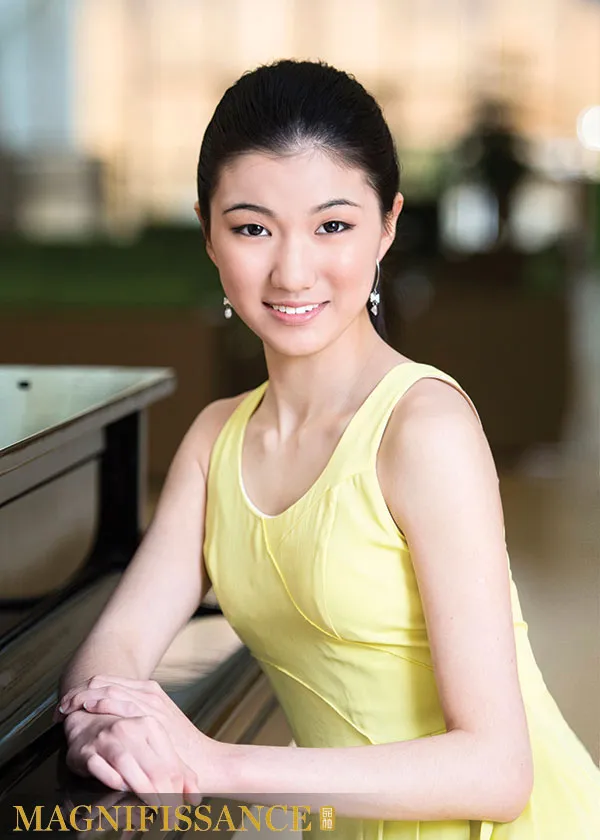
Yi Li executing a high leap in classical Chinese dance costume
If the language barrier was a mental wall, flexibility was the physical one. Classical Chinese dance demands a plasticity of the body that must often be forged through immense discomfort. Li describes this period not with romanticism, but with the visceral memory of pain. Her back and legs, accustomed to the sturdy movements of sports, rebelled against the extreme extensions required by the art form.
“I cried every day. I wanted to go home, but somehow I pushed through,” she admits. It is in this crucible of tears and stretching that the artist is often born—not in the moment of applause, but in the solitude of the studio. Li notes that after enduring these hardships, “something like the true heart of dancing awoke in me.” It was an awakening that transcended vocabulary, a sense of fulfillment found in the mastery of her own resilience.
Embodying the Mythic
By 2013, Li had ascended to the professional company of Shen Yun Performing Arts, embarking on the very world tours she had once watched from the stalls. Her education at Fei Tian had expanded beyond the physical; it included a deep dive into Chinese history and the mythical narratives that form the backbone of the culture.
Among these narratives, the legend of The Butterfly Lovers (Liangzhu) resonated most deeply with Li. In the 2013 New Tang Dynasty Television’s International Classical Chinese Dance Competition, she chose to portray the story’s protagonist, Yingtai.
The character of Yingtai—a woman who disguises herself as a man to attend school—offered a complex artistic challenge. It required Li to portray a witty maverick, a role that demanded a departure from the demure. In navigating Yingtai’s dual identity, Li found a reflection of her own journey: the girl who crossed oceans and cultures, masquerading through language barriers until she found her true voice in movement. The role allowed her to tap into an adventurous spirit that had been dormant since her days on the farm.
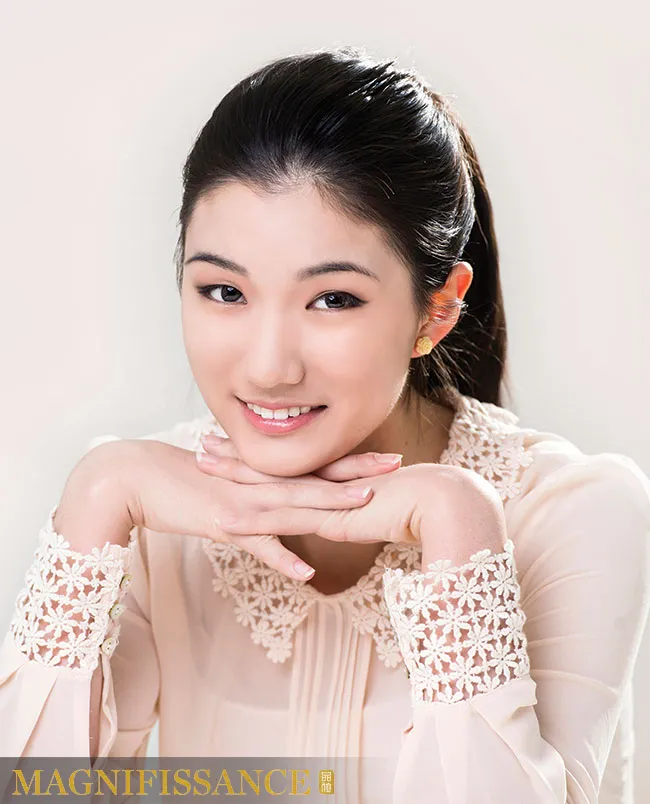
Yi Li in a classical dance pose holding a fan
Looking back, the contrast between the girl who whistled away days in the German fields and the performer bowing to packed theaters is stark. Yet, Li recognizes that the transformation was not accidental. The pain of the stretches, the frustration of the silence, and the discipline of the academy were the necessary fires that forged her identity. The farm girl remains within her, grounding the ethereal movements she now performs, proving that the most magical metamorphoses are often born from the hardest realities.

 Portrait of Shen Yun dancer Yi Li looking contemplative
 Yi Li executing a high leap in classical Chinese dance costume
 Yi Li in a classical dance pose holding a fan