The 14th and 15th centuries in Italy were not merely a passage of time; they were an awakening. It was a moment when the heavy veil of the Middle Ages was lifted by the hands of humanists and engineers, revealing a world where the ancient past and the innovative future could coexist. At the heart of this “rebirth”—the literal translation of renaissance—lay a profound respect for the divine law of proportion.
The masters of that era, from Da Vinci to the architects of Florence, understood that the structure of life adheres to the Golden Ratio. Whether in the curve of a leaf or the anatomy of the human form, they saw a sacred geometry. As the Greek philosopher Protagoras had observed two millennia prior, “Man is the measure of all things”—a sentiment Leonardo famously immortalized in his Vitruvian Man. They believed that true art must begin with this divine sense of balance and interconnectedness.
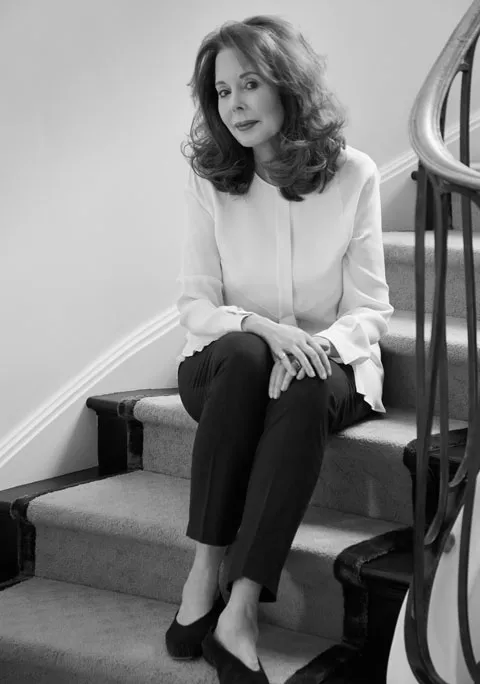
Centuries later, this pursuit of “absolute beauty” finds a contemporary vessel in the work of Maria Theresa Meloni. A Florentine painter and photographer, Meloni does not simply emulate the aesthetics of her ancestors; she inhabits their spirit, translating the ancient language of harmony into the modern mediums of photography and oil painting.
Maria-Theresa-Meloni*A large photography portrait of Darja Denisenko, titled Sleeping Beauty, private collection in Milan.*
The Living Portrait
Born and raised in Italy, the cradle of this cultural explosion, Meloni’s visual vocabulary was formed early on. Her childhood was spent amidst public spaces alive with angels and the hallowed halls of the Uffizi Gallery in Florence. Yet, her connection to the era transcends mere geographical proximity; it appears to be written into her very being.
There is an uncanny resonance between the artist and her muse. With fair skin and a gaze that holds a quiet, deep wisdom, Meloni possesses a face that seems plucked from the canvas of a master. Throughout her life, she was told she bore a resemblance to the Mona Lisa. Indeed, the calm nobility in her eyes mirrors the glorious face of Mary in Leonardo’s Virgin of the Rocks.
“The maestro I love—love as if he was a relative—is Leonardo da Vinci,” Meloni confesses. This affinity goes beyond admiration; it suggests a lineage of the soul. “Why do all the paintings look like me? Have we met in another life?”
This internal questioning culminated in a profound moment of recognition when she was just 23. While working as a children’s illustrator, Meloni visited the Royal Château of Amboise in France’s Loire Valley. Wandering into a Gothic chapel described as “a sand castle standing on a cliff, bathed by the sun,” she found herself alone, immersed in the prismatic colors of stained glass.
There, she discovered the simple granite grave of Leonardo da Vinci. “I put my hand on the grave,” she recalls of the encounter. “And then… magic reconnection.”
Maria-Theresa-Meloni*A photography portrait of Andrea Wallner Zeiner, titled Andrea and His Grandfather’s Kingfisher (from the Italian, Andrea e il Martin Pescatore del Nonno).*
The Philosophy of Disegno
To understand Meloni’s process is to understand the Italian concept of disegno. Often simplified as “drawing” or “design,” the term carries a far weightier significance in art history. It describes the capacity of an artist to act as a microcosm of the divine—someone who can both conceive a vision intellectually and execute it physically. It elevates the work from mere craft to high art.
For Meloni, the image exists fully formed in the mind before the camera is even lifted or the brush touches the canvas. “It’s called vision,” she explains. “When you have the vision, you can apply it to a drawing, photograph, or an oil painting… the vision is in my brain. It’s always the same, it’s just the execution that changes.”
This internal “spring” of inspiration allows her to overlay the aesthetics of the Medici era onto the modern world. A landscape in upstate New York, near the Hudson River, can be mentally transfigured into a Renaissance backdrop of marble columns and vast waters.
Serendipity often plays the role of the quiet assistant in her work. During a trip to Harvard, Meloni encountered a young woman whose features echoed the Pre-Raphaelite brotherhood—the 19th-century movement that sought to revive the detailed realism and symbolism of the era before Raphael. “I’ve never seen a woman in my life that looked as if you’re walking out of a Dante Gabriel Rossetti image,” Meloni told her.
This chance meeting evolved into a collaboration where reality was bent to fit the artist’s internal eye. Meloni designs the period-accurate clothing herself, with bespoke outfits sewn by her friend Angela Stavola. The result is a tactile richness—exquisite details and regal fabrics that physically transport the subject back to the Golden Age.
Maria-Theresa-Meloni*Photography portrait Cherub and Chronos, private collection in London.*
The Fragmentation of Light
While the costumes and composition set the stage, it is the treatment of light that elevates Meloni’s work to mastery. In the Renaissance, light was not merely a tool for visibility; it was a spiritual presence. Meloni operates with the conviction that “Light is the engine of everything. Light is king at all times.”
Her technical prowess lies in understanding the “fragmentation of light”—the way illumination interacts with the microscopic atmosphere of a space. She speaks of the dust floating within blades of light in a dark room, a phenomenon she recreates using humidification or fog to enhance the chiaroscuro.
This technique—the dramatic contrast between light and shadow—does more than create depth. It sculpts the subject, imbuing the photograph or painting with an angelic glow reminiscent of the divine imagery that surrounded her youth in Florence. By manipulating these atmospheric elements, she achieves a texture that feels less like a captured moment and more like a suspended eternity.
In a world obsessed with the new, Maria Theresa Meloni looks backward to find the eternal. Her work serves as a bridge, proving that the nobility and grace of the 15th century are not lost, but merely waiting for the right light to reveal them again. As she poignantly observes, “Art is a connection to immortality.”
Maria-Theresa-Meloni*Self photography portrait of Maria Theresa Meloni at the studio with the latest oil painting portrait of Maribel Buono Lopera.*

 Maria-Theresa-Meloni*A large photography portrait of Darja Denisenko, titled Sleeping Beauty, private collection in Milan.*