In the fragmented landscape of modern education, the liberal arts and sciences are often treated as distinct, non-overlapping territories. Yet, for Dr. Tianliang Zhang, a professor of Chinese history at Fei Tian College, these disciplines are not parallel lines that never meet, but rather arcs in a greater circle of understanding.
Zhang, known to millions as the host of the insightful program A Grand View of Chinese History on NTD Television and the YouTube channel Dawn Time, embodies the classical ideal of the “generalist.” Originally trained in science and engineering before turning his gaze toward literature and history, he posits that true intellectual depth requires a synthesis of logical rigor and expressive grace.
“The liberal arts and the sciences were divided by modern society,” Zhang observes, noting that a complete human being requires both the structural thinking of an engineer and the narrative soul of a historian.
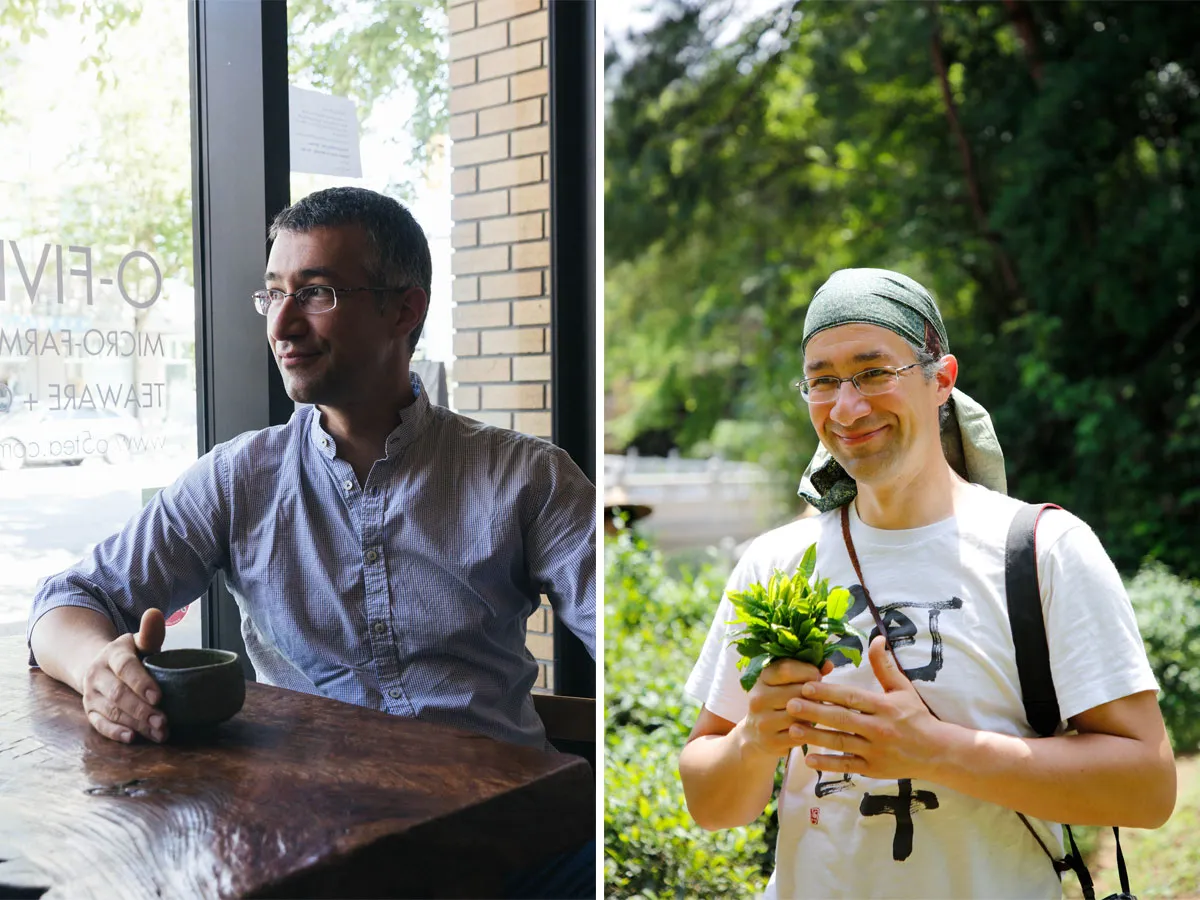
Chinese history professor and video host Tianliang Zhang
The Three Tiers of Knowing
To navigate the complexities of the world, Zhang proposes a hierarchy of knowledge that ascends from the material to the metaphysical. The foundation, he suggests, lies in the study of the relationship between humans and the material world—the domain of physics, chemistry, and computation. Above this sits the study of human relationships, encompassing politics, law, sociology, and psychology.
However, the apex of this structure is the exploration of the relationship between the human and the divine. This level, occupied by theology and philosophy, provides the context for all other inquiries. Zhang references the great historian Sima Qian, who sought “to explore the relationship between the Way of Heaven and the Way of Man.”
It is this philosophical grounding, Zhang argues, that often precipitates scientific breakthroughs. He cites the moment Albert Einstein, riding a streetcar past a clock tower in Bern, conceptualized the theory of relativity. It was a philosophical experiment—imagining the observer moving away from the clock at the speed of light—that dismantled the rigid, three-hundred-year-old Newtonian framework of absolute time.
“Equipped with a philosophical foundation,” Zhang notes, “one will be able to find the path to make breakthroughs.”
The Renaissance of the Warrior-Poet
This holistic approach mirrors the education of the ancients. In China’s dynastic history, the most revered figures were rarely specialists in a single trade. Emperor Taizong, the military strategist Yue Fei, and the philosopher-general Wang Yangming were polymaths who could command armies from the saddle and compose transcendent poetry or calligraphy upon dismounting.
“They could get on a horse to fight, and then get off to rule the country,” Zhang explains. This fluidity finds its Western echo in the Renaissance masters like Michelangelo and Leonardo da Vinci—figures who saw no contradiction between engineering a fortification and sculpting a masterpiece.
For Zhang, his own pivot from engineering to history was catalyzed by a spiritual awakening. Through the practice of Falun Gong (Falun Dafa) and its principles of Truthfulness, Compassion, and Forbearance, he began to perceive history not through the lens of the Marxist ideology he had learned in China, but through a lens of cosmic cause and effect. This shift in perspective allowed him to see the “eternal laws of the universe” weaving through the rise and fall of dynasties.
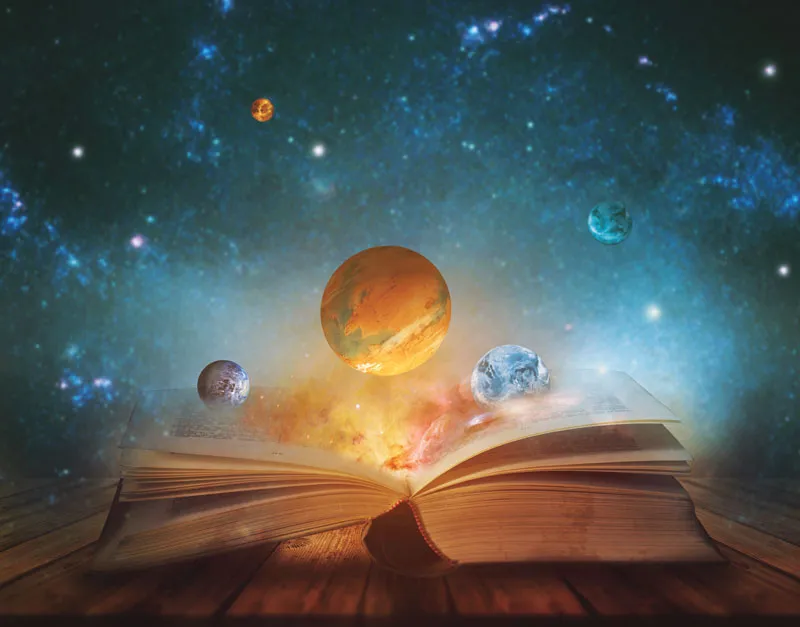
Nature and the concept of circles in Chinese philosophy
The Circle as Cosmos
Central to this traditional worldview is the motif of the circle, or Taiji. In Chinese arts, architecture, and philosophy, the circle is ubiquitous—from the moon gates of classical gardens to the rounded movements of classical Chinese dance.
“The highest concepts in Taoism originate from the concept of Taiji, which is represented as the circle of yin and yang,” Zhang says. It is a visual representation of the law of the universe: the coexistence and dynamic interplay of opposing forces.
Unlike the linear progression of time favored in the West, the Chinese temporal view is cyclical, marked by the sexagenary (60-year) cycle. This circularity suggests that time, space, and destiny are not straight lines vanishing into infinity, but revolving patterns where every end is a precursor to a new beginning.
The Wisdom of Retreat
The philosophy of Taiji offers profound guidance for navigating the pressures of contemporary life. A core tenet is that “everything reverses once it reaches the limit.” When Yang reaches its extreme, Yin emerges. In a world obsessed with constant forward momentum, this wisdom suggests a counter-intuitive strategy: taking a step back to eventually move two steps forward.
Zhang illustrates this with the story of Sun Tzu, the legendary author of The Art of War. After leading the state of Wu to a miraculous victory against a superior force, Sun Tzu did not seek higher office or greater glory. He recognized the cyclical nature of fortune.
“When summer passes, cold times arrive; when spring departs, autumn comes,” Sun Tzu told his contemporary, the commander Wu Zixu. Sun Tzu understood that a king, once secure and victorious, would inevitably grow prideful. He chose to retire at the height of his success, distributing his wealth and vanishing into obscurity.
Wu Zixu, conversely, remained attached to his position and failed to heed the warning of the turning cycle. Years later, when the state of Wu fell, he was forced to commit suicide.
In Zhang’s view, this historical lesson remains vibrant today. The ability to recognize the “extreme”—to understand when to advance and when to retreat—is not merely a survival tactic, but a harmonization with the natural rhythm of the Tao.
 Chinese history professor and video host Tianliang Zhang
 Nature and the concept of circles in Chinese philosophy