In the realm of classical Chinese dance, the stage is rarely just a floor for movement; it is a canvas for invisible energy. When Lillian Parker stepped onto the stage at the 2021 NTD International Classical Chinese Dance Competition, the air seemed to shift. Dressed in brilliant purple, with “water sleeves” extending far beyond her fingertips, she did not merely occupy the space—she manipulated it.
For Parker, a Toronto native who grew up watching Shen Yun Performing Arts become a global phenomenon, this moment was the culmination of a decade-long immersion into a culture distinct from her own heritage. Her performance, titled “Flow of the Taoist Spirit,” earned her a gold medal in the junior category, marking a significant milestone not just for her career, but for the universality of the art form itself.
Shen Yun dancer Lillian Parker won a gold medal at the 2021 NTD International Classical Chinese Dance Competition with the performance “Flow of the Taoist Spirit.”
The Architecture of Silence
Parker’s winning piece was a study in contrast: the expansive, flowing motion of the silk sleeves against the grounded stillness of her core. Alone on an empty stage, she eschewed the typical barrage of high-flying tumbling techniques that often dazzle audiences. Instead, she chose a more difficult path: the cultivation of composure.
The performance relied heavily on the manipulation of long sleeves, a prop that acts as an extension of the dancer’s intent. Parker threw them out and pulled them back with a precision that suggested the fabric was alive, demonstrating a blend of power and extreme delicacy. This stylistic choice highlighted a maturity often absent in junior competitors—the understanding that the most profound expression often happens in the quietest moments.
Portrait of Lillian Parker demonstrating the subtle bearing of classical Chinese dance
Decoding the ‘Yun’
For a dancer of Western descent, mastering the physical techniques of classical Chinese dance is a feat of athleticism; mastering the yun—or bearing—is a feat of empathy and philosophical understanding. Bearing is the soul of the movement, the specific cultural DNA that dictates how a breath is taken or how a gaze is held.
Parker admits that early in her training, the disparity between her natural expression and the requirements of the art form was palpable. “I realized that I needed to adjust myself,” she notes, reflecting on the difference between Western projection and Eastern introspection. “I noticed that [Chinese dancers] hold a lot inside. You can see their intentions and emotions, but it’s like seeing them through a veil.”
To bridge this gap, Parker began to emulate the “veiled” quality of her peers at the Fei Tian Academy of the Arts in New York. She moved away from the Western tendency to “explode” emotion onto the stage, opting instead for a method where feeling “slowly leaks out.” This shift created a sense of mystery, adding layers of depth to her stage presence that resonated with the judges.
Lillian Parker in training, focusing on the mechanics of classical dance
The Physics of Grace
The technical foundation of Parker’s “Flow of the Taoist Spirit” rests on a core principle of classical Chinese dance: “the body leads the hands.” This is not merely a stylistic instruction but a kinetic imperative.
In her performance, the long sleeves did not appear to originate from her wrists but seemed to shoot out from her very center. “The movement comes from the centre,” Parker explains. “Everything else just follows from that energy source like a ripple effect.”
This centrifugal generation of force serves two purposes. Aesthetically, it prevents movements from looking small or disconnected. Philosophically, it aligns with the concept of xiao sa—a state of being care-free, open, and elegant. By concentrating the feeling in the heart and pushing it outward through the body, the dancer achieves an “upright feeling,” a physical manifestation of noble character.
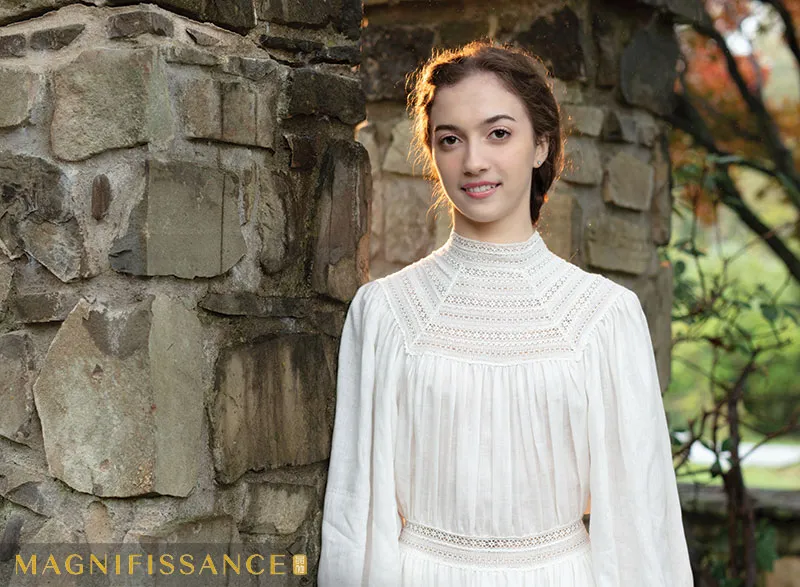
Shen Yun dancer Lillian Parker posing in a garden setting
A Universal Heritage
Parker’s victory—alongside her siblings who also placed in the competition—signals a shift in the landscape of traditional arts. As practitioners of Falun Dafa, the Parker siblings were drawn to Shen Yun’s mission of reviving the traditional Chinese culture suppressed following the events of 1949.
Interestingly, this mission places Parker on a similar footing to her ethnically Chinese counterparts. At Fei Tian Academy, both Western and Chinese students are often encountering the depths of this traditional culture—its legends, its virtues, and its “divinely inspired” aesthetics—for the first time. It is a process of reconstruction for everyone involved.
For Parker, the training goes beyond the studio. It involves studying the great figures of Chinese history and understanding the emphasis on virtue in daily conduct. “Anyone can learn the techniques,” she observes, “but only with the right values of action and intention can the dance have the genuine feel of traditional Chinese culture.”
Lillian Parker executing a dance move with extended sleeves
Beyond the Gold
The gold medal serves as a validation of Parker’s method—an acknowledgment that the “spirit” of a culture can be inhabited by anyone willing to do the internal work required to understand it. Yet, for an artist of her caliber, the accolade is merely a “stepping stone.”
The beauty of classical Chinese dance lies in its infinite ceiling. There is always a subtler way to breathe, a smoother way to transition, a deeper layer of yun to uncover. As Parker continues her journey with Shen Yun, her performance remains a testament to the power of the “ripple effect”—starting from a centered heart and expanding outward, transcending borders and backgrounds.
Lillian Parker standing by a railing, balancing student life and professional dance

 Shen Yun dancer Lillian Parker won a gold medal at the 2021 NTD International Classical Chinese Dance Competition with the performance “Flow of the Taoist Spirit.”
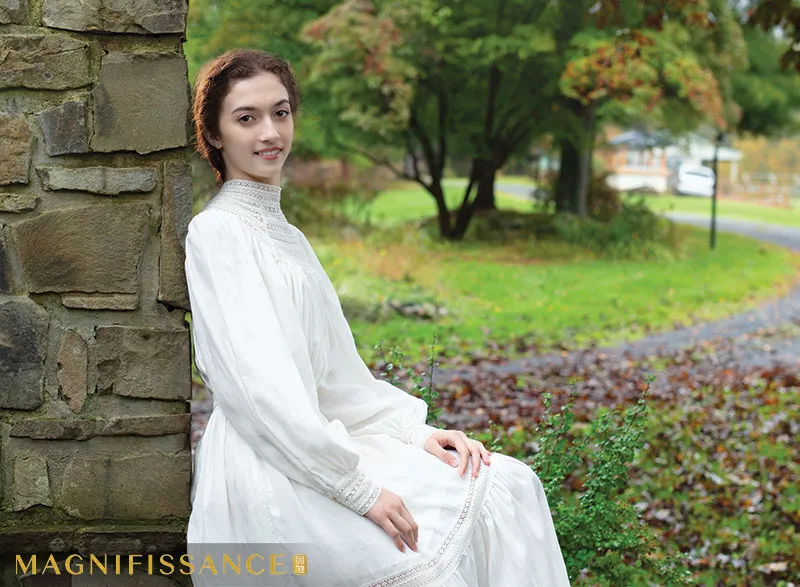 Portrait of Lillian Parker demonstrating the subtle bearing of classical Chinese dance
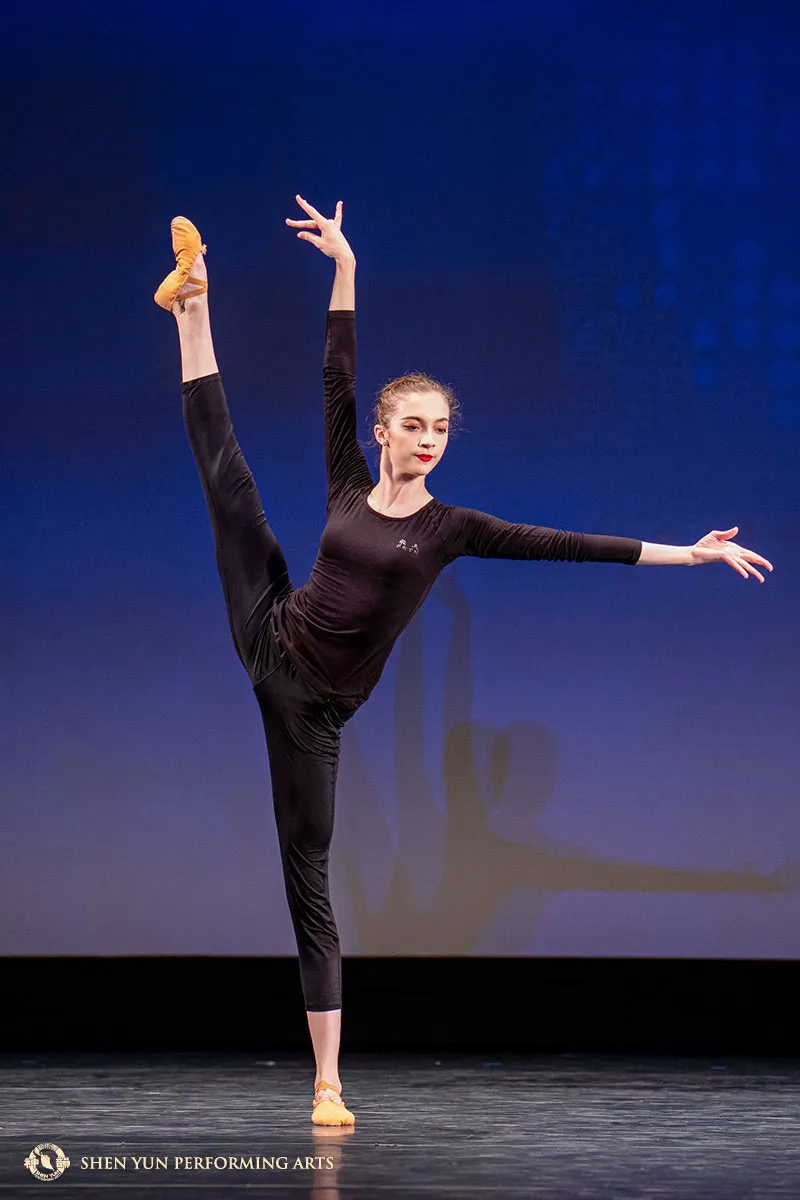 Lillian Parker in training, focusing on the mechanics of classical dance
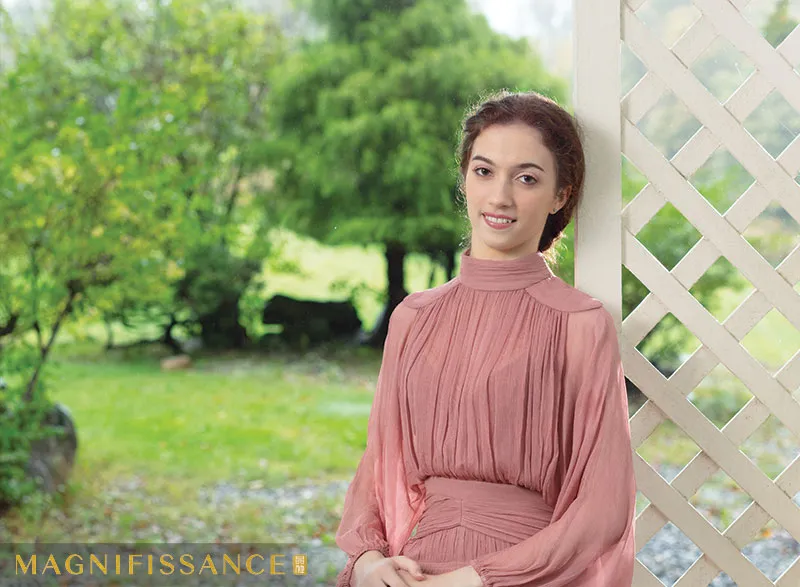 Shen Yun dancer Lillian Parker posing in a garden setting
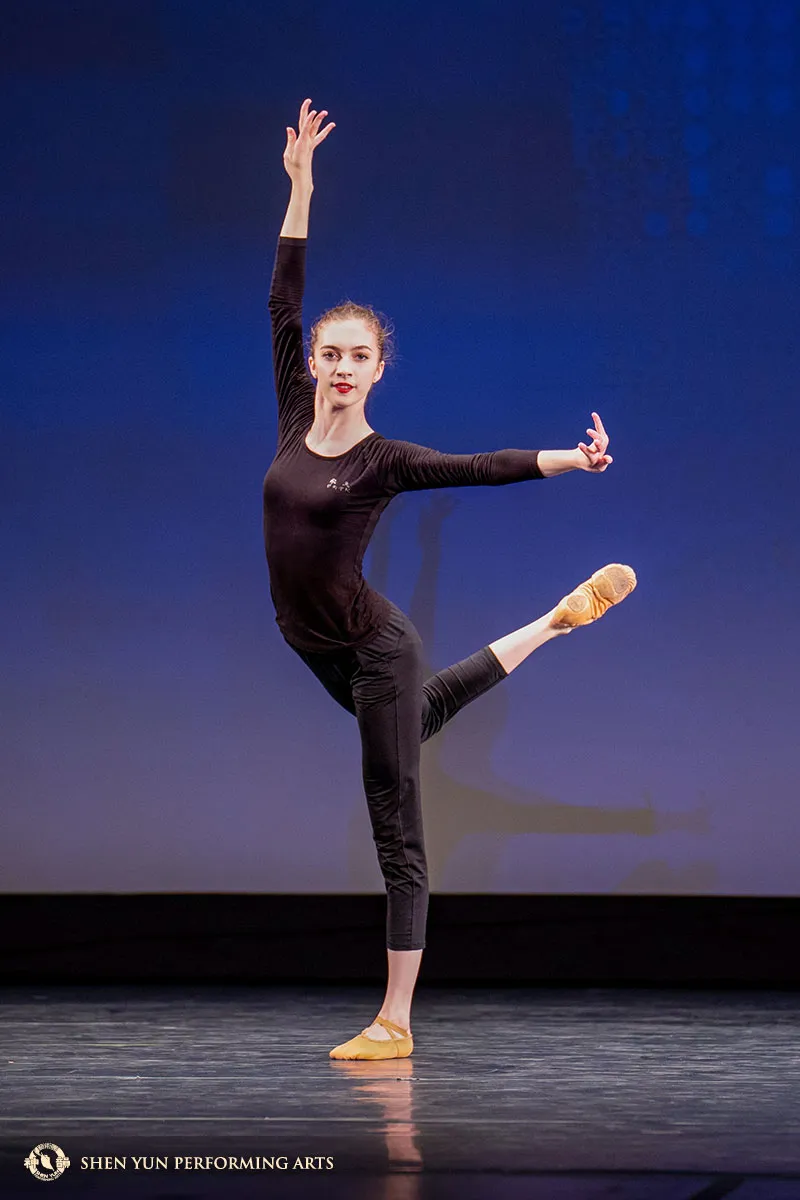 Lillian Parker executing a dance move with extended sleeves
 Lillian Parker standing by a railing, balancing student life and professional dance


