In the annals of the Tang Dynasty, history is often written in the ink of conquests and the bronze of weaponry. Yet, in the repertoire of Shen Yun Performing Arts, the weight of history is carried in the flutter of a silk sleeve and the subtle incline of a dancer’s head. For principal dancer Cheney Wu, bringing the legend of General Xue Rengui to life was not merely a physical feat, but an excavation of the human spirit—a journey into the quiet, enduring power of “Devotion.”
The piece, set against the backdrop of ancient China, demands more than technical precision; it requires an understanding of a loyalty that transcends the immediate, stretching across eighteen years of solitude.
The Choice of the Silk Ball
The narrative begins with a stark social divide. Xue Rengui, before his ascent to military immortality, was a man of destitution—a commoner living in a yaodong, the traditional earth shelters carved into the loess plateaus of Northern China. Conversely, his future wife was born of aristocracy.
In the dance, this divide is bridged by the ancient custom of the silk ball. Wu portrays the noblewoman who, unimpressed by the lineage of wealthy suitors, casts her fate—represented by the embroidered sphere—toward the impoverished Xue. She had witnessed his quiet benevolence in helping a stranger, a moment that revealed a nobility of character far outstripping material wealth.
For Wu, this opening act is crucial. It establishes the weight of the sacrifice to come. By choosing Xue, the character is banished, trading silk robes for the dust of the cave dwelling. “I imagined myself in her position,” Wu reflects on the transition. “I used to be really rich… so by choosing him, I gave away everything. Now I’m sending him away. I feel like my heart would be so torn.”
The Duet of Breath and Parting
The emotional fulcrum of the piece lies in the yaodong. Here, the domestic tranquility is shattered by the call of war. The wife, recognizing Xue’s potential to serve the Emperor, urges him to depart, promising to wait.
This separation is articulated through a duet of immense complexity. It is not enough for the dancers to move in unison; they must exist as a singular emotional entity preparing to be severed. Wu notes that she and her partner had to synchronize their very breathing. In the silence of the stage, the rise and fall of their chests had to align, creating the illusion of two parts of a whole.
“If the duet isn’t extremely well-rehearsed and isn’t synchronized, it looks just like two people dancing next to each other,” Wu observes. True artistry lies in the invisible tether between the performers—a shared gravity that makes the eventual parting feel like a physical tearing of the soul.
Eighteen Winters of Solitude
When the General leaves, the stage belongs to Wu alone. The narrative spans eighteen years—a lifetime of waiting depicted through the changing digital backdrops of seasons: the verdant green of hope, the falling leaves of passage, the gathered snow of isolation, and the recurring spring of resilience.
This solo was among the most demanding female roles of the 2018 season. However, the challenge was not just in the rigorous jumps, flips, and spins, but in imbuing these explosive movements with the texture of longing. Initially, Wu approached the choreography with technical diligence, only to be met with a critique that cuts to the bone of any artist: “You’re too shallow.”
The choreographer’s words forced a metamorphosis. “You can’t just frown when you’re sad and smile when you’re happy,” Wu realized. “You have to have meaning underneath.”
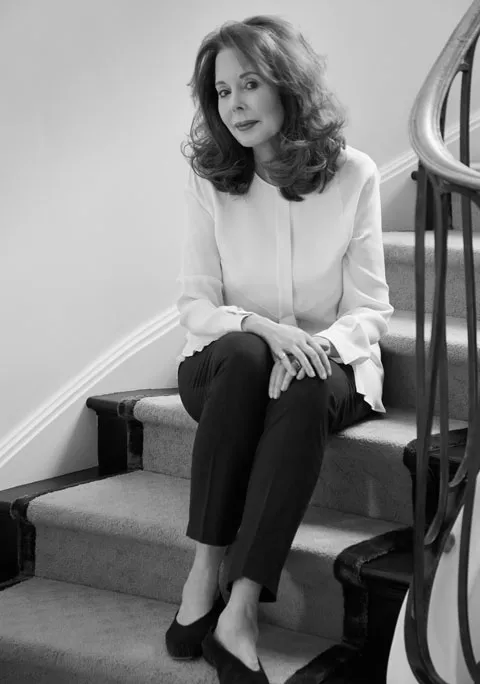
Dancer Cheney Wu was moved by the devotion she learned about in ancient Chinese legends. / Photo by Binggan Zhang
To find that meaning, Wu stepped off the stage and into the library. She researched the life of Xue Rengui’s wife, diving into the sensory details of her existence. She imagined the tactile reality of the character—making hand-pulled noodles in the dim light of the cave, a staple of Shanxi province. She listened to the score incessantly, letting the melody dictate the emotional landscape.
The technical difficulty of the dance—the repetitive, exhausting leaps—became a metaphor for the character’s internal state. The physical strain mirrored the volume of her pain and the fortitude required to maintain faith when the outcome remained unknown. “Even though you don’t know if he’s still alive or not… You don’t know if he’s going to come back,” Wu says. “It really left a deep impression on me.”
The Return and the Bow
The resolution of “Devotion” is as quiet as it is powerful. Xue Rengui returns, now a decorated general, and drops to one knee before his wife. It is a gesture of supreme humility—a recognition that her battlefield was the empty home, and her victory was her unwavering fidelity.
For Wu, the journey to this role began long before the curtain rose. Her own path at the Fei Tian Academy was paved with the grit of adaptation. As the youngest dancer, the transition from an American upbringing to the rigors of classical Chinese dance was marked by tears and physical pain. Yet, guided by the “soft strength” of senior dancers, she learned that resilience is a quiet virtue.
Wu believes that she improves her dancing when she betters her moral character. Dress by Max Mara / Photo by Binggan Zhang
This artistic evolution parallels the spiritual ethos of the performance. Wu cites C.S. Lewis to encapsulate her approach: “Humility is not thinking less of yourself, it’s thinking of yourself less.”
In inhabiting the role of the devoted wife, Cheney Wu discovered that the highest form of art requires a surrender of the ego. The dancer disappears, and only the story remains—a testament to the belief that if one remains devoted, whether to a person, a craft, or a principle, the echoes of that loyalty will resonate far beyond the stage.

 Wu performs her most challenging role yet—as General Rengui Xue’s wife in Devotion. © Shen Yun Performing Arts
 Wu says she is most happy and free when she’s dancing onstage. © Shen Yun Performing Arts
 Dancer Cheney Wu was moved by the devotion she learned about in ancient Chinese legends. / Photo by Binggan Zhang
 Wu believes that she improves her dancing when she betters her moral character. Dress by Max Mara / Photo by Binggan Zhang