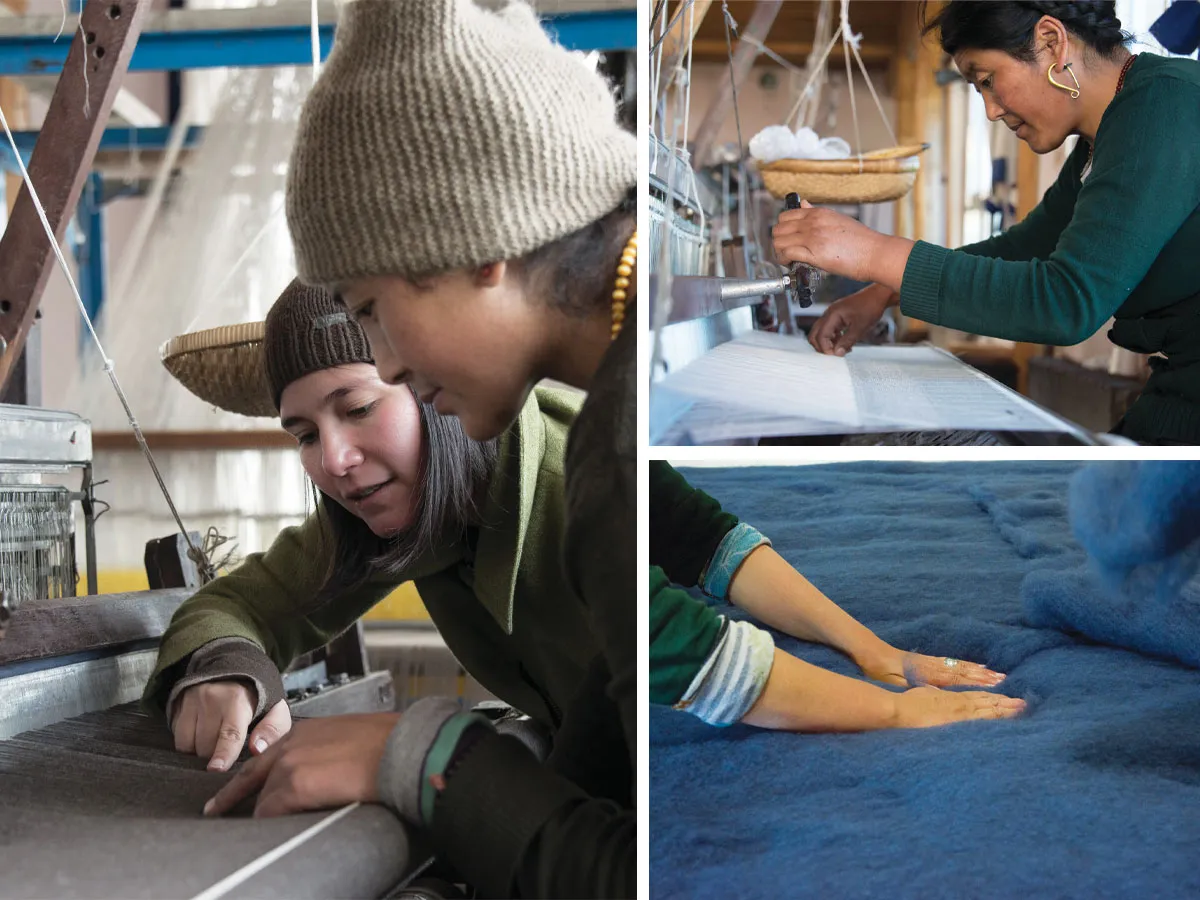
In the universe of haute couture, the true essence of luxury is often invisible to the naked eye. It lies not in the final silhouette striding down the runway, but in the thousands of hours of silent, rhythmic labor that precede it. Chanel’s Métiers d’Art collection is less of a fashion show and more of a pilgrimage—a tribute to the specialized ateliers that serve as the custodians of French craftsmanship. These are the artisans who translate the sketches of the Creative Director into tangible reality, working within the dedicated sanctuary of le19M, the Parisian hub designed to preserve these endangered crafts.
The 2021/2022 collection serves as a dialogue between the past and the present, where ancestral techniques meet modern architectural inspiration. To understand the gravity of these garments, one must look beyond the fabric and into the workshops where metal, wood, feather, and thread are transmuted into art.
Atelier Montex: The Architecture of Thread
Embroidery is often perceived as mere decoration, but at Atelier Montex, it is structural engineering performed with a needle. Joining the Chanel Métiers d’art constellation in 2011, Montex has distinguished itself by bridging the gap between traditional ornamentation and contemporary graphic design. The atelier does not simply embellish; it constructs texture.
Close-up of intricate silver and black embroidery work at Atelier Montex
The magic here is born from the tension between two distinct tools: the Lunéville crochet hook, used for delicate, hand-guided maneuvers, and the Cornely, a century-old hand-guided embroidery machine. The Cornely allows for a specific density and rhythm that purely manual needles cannot replicate, creating embroideries that grace everything from structured jerseys to fluid knitwear.
Artisan using a machine to embroider geometric patterns at Atelier Montex
In the 2021/2022 collection, Montex’s contribution is palpable in the architectural motifs that mirror the façade of le19M itself. The embroidery becomes a mirror of its own home, weaving the physical space of the artisan into the very fiber of the garment.
Goossens: Sculptors of Gold
If couture is the fabric of dreams, Goossens provides its armor. Founded in the 1950s and formally joining the Métiers d’art in 2005, this goldsmithing workshop shares a profound spiritual lineage with Gabrielle Chanel. The collaboration began in 1954, born from a shared fascination with the antique and the opulent. Robert Goossens understood Chanel’s desire to reinterpret the heavy, regal aesthetics of Byzantine jewelry into pieces that were lighter, yet retained their visual gravity.
Golden necklaces and accessories displayed on a model for Chanel Goossens
The atelier’s work extends beyond simple adornment; they are sculptors of metal. For this collection, the artisans returned to the foundational talismans of the House. They rendered the lion—Gabrielle’s zodiac sign—and the profile-embossed medallions with a raw, textured finish that feels unearthed rather than manufactured.
Detailed shot of a gold lion motif belt buckle by Goossens
These pieces serve as anchors to the fluidity of the fabrics. The Byzantine cross pendants and heavy gold cuffs are not merely accessories; they are historical footnotes worn on the body, continuing a conversation that Gabrielle started nearly seventy years ago.
Massaro: The Foundation of Movement
There is a saying in the atelier that elegance begins with the step. Massaro, the master bootmaker established in 1894, has been the architect of Chanel’s silhouette since 1957. It was here that the legendary two-tone shoe was conceived—a design alchemy that visually shortened the foot while lengthening the leg. Massaro joined the Métiers d’art in 2002, ensuring that the “hand” remains present in every heel and sole.
Beige and black Massaro shoes being crafted in the workshop
The process at Massaro is one of rigorous anatomy and aesthetics. A shoe is not just leather; it is a vessel for the wearer’s weight and grace. For the 2021/2022 collection, the atelier revisited the Mary-Jane pump, reimagining it in buttery goatskin.
A pair of white Massaro Mary-Jane pumps with black tips
The versatility of these creations—paired effortlessly with tweed suits or denim—speaks to Massaro’s unique ability to balance the demanding standards of couture with the practical necessities of modern life.
Lemarié: The Breath of Flowers
Among all the ateliers, Lemarié perhaps deals with the most ephemeral of materials: air and light, captured in feathers and silk petals. Partnering with Chanel since the 1960s, Lemarié is the botanical garden of the House, responsible for the iconic Camellia that blooms perennially across collections.
Artisan hands arranging white feathers at Atelier Lemarié
The work here is an exercise in extreme patience. A single floral ornament is a composite of individual petals, each hand-cut, shaped, and assembled to mimic the random perfection of nature. Feathers are not merely attached; they are combed, curled, and woven to create volumes that defy gravity.
A model wearing a cardigan adorned with Lemarié blue feathers
In this collection, Lemarié’s touch brings a vibration to the garments. The embellishments are not static; they move with the wearer, reacting to the slightest breeze, adding a living, organic dimension to the structured tweed.
Maison Michel: The Keeper of Forms
Headwear is the punctuation mark of a silhouette, and Maison Michel has been crafting these definitive statements since 1936. Joining the Métiers d’art in 1997, the atelier is a library of history, housing over 3,000 lime wood forms. These wooden blocks are not just tools; they are the memory of every hat shape created over decades, preserved to ensure the continuity of the craft.
Artisans working on hat forms at Maison Michel
The process of blocking a hat is physically demanding yet requires a delicate touch. The felt or straw is steamed and stretched over the lime wood, guided by hands that know exactly how much tension the material can withstand.
A classic black hat with a ribbon by Maison Michel
For the Métiers d’Art collection, Maison Michel’s artisans embellished these crowns and brims with braids and natural elements, proving that the hat remains an essential component of the Chanel allure—a halo of craftsmanship.
Lesage: The Weaver of Dreams
Chanel without tweed is unimaginable, and Lesage is the keeper of this sacred code. Collaborating with the House since 1983 and joining the fold in 2002, Lesage is unique in its dual mastery of embroidery and weaving. It is here that threads of wool, ribbon, and metallic fiber are crossed to create the rich, irregular textures that define the Chanel suit.
Detailed embroidery work in progress at Atelier Lesage
The 2021/2022 collection saw Lesage engaging in a meta-textual conversation with its environment. One standout piece features embroidery that mimics the concrete weave of the le19M building itself. Using the Lunéville technique, artisans translated the brutalist architecture into soft, wearable art.
Close up of Lesage tweed and embroidery texture
This synthesis of hard architecture and soft textile encapsulates the vision of the Métiers d’Art: the ability to draw inspiration from the world and refine it through the lens of extreme craftsmanship.
The Lognon Ateliers: Sculpting with Paper and Silk
The art of the pleat is the art of shadow and light. Lognon Ateliers, which joined the group in 2013, specializes in giving two-dimensional fabric a three-dimensional life. The technique has remained largely unchanged for decades, relying on “origami” moulds made from kraft cardboard.
Artisans folding pleating moulds at Lognon Ateliers
Two artisans must work in perfect synchronicity to manipulate the fabric between the cardboard layers, steaming it to set the permanent memory of the fold. Whether it is a sunray pleat or a Watteau style, the result is a garment that expands and contracts, possessing a kinetic energy of its own.
A black pleated skirt detail by Lognon Ateliers
A testament to the collaborative spirit of the Métiers d’Art is found in a skirt of accordion-pleated silk organza from this collection. Pleated by Lognon and subsequently embellished by Lemarié, it represents the cumulative power of specialized hands working in unison—224 hours of labor to create a single moment of fluid perfection.

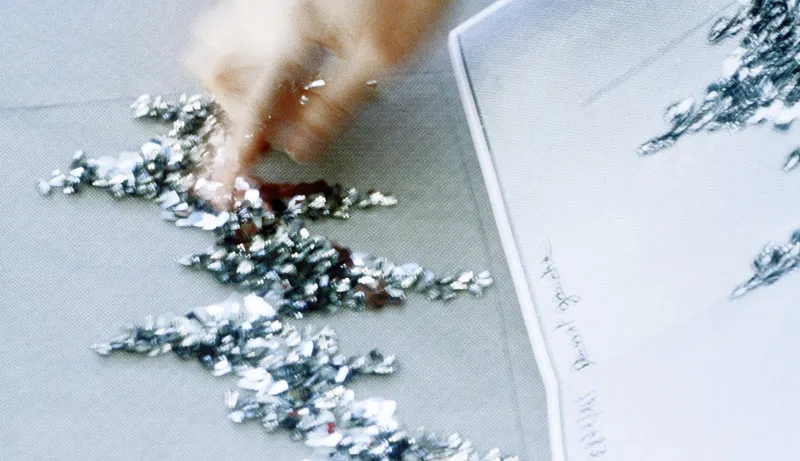 Close-up of intricate silver and black embroidery work at Atelier Montex
 Artisan using a machine to embroider geometric patterns at Atelier Montex
 Golden necklaces and accessories displayed on a model for Chanel Goossens
 Detailed shot of a gold lion motif belt buckle by Goossens
 Beige and black Massaro shoes being crafted in the workshop
 A pair of white Massaro Mary-Jane pumps with black tips
 Artisan hands arranging white feathers at Atelier Lemarié
 A model wearing a cardigan adorned with Lemarié blue feathers
 Artisans working on hat forms at Maison Michel
 A classic black hat with a ribbon by Maison Michel
 Detailed embroidery work in progress at Atelier Lesage
 Close up of Lesage tweed and embroidery texture
 Artisans folding pleating moulds at Lognon Ateliers
 A black pleated skirt detail by Lognon Ateliers