In the Western artistic tradition, a flower is often a memento mori—a fleeing symbol of beauty’s fragility or a romantic gesture. Yet, gaze eastward, and the botanical world transforms into a mirror of human character. To the Chinese literati, flora was never merely decorative; it was didactic.
Among the vast garden of Chinese symbolism, four plants stand apart, collectively known as “The Four Gentlemen” (Si Junzi): the Plum Blossom, the Orchid, the Bamboo, and the Chrysanthemum. They are not chosen for their opulence, but for their resilience, their structural integrity, and their timing. They represent a moral standard, a set of virtues that scholars and artists aspired to embody. Through ink and verse, these plants cease to be biological entities and become the guardians of the noble spirit.
The Plum Blossom: Defiance in the Snow
The plum blossom (Mei) is the herald of hope. Unlike the fair-weather blooms that await the caress of spring, the plum blossom emerges amidst the biting frost of late winter. It is a study in contrasts: the fragility of petals against the harshness of ice, a subtle fragrance cutting through the frozen air. It symbolizes a resilience that does not require favorable conditions to thrive.
The plum blossoms at the corner of the wall
Song Dynasty reformer and poet Wang Anshi captured this ethereal distinction between the white of the snow and the white of the flower—a distinction known only by the scent.
墙角数枝梅,凌寒独自开。 遥知不是雪,为有暗香来。
The plum blossoms at the corner of the wall Blossom all alone in the chilly snowfall; You can’t mistake them for snow mass from afar, For a subtle fragrance keeps coming forth.
— Wang Anshi (1021–1086)
While Wang Anshi observed the flower’s purity, the patriotic poet Lu You saw in the plum blossom a metaphor for integrity beyond death. Even when crushed, the essence remains. It is a sentiment that speaks to legacy—the idea that character survives the decay of the body.
无意苦争春,一任群芳妒。 零落成泥碾作尘,只有香如故。
I have no intention of holding onto spring, I’ll leave jealousy for various flowers to endure. As blossoms fall to the ground and turn to dust, They leave only the fragrances that never change.
— Lu You (1125–1210)
The Orchid: Solitude and Refinement
If the plum blossom is the warrior of winter, the orchid (Lan) is the sage of the deep valley. Its virtue lies in its autonomy. The orchid blooms in the wildest, most secluded places, emitting its delicate fragrance regardless of whether there is anyone there to appreciate it.
This defines the truest test of the Confucian gentleman: to maintain one’s moral standard in solitude, not for the applause of an audience, but for the sake of the virtue itself.
My love for the orchid is different from all the other blossoms
Xue Wang, writing in the Ming era, articulated this quiet confidence. The orchid does not compete with the flamboyant blooms of spring; it simply exists in its own truth.
我爱幽兰异众芳,不将颜色媚春阳。 西风寒露深林下,任是无人也自香。
My love for the orchid is different from all the other blossoms, For it does not color to charm the spring sun. Under the cold dew of the west wind and deep forest, It smells fragrant even if no one is around.
— Xue Wang (c. 1400)
Centuries prior, Confucius himself drew the parallel between the plant and the human heart. The orchid’s persistence—growing on cliffs, hanging over abysses—mirrors a temperament that remains unswayed by external chaos.
气若兰兮长不改,心若兰兮终不移。
Temperament like the orchid’s never-changing fragrance, Heart like the orchid’s never-moving core.
— Confucius (551 BC–479 BC)
The Bamboo: The Strength of the Hollow Heart
Bamboo (Zhu) is unique among the four; it is not a flower, but a grass that rivals the strongest trees. Its symbolism is derived from its anatomy. It grows straight, representing uprightness. It has “joints” (Jie), a word that in Chinese also implies integrity and moral principles. Most importantly, it is hollow inside.
In the Daoist and Confucian view, this hollowness represents modesty—a heart empty of arrogance and open to new wisdom. Bamboo bends before the storm but rarely breaks, springing back once the wind passes. It is the embodiment of flexible strength.
The bamboo clings firmly to the mountain slope
Zheng Banqiao, a master painter and poet of the Qing Dynasty, was obsessed with bamboo. He saw in its roots—clinging desperately to broken rocks—a tenacity that mirrored the struggles of the common people and the righteous scholar.
咬定青山不放松,立根原在破岩中。 千磨万击还坚劲,任尔东西南北风。
The bamboo clings firmly to the mountain slope, In the chasm of a rock, it plants its root so deep. In spite of all beats, it stands still, not bending low, Whether from the east, west, south or north, the wind does blow.
— Zheng Banqiao (1693–1766)
Another poet of the same clan, Zheng Xie, highlighted the plant’s austere aesthetic. Unlike the peach or pear tree that seduces insects with showy blossoms, the bamboo dedicates its energy to structural growth—layer upon layer, section after section.
一节复一节,千枝攒万叶。 我自不开花,免撩蜂与蝶。
One section after another, a thousand branches with ten thousand leaves I don’t bloom, so I don’t tease bees and butterflies.
— Zheng Xie (1693–1766)
The Chrysanthemum: The Hermit of Late Autumn
As the year wanes and the vibrant colors of spring and summer fade into memory, the chrysanthemum (Ju) takes the stage. It is known as the “hermit of flowers.” It chooses to bloom when the world is turning cold, signifying a withdrawal from the crowded contest of life to preserve one’s spiritual purity.
The chrysanthemum accepts the onset of winter with a stoic grace. It does not fear the frost; it embraces it as a companion.
Not that more than the rest I these adore
Tang Dynasty poet Yuan Zhen expressed a melancholy appreciation for this flower. Its blooming signals the end of the floral calendar; after the chrysanthemum, there is only the barren silence of winter.
不是花中偏爱菊,此花开尽更无花。
Not that more than the rest I these adore, But once they are gone, flowers are no more.
— Yuan Zhen (779–831)
However, the most powerful image of the chrysanthemum comes from its refusal to yield. Unlike other flowers that shed their petals and drift away in the breeze, many chrysanthemum varieties dry on the stalk, dying intact. Zheng Sixiao used this biological quirk to symbolize an unbending loyalty—a refusal to drift with the prevailing political winds.
宁可枝头抱香死,何曾吹落北风中。
I would rather die on the branch holding fragrance, Why would I ever flow down with the north wind?
— Zheng Sixiao (1241–1318)
Su Shi, the great polymath, contrasted this endurance with the fading glory of summer. The lotus, once the queen of the pond, loses its protective umbrella, but the chrysanthemum’s branches stand defiant against the frost, structural and proud even in decay.
荷尽已无擎雨盖,菊残犹有傲霜枝。
Withered lotuses have lost their umbrellas to the rain; Yet the waning chrysanthemum stalks still hold out against the frost.
— Su Shi (1037–1101)
To walk through this garden of verses is to understand that beauty, in the eyes of the ancients, was inseparable from character. The plum, orchid, bamboo, and chrysanthemum offer a silent pedagogy: to endure the cold with hope, to maintain integrity in solitude, to remain modest yet strong, and to stand firm when the season turns.

 The plum blossoms at the corner of the wall
 My love for the orchid is different from all the other blossoms
 The bamboo clings firmly to the mountain slope
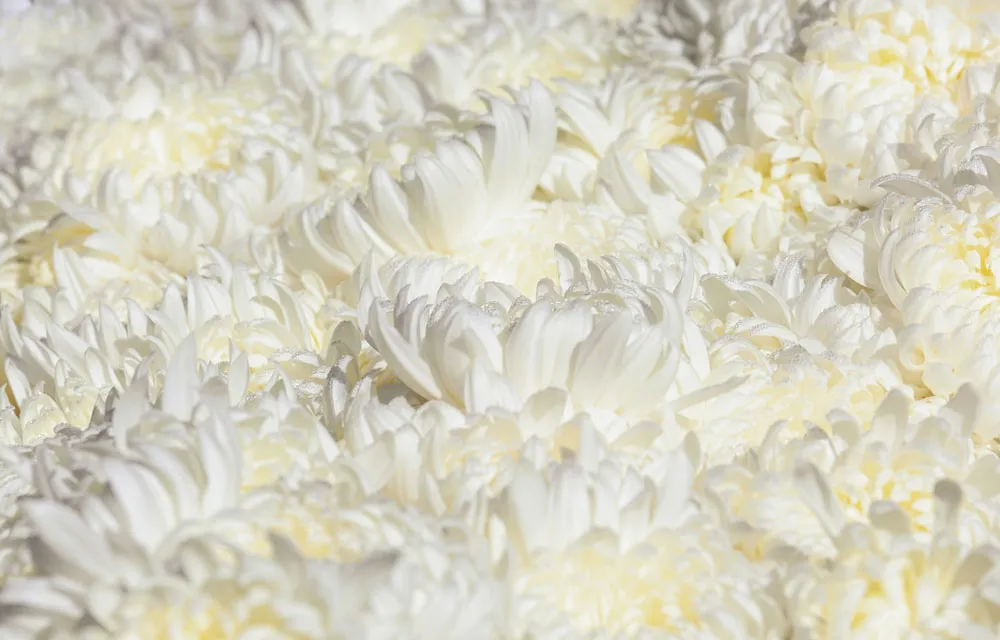 Not that more than the rest I these adore


