“I think most people who aren’t spiritual grow up not knowing that there’s another world out there. It’s like your life is black and white, and you don’t realize that it’s actually in colour.” — Angel Chang
To the uninitiated eye, a piece of fabric is merely a surface—a textile woven for utility or adornment. But to the designer Angel Chang, fabric is a repository of time, a physical manifestation of a rhythm that the modern world has largely forgotten. Her journey into the remote mountains of Guizhou, China, was not merely a sourcing trip; it became a pilgrimage into the soul of artisanship, where the act of creation is inextricably bound to the cycles of the earth.
Angel-Chang-2
The Architecture of Silence
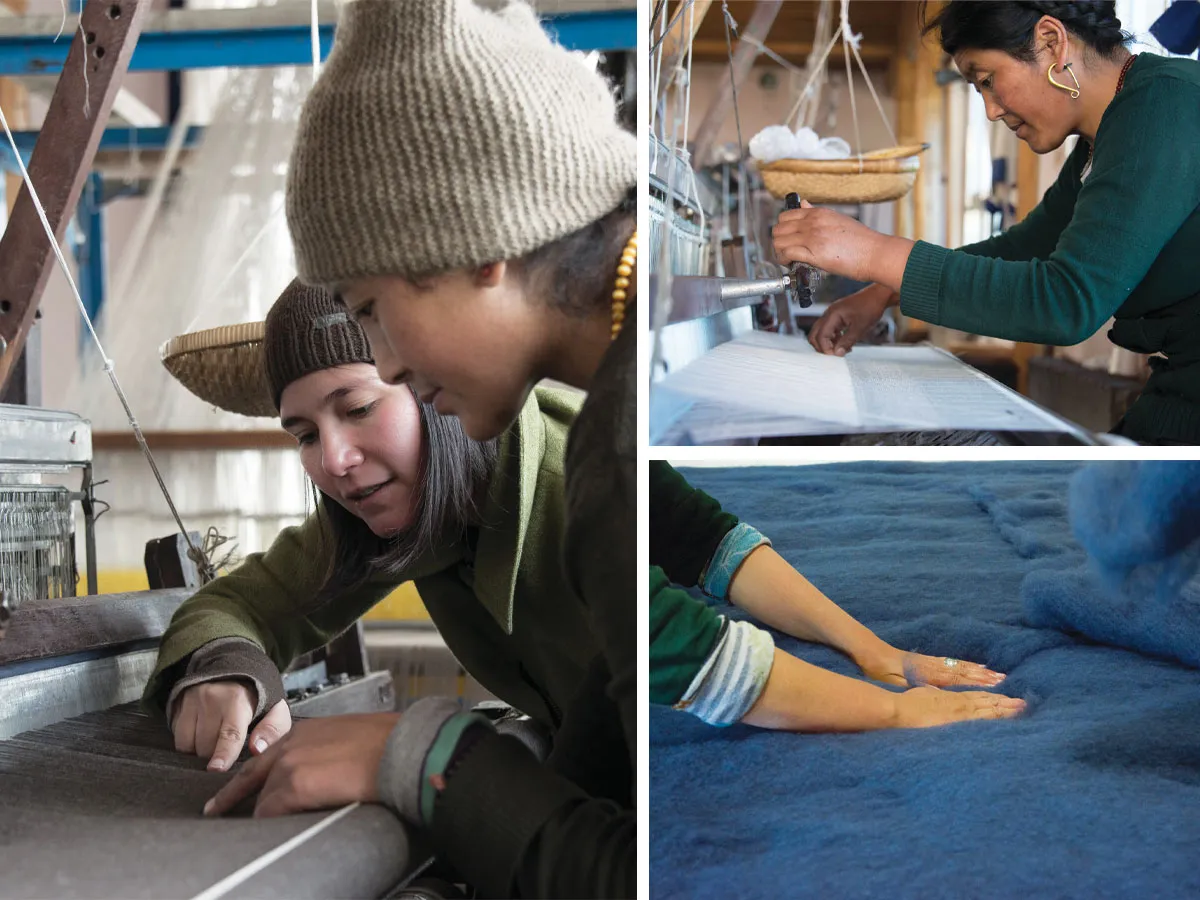
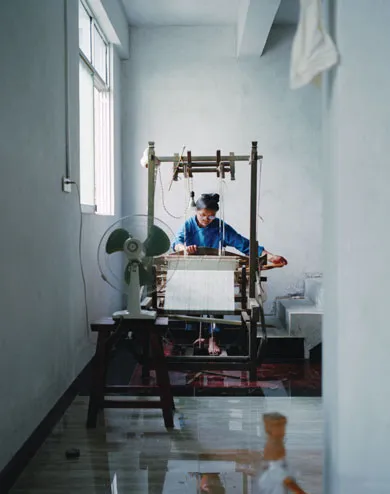
When Chang first arrived in Guizhou in 2009, she stepped into a world governed by a different chronology. She spoke little of the language and knew nothing of the terrain, yet she was pulled by an intuitive gravity toward the weavers of the region. Here, in the quiet autonomy of village life, she found grandmothers spinning stories into thread—creating lush, handmade textiles that possessed a vitality absent in industrial mass production.
However, this beauty existed on the precipice of erasure. The economic reality of the region was stark; the allure of factory work in the cities threatened to sever the lineage of craft that had sustained these communities for generations. Chang, an eco-fashion designer with a background in the high-velocity fashion capitals of New York and Paris, recognized the urgency. She saw not just poverty, but a fading library of tactile knowledge.
Her response was not to modernize the village, but to archaicize her own process. To save the craft, she had to submit to it.
Angel-Chang-2
Beyond the Transactional
The intersection of high fashion and indigenous craft often stumbles on the incompatibility of values. Chang’s initial attempts to establish an artisanal workshop faced a silent wall. The villagers, whose lives were dictated by the harvest and whose pockets rarely held coins, were not motivated by the transactional logic of the West. Money was an abstract concept; survival was tied to the land.
Chang realized that to bridge this chasm, she had to dismantle her own professional conditioning. She could not speak to them of markets or margins. She had to speak a primordial language.
“I had to go down to the deepest parts of the human soul and ask, ‘What drives people?’” Chang reflects. The answer lay in the intrinsic human desire for connection and dignity. “They love beauty. They love connection. They want to be proud of what they’re working on.”
The breakthrough came through a generational bridge—a sixteen-year-old girl and a hidden trunk of silk costumes. When the granddaughter saw the exquisite work of her own ancestors, stored away in darkness, a spark was lit. It was a moment of recognition, proving that the preservation of culture relies not on commerce, but on the reawakening of pride.
Angel-Chang-3
The Cadence of the Seasons
Establishing her atelier, Village Embassy, and later her eponymous zero-carbon line, required Chang to surrender to the tyranny of nature. In the industrial world, color is chemical and available on demand. In Guizhou, color is a waiting game.
Chang had to relearn the calendar. Indigo and gardenia pods do not bend to the designer’s deadline; they ripen in the heat of July and August. To work with natural dyes is to enter into a negotiation with the sun and the rain. It is a slow, deliberate discipline where patience is the primary tool.
“I had to really open myself up to nature,” she observes. This was no longer about designing clothes; it was about curating an ecosystem where the garment is the final fruit of a year-long process involving rainwater, soil, and the specific maturity of a plant.
Angel-Chang-3
The Spiritual Thread
This surrender to natural rhythms opened a metaphysical door. Chang began to meditate, finding that the silence of the mountains allowed for a heightened sensory perception. She felt guided by the spirit of her paternal grandfather, a native of the region, as if the lineage itself was orchestrating the collaboration.
The experience transformed her aesthetic perception. The world was no longer flat; it vibrated with invisible energy. “When someone was sitting next to me, I could feel their personality without even talking to them,” she notes. This spiritual sensitivity infused her work with a profound depth, distinguishing her pieces not just as “sustainable fashion,” but as artifacts of a spiritually aligned existence.
Her work has since received global accolades—from the Ecco Domani Fashion Foundation Award to the Cartier Women’s Initiative Award—and Village Embassy became the first Chinese atelier selected for Première Vision’s Maison d’Exceptions. Yet, the true victory remains in the intangible connection between the maker, the material, and the ancestor.
Angel-Chang-4
A Universal Flow
The wisdom gleaned from the mountains of China has proven to be universal. Chang has extended her philosophy to the American Southwest, collaborating with the Navajo Nation. She finds a mirroring of values there: the same reverence for the land, the same dialogue with ancestors, the same understanding that we are but temporary stewards of the earth’s resources.
Her approach to design has become akin to the philosophy of the spring water she describes: “If spring water is coming out, you just let it flow… it’s been flowing like this for hundreds of years.”
In a world obsessed with extraction and speed, Angel Chang’s work stands as a testament to the power of flowing with, rather than against, the current of time. Her garments are not merely worn; they are inhabited, carrying within their fibers the quiet, colorful hum of a world that breathes.

 Angel-Chang-2
 Angel-Chang-3
 Angel-Chang-4
 Angel-Chang-5