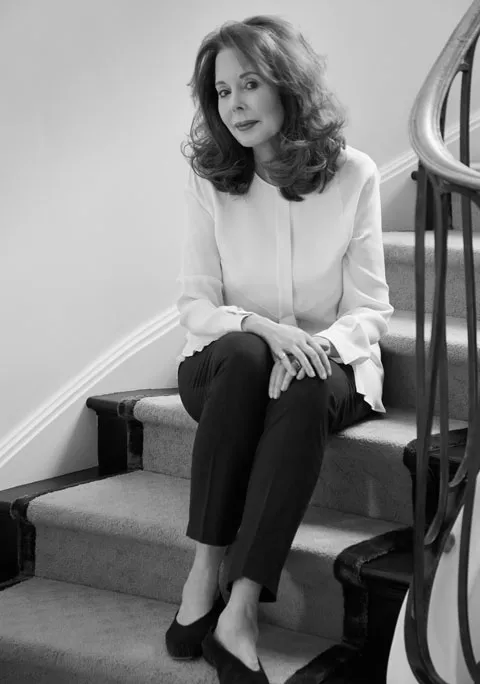
For twenty-two years, Xiao Nan Yu has been a pillar of the National Ballet of Canada, a figure of ethereal grace and steely discipline. When a principal dancer of such magnitude decides to step away from the limelight, the choice of the final curtain call becomes a statement in itself. For Yu, that statement was The Merry Widow.
It is a departure devoid of sorrow, replaced instead by a celebration of maturity. In June, Yu bid farewell to the stage not as a fragile swan or a tragic heroine, but as Hanna Glawari—a wealthy, self-assured widow who commands her own destiny. The symmetry between the artist and the role is palpable. “The heroine of this drama, Hanna, is basically in the same state with me in age, experience, career, and feelings of life,” Yu reflects. “She is very confident, not affected by external factors, and knows what she wants.”
Principal dancer Xiao Nan Yu of The National Ballet of Canada retires after an illustrious career.
A Reflection in Retro
The Merry Widow, a 19th-century classic, offers a narrative texture that differs from the ethereal fairy tales of the ballet canon. It is grounded in the glamour of high society, the tension of bankruptcy, and the intricate dance of courtship. The story follows the countrymen of a small, failing principality desperately trying to marry off the wealthy widow Hanna to keep her fortune within their borders. What ensues is a reunion with Count Danilo, a former lover, sparking a series of comedic and romantic entanglements.
Yet, beyond the plot twists, Yu perceives the production as a grand aesthetic vessel. She notes the costumes possess a distinct “artistic sense,” evoking the nostalgic taste of old Shanghai. It is a world of retro elegance, a fitting backdrop for a dancer who has spent decades refining the classics. At 40, Yu’s presence on stage is evergreen, bringing a freshness to the role that only experience can provide. The production feels larger than any single performer—a celebration of life, music, and design—allowing Yu to exit on a note of triumphant joy rather than melancholy.
Xiao Nan Yu with A rtists of the Ballet in The Sleeping Beauty . P h oto by Aleksandar Antonijevic
The Universal Language of the Shoe
The journey to this confident finale began with a leap of faith. Twenty-four years ago, a 17-year-old Yu arrived at a Toronto airport, clutching a scholarship to Canada’s National Ballet School but possessing no English. In a poignant moment of cultural translation, representatives from the school greeted her not with a sign bearing her name, but with a pair of ballet shoes.
That object became her anchor. In the silence of the language barrier, dance became the medium of communication. The studio was the one place where the foreign world faded, replaced by the familiar rigor of the barre. Her acclimation to Western culture was mediated through the universal language of movement.
Her ascent was meteoric. While most dancers toil for a decade to reach the pinnacle of a company, Yu was promoted to principal dancer by director James Kudelka just four years after joining the corps. It was a testament to a technique that was razor-sharp and a focus that was unwavering. The trust placed in her to carry the show became the fuel for her work ethic, a responsibility she bore with grace for two decades.
Xiao Nan Yu with Artists of the Ballet in rehearsal for The Merry Widow. Photo by Sian Richards.
The Spirituality of Repetition
In an era obsessed with novelty, Yu remains a devotee of the orthodox. Her philosophy of art is rooted in the belief that true beauty lies in the unchangeable nature of the classics. “I want to believe that the classic thing is the root for art to be passed down, like Mozart and Bach’s music,” she observes. “They are just beautiful and cannot be changed.”
This reverence for tradition informs her approach to the daily grind of the dancer—the endless repetition that many find tedious. For Yu, the repetition is not a burden but a method of purification. She argues that the simplicity of the movements keeps her character “simple and innocent.”
There is a Zen-like quality to this perspective. When the form is simple, the artist is forced to explore the nuances of expression with deeper curiosity. Having performed Hanna in The Merry Widow multiple times over twenty years, Yu does not simply repeat the steps; she excavates them. Each rehearsal is an opportunity to refine the emotional calibration, to ensure that the feeling of the moment is expressed with absolute precision.
Xiao Nan Yu in Onegin. Photo by Aleksandar Antonijevic
Perfection as a Practice
“If you can’t do it well today, you have to do it tomorrow. Do it every day until it’s the best.” This mantra encapsulates the unique charm of classical art for Yu. It is the pursuit of an elusive perfection, a path that has no final destination, only endless refinement.
Ballet, in Yu’s view, shapes the soul as much as the body. It bestows a regal poise and an elegant temperament, but more importantly, it instills a fortitude that transcends the stage. The discipline required to make the difficult look effortless creates a spirit of perseverance that serves the artist long after the final bow.
As she steps away from professional ballet, Yu carries this internal architecture with her. “Maybe I won’t engage in ballet anymore, but my attitude towards things won’t change,” she affirms. The shoes may be hung up, but the pursuit of excellence—the refusal to give up—remains the permanent choreography of her life.
Xiao Nan Yu in The Merry Widow. Photo by Cylla von Tiedemann

 Principal dancer Xiao Nan Yu of The National Ballet of Canada retires after an illustrious career.
 Xiao Nan Yu with A rtists of the Ballet in The Sleeping Beauty . P h oto by Aleksandar Antonijevic
 Xiao Nan Yu with Artists of the Ballet in rehearsal for The Merry Widow. Photo by Sian Richards.
 Xiao Nan Yu in Onegin. Photo by Aleksandar Antonijevic
 Xiao Nan Yu in The Merry Widow. Photo by Cylla von Tiedemann